
Xreal's Aura fits 1920x1200 per eye and 1050 nits into 95g of glasses

Xreal has published a full spec sheet for Aura, and the numbers that were missing are the display ones: 1920 x 1200 pixels per eye on Sony micro-OLED, up to 120Hz, and a maximum 1050 nits, in glasses Xreal weighs at 95g. Xreal’s own page gives pixel density as 32 PPD, colour as "100% sRGB" with "ΔE<3, individually factory calibrated", and motion-to-photon latency as 3ms.
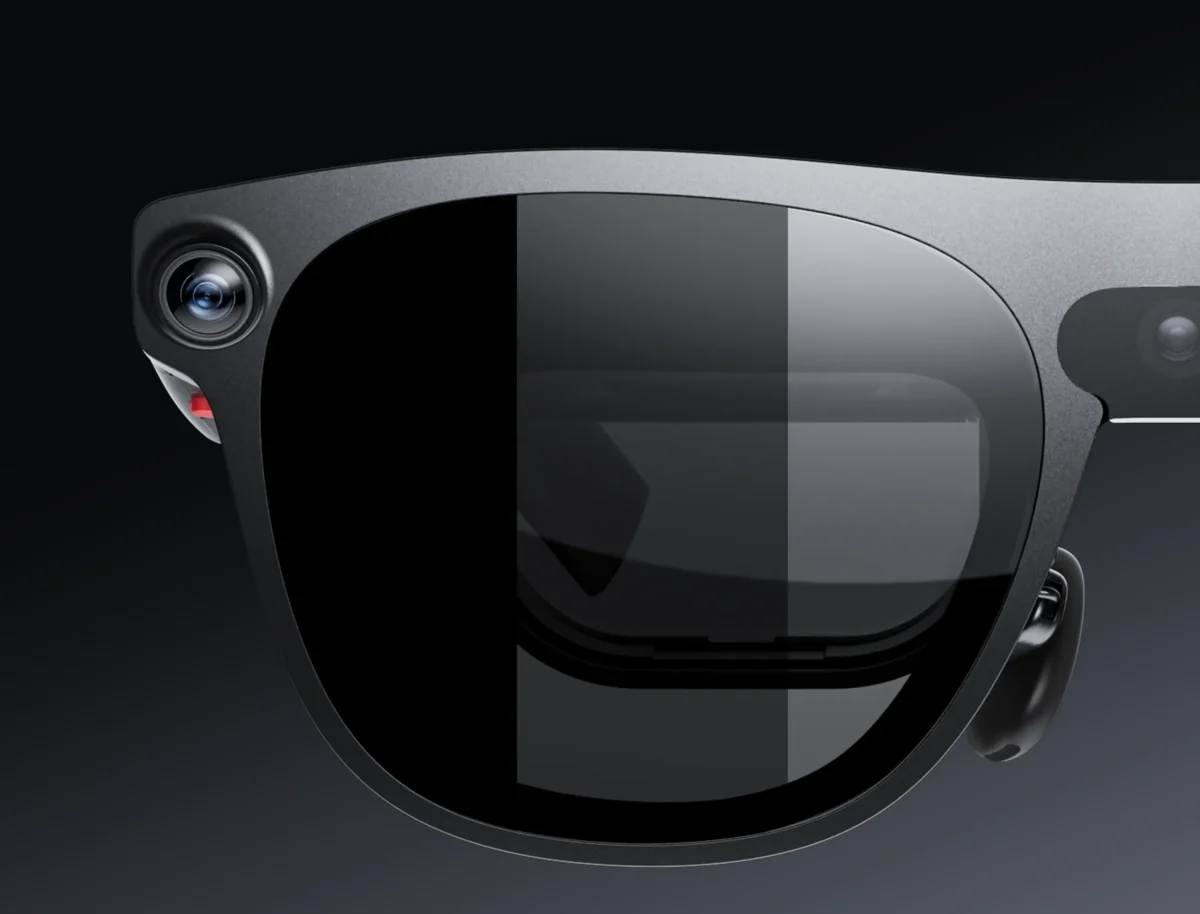
Xreal lists five levels of transparency, blocking up to 99.9% of external light at the darkest. Image: Xreal
The field of view stays where Xreal first put it, at 70 degrees of optical see-through. That is the same number Meta quotes for its own VR Glasses, against the 110 degrees a Quest 3 covers, which is the trade a pair of glasses makes for not being a headset.
The puck carries 48 TOPS and 34.84Wh
Xreal lists the compute puck on the "Snapdragon Reality Elite platform" with "AI Processing 48 TOPS", either 12GB of memory with 256GB of storage or 16GB with 512GB, and "UFS 4.0 support". The battery is given as 4,455mAh, which Xreal also states as 34.84Wh.
For scale, the puck alone holds more charge than the whole of the headset Valve put on sale in September: the Steam Frame runs on a 20.9Wh battery glued into the housing, where Aura’s sits in a puck in your pocket. Xreal publishes no runtime in hours for either half of the product, and no weight for the puck.
Charging goes through the puck’s second USB-C port, which Xreal rates from 5 to 19V at up to 3A and "57W Max", with "QC3.0 / PD3.0 with PPS", and the same port takes DisplayPort in from a PC, a laptop or a handheld console. The first USB-C port drives the glasses at 5V and 2A, runs at USB 3.1 speeds and carries "Full ADB Support", which is the Android debugging channel developers need.
Two tracking cameras, and five levels of tint
The glasses carry "World-facing tracking cameras ×2" for 6DoF spatial anchoring and hand tracking, plus a "High-resolution camera with privacy LED indicator". Electrochromic dimming runs in automatic or manual mode across five levels of transparency, "Blocking up to 99.9% of external light" at the darkest.
Audio is "Sound by Bose EQ tuning" with a four-microphone array and spatial audio handled by Android XR. Wireless is Wi-Fi 6 and 6E with Bluetooth 5.3, and the puck also carries GPS, GLONASS, Galileo, QZSS and BeiDou.
The fingerprint button on the puck does more than wake it. Xreal lists it for power, locking and unlocking the system, biometric authentication in supported third-party apps, and authorising purchases and payments.
The split itself is not new. Xreal’s store listing put the Snapdragon in the puck and the X1S Spatial Coprocessor in the glasses, behind the same 70-degree display, when four Aura versions appeared on the store on October 7. It carried no resolution, no brightness figure, no weight and no battery capacity.
Xreal’s page puts the two configurations at $1,279 and $1,499 in the US and says Aura is expected to launch in autumn 2026, starting with the US, Canada, Japan and South Korea. The box includes an optical insert frame for prescription lenses and three pairs of nose pads, and a lanyard that Xreal marks "16GB model only".

