
Meta's $1,299.99 VR Glasses see 70 degrees, where your Quest 3 sees 110
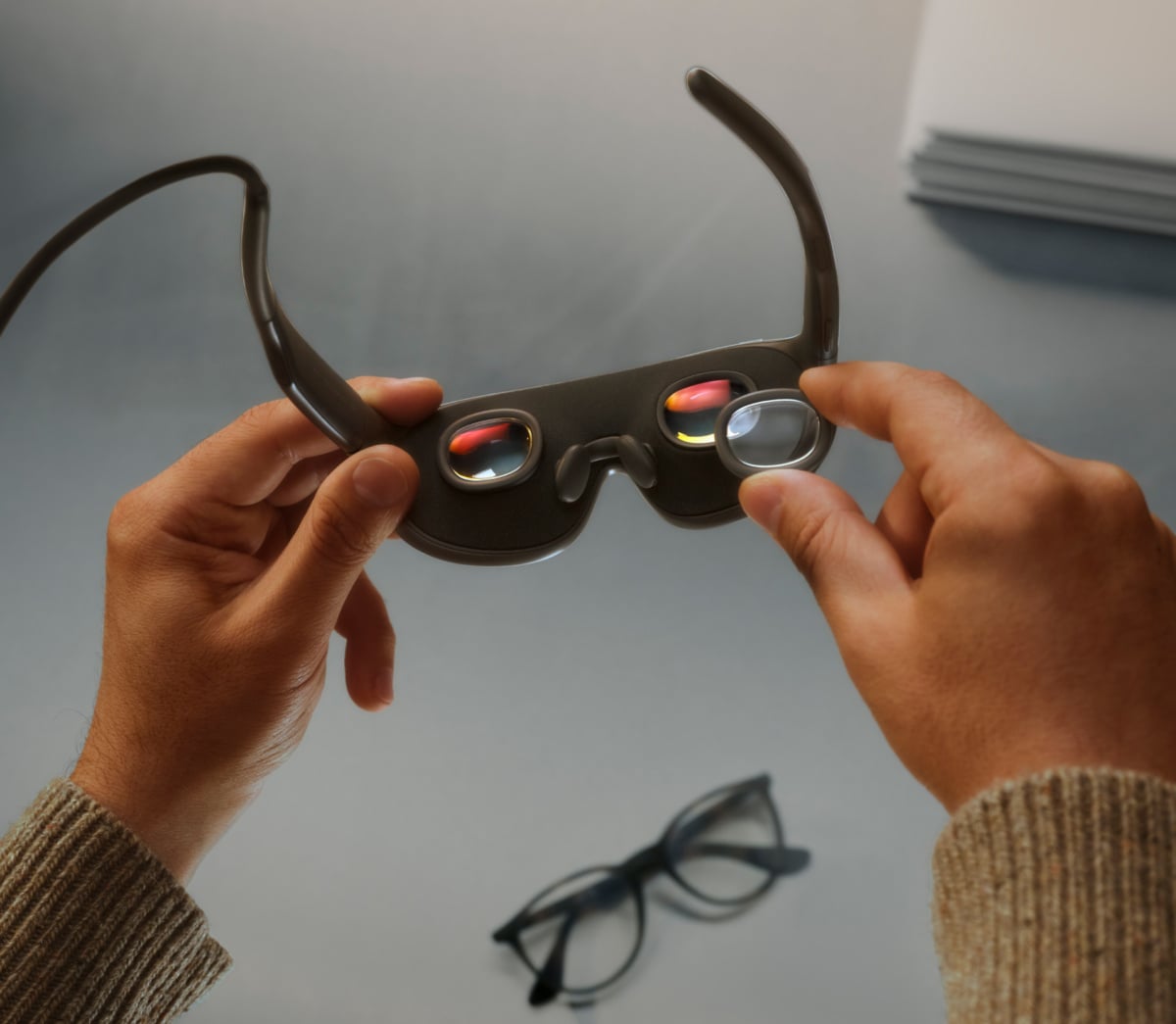
Meta VR Glasses show roughly 70 by 66 degrees of field of view, against 110 by 96 on Meta Quest 3, and the comparison is Meta's own. Meta says the $1,299.99 headset has "a higher resolution per eye with a narrower field of view than Quest 3, roughly 70 by 66 degrees versus 110 by 96", in a Connect recap written for developers and published on September 24.

Meta pitches VR Glasses first as a screen. They go on sale in spring 2027 at $1,299.99 in the US. Image: Meta
Meta's case for the narrower view is sharpness. "In practice, text is more legible and eye fatigue drops, and the perceptual difference is minor," the developer post says. The keynote a day earlier gave the price, the weight and the spring 2027 date without ever giving this number.
Meta trades width for pixels per degree
The display is a "5K Infinite Display built on micro-OLED panels, with 37 pixels per degree", according to Meta's newsroom post, behind ultra-compact pancake lenses built specifically for the device. Quest 3 has never led on pixel density, and that is the axis Meta has chosen to win on.
The rest of the spec sheet points the same way. The glasses weigh about 100 grams, which Meta calls five times lighter than Quest 3, and Meta pitches them first as a screen, with Dolby Vision and Dolby Atmos built into the frames. The price and the spring 2027 ship date came out of the keynote a day earlier.
Developers are told to move their menus inwards
An app built for Quest 3 can put controls at the far edge of the view, and on VR Glasses that edge is no longer there. Meta asks developers to bring key interface elements inwards, says most existing apps "should run at parity or better than Quest 3", and tells them the v207 SDK is all they need to start building for the device today.
"Eyes and hands are the primary inputs on VR Glasses, and though Touch Plus controllers are supported, we expect most customers not to use them," the same post says. Meta points developers to Touch Plus only for "virtual locomotion or gun-based gameplay", and the controllers are sold separately, which fits the 75-plus hand-gesture titles Meta promised for launch.
The compute and the battery sit off your face
Weight comes off the head because most of the hardware is not on it. Compute and battery live in a tethered puck, which Meta rates at up to three hours of continuous high-resolution media playback, with 45W fast charging and a Qualcomm Snapdragon Reality Elite doing the work.
Both sets of figures are approximate, in Meta's own wording, and Meta has published no diagonal field of view and no per-eye resolution for VR Glasses. Meta VR Glasses go on sale in spring 2027 at $1,299.99 in the US, and until then the only field of view number on the record is smaller than the one Quest 3 gives you.

