
Meta's 100-gram VR Glasses cost $1,299.99, but they don't ship until spring 2027

Meta has announced Meta VR Glasses, a pair of VR glasses that weigh about 100 grams and keep the battery and the processor in a puck you clip to a pocket. Meta says they will go on sale in spring 2027 for $1,299.99 in the US.
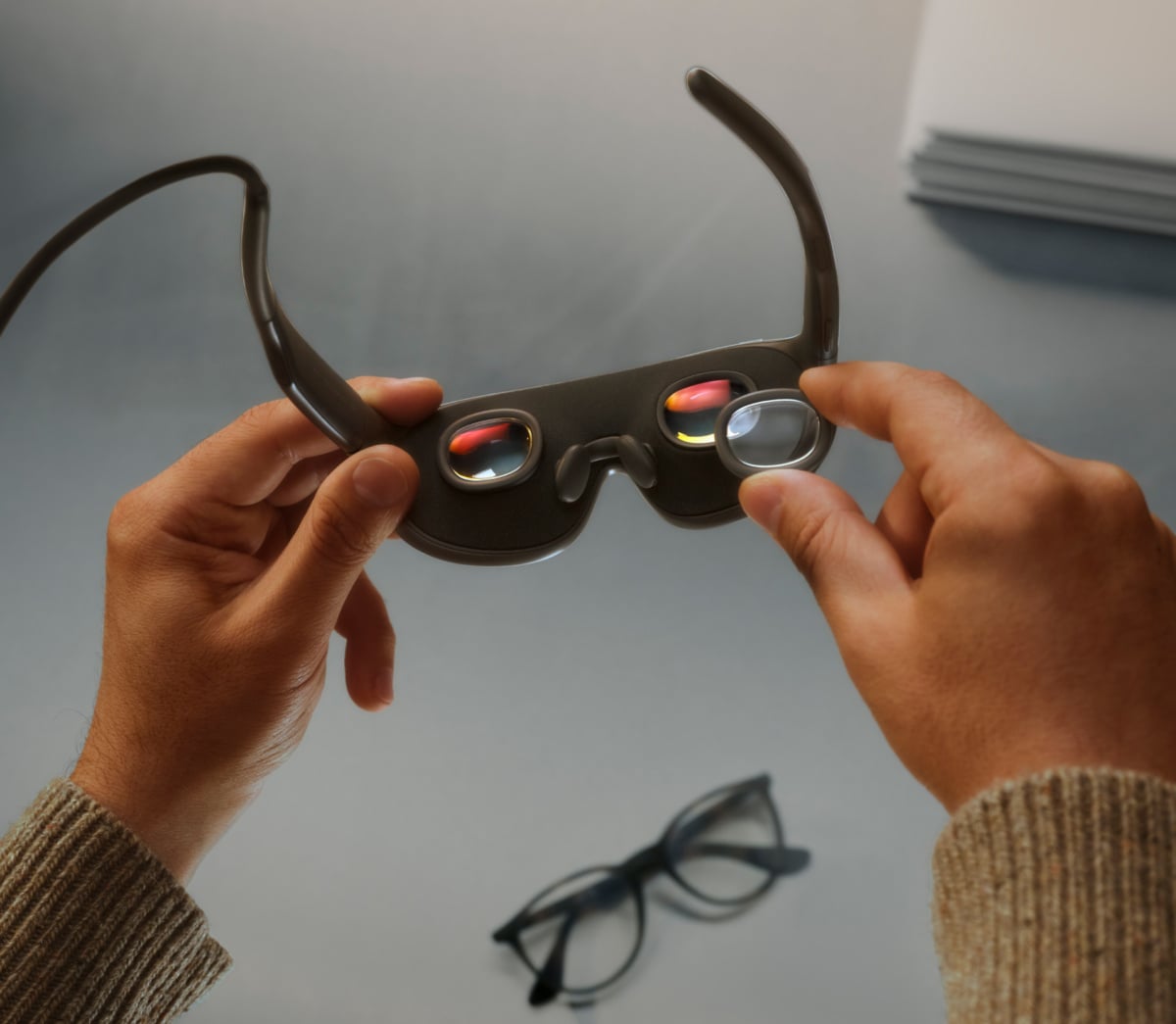
Meta's product page lists prescription inserts as a separate purchase. Image: Meta
Spring 2027 is the whole of the timing. Meta names no month, opens no pre-orders and gives no price in any other currency, which leaves the weight as the most concrete thing about the device.
The puck carries the battery and the compute
Meta says the glasses are five times lighter than Meta Quest 3, and puts the 100 grams next to a deck of cards. The saving comes from splitting the device in two: the glasses hold the sensors and the display, and an optical tether runs down to a puck that handles compute, battery and storage.
Meta's Connect round-up says the puck clips to a belt, pocket or bag. Meta has published no weight, no dimensions and no storage figure for it.
The puck battery is rated for up to three hours of continuous high-resolution media playback, with 45W fast charging. That number covers video, and Meta quotes no runtime for games or for a day of work.
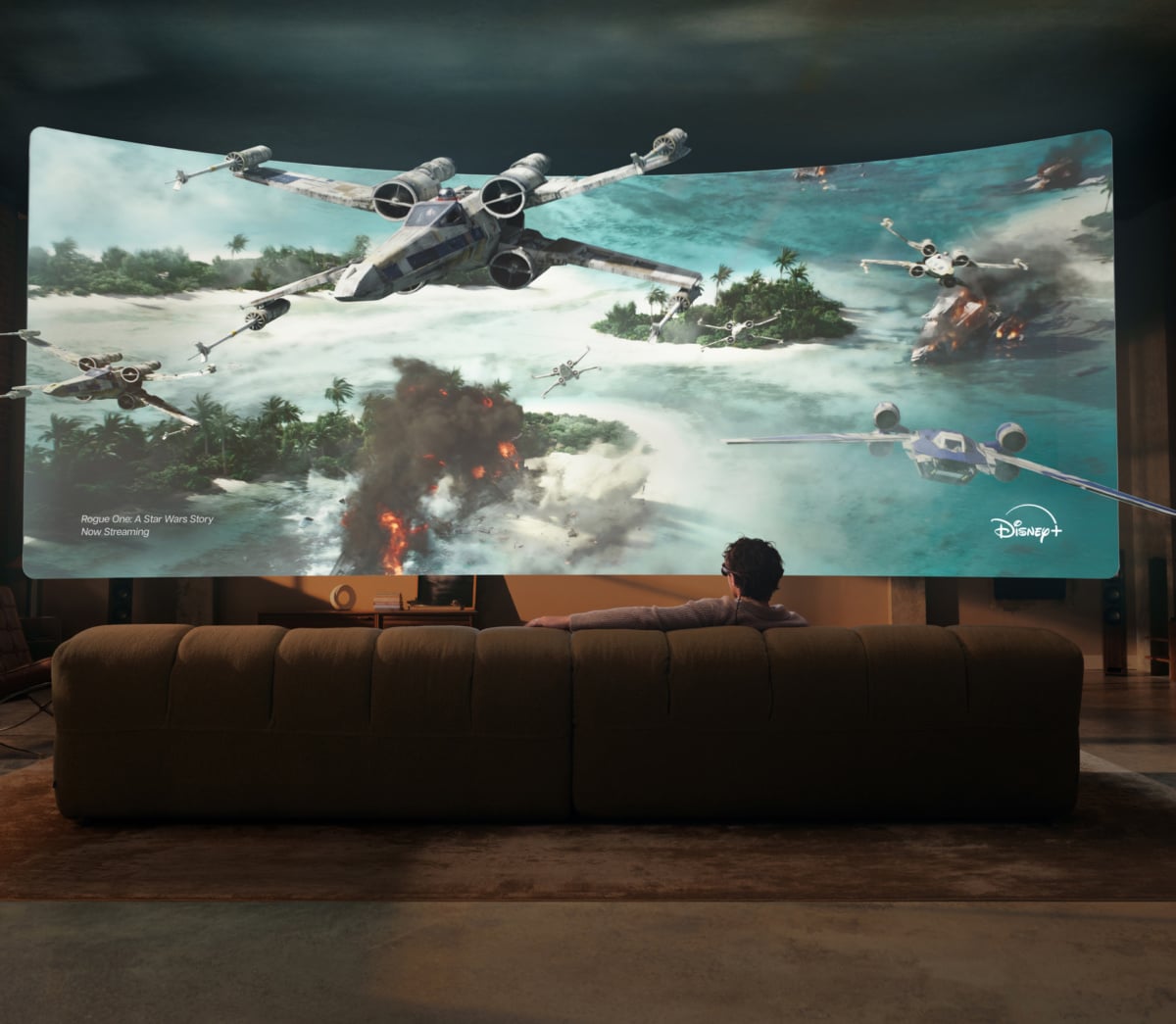
Meta's own illustration of the virtual screen the glasses are meant to put in front of you. Image: Meta
Meta counts the display in pixels per degree
The glasses use what Meta calls a 5K Infinite Display, built on micro-OLED panels at 37 pixels per degree, behind pancake lenses designed for this device. Dolby Vision handles the video and Dolby Atmos spatial audio sits in the frames.
Those are Meta's own figures, and they are the only display figures it has given. No field of view, no refresh rate and no per-eye resolution appear anywhere on Meta's pages.
The processor is Qualcomm's Snapdragon Reality Elite, the XR chip announced in June. Meta credits it with fast load times and better efficiency, and publishes no benchmark.
Meta is not presenting this as a replacement for Quest. The hand-tracking games announced at Connect, and the Beat Saber update due next spring, are listed for Meta VR Glasses and Meta Quest together, and the ESPN immersive sports Meta showed start on Quest this year.
Hand tracking replaces the controllers
You navigate with your eyes and hand gestures, or by talking to Meta AI, which Meta says is built into the operating system. No controllers are included, and Meta does not mention any.
More than 75 games will be playable at launch with hand gestures alone, according to Meta, with Xbox Cloud Gaming streaming hundreds more. Meta and Microsoft have been drawing closer for a while: Xbox Game Pass joined the Meta Horizon+ subscription at no extra cost in July.
For work, Meta promises several virtual screens at once, the option to extend the display of another device, and surface input that turns a table into a keyboard and touchpad. Full-colour passthrough and the open sides of the frame are meant to keep your desk and your phone in view while you type.
Hologram calling ships with the glasses
Meta is also putting hologram calling on the device at launch, a photorealistic version of you built from a quick self-capture with your phone, carrying your expressions in real time. Meta says it works in whichever calling app you use, from WhatsApp to Zoom, and that people on a phone or a computer see the hologram on their screen.
Meta calls the glasses the first IMAX Enhanced certified VR device, and names Disney+, Prime Video, YouTube and Crunchyroll among the services lined up for launch. Peacock, HBO Max and Paramount+ are opening 3D catalogues for the first time, Meta says.
Meta's product page for the glasses is live, listing prescription inserts as a separate purchase and telling most of the world that the device is not yet available in their region. On Meta's own timetable, that stays true for at least another six months.

