
Samsung's first AI glasses launch in November, with no display and no price yet
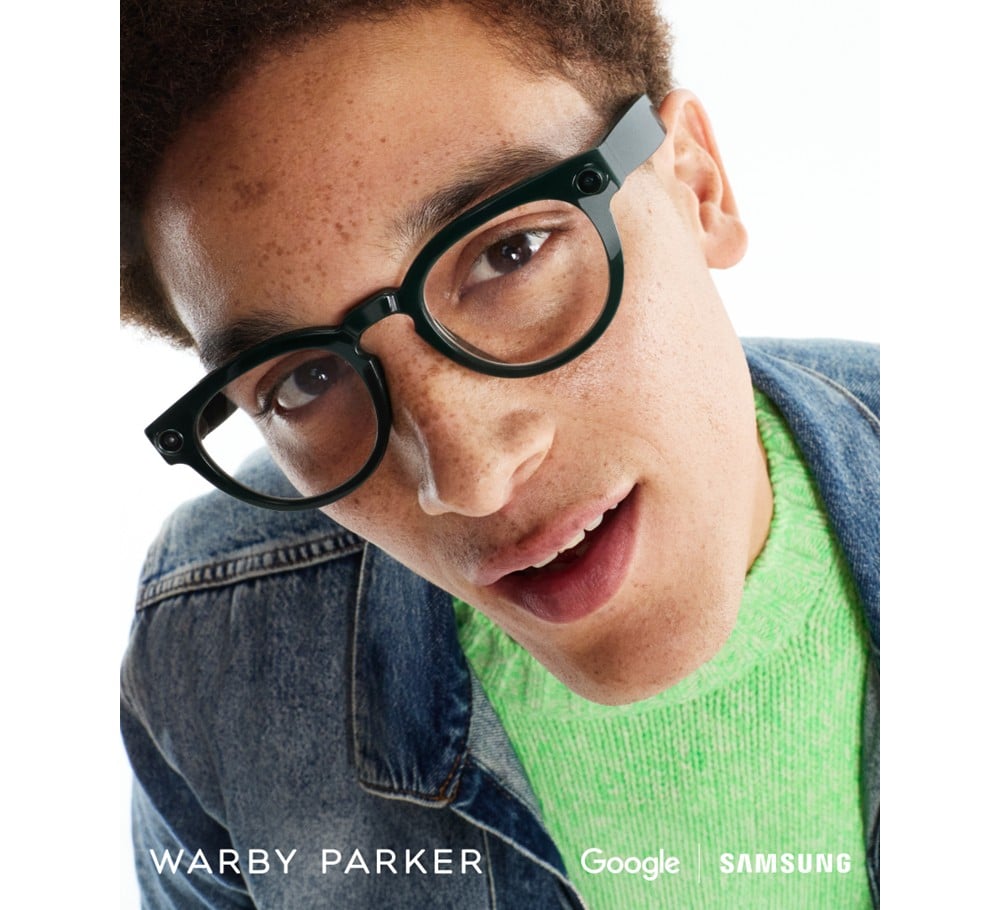
Samsung will launch Intelligent Eyewear, its first AI glasses, in November, a Samsung Electronics official has confirmed to The Korea Herald, in an October 1 report by its tech reporter Moon Joon-hyun. Samsung has still not given a price, a date inside the month, or a list of launch markets.
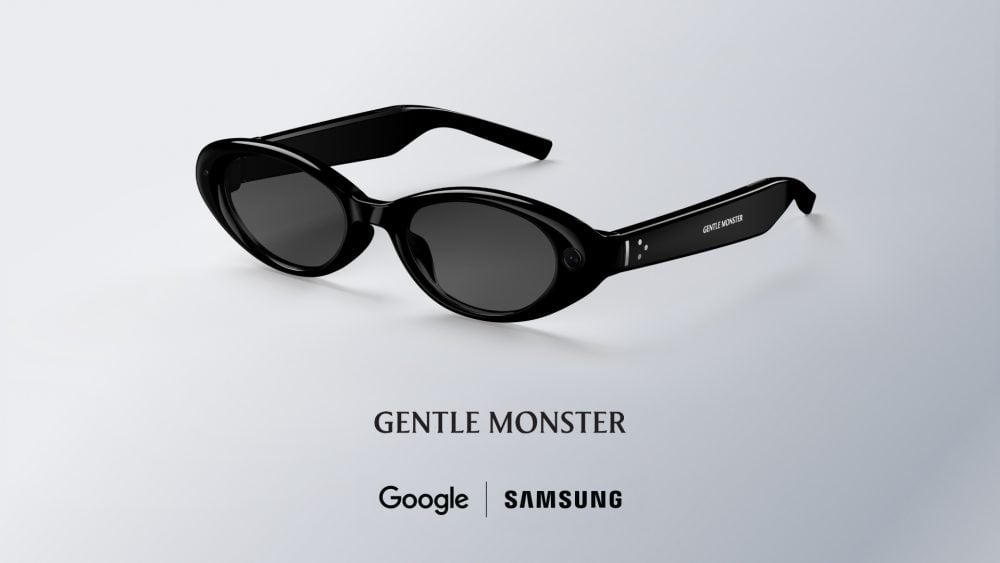
The Gentle Monster design, one of the two styles Samsung and Google showed at Google I/O in May. The camera sits beside the hinge. Image: Samsung
There is no visual display, the newspaper says. A camera and microphones capture what the wearer sees and hears, and the reply comes back through speakers built into the frame, so everything the device tells you arrives as sound.
Samsung showed the glasses with Google at Google I/O in May and put the two designs on stage at Galaxy Unpacked in London in July. Samsung's July announcement lists the Snapdragon AR1 Gen 1 platform, up to nine hours on a single charge with up to seven further full charges from the case, and frames from Gentle Monster and Warby Parker.
What Samsung says the glasses are for is mostly Gemini errands. Its May announcement lists walking navigation asked for by voice, summarised notifications, calendar entries, photos taken without reaching for the phone, and real-time translation with audio that Samsung says matches the speaker's voice, including text on menus and signs in the wearer's line of sight. The phone carries part of the load: through what Samsung calls split computing, processing is divided between the glasses and the connected Galaxy handset.
Weight is the number Samsung has not published
Samsung has made lightness part of the pitch without ever attaching a figure to it. Its own engineers describe patented slim hinges, advanced thin-wall moulding, lightweight materials and graphite on the left side of the frame to keep heat from the processor off the face, with the weight balanced across both sides so that "users can barely notice any difference".
Samsung says it has filed around 200 patent applications in the category. What it has not published, anywhere it controls, is a weight in grams.
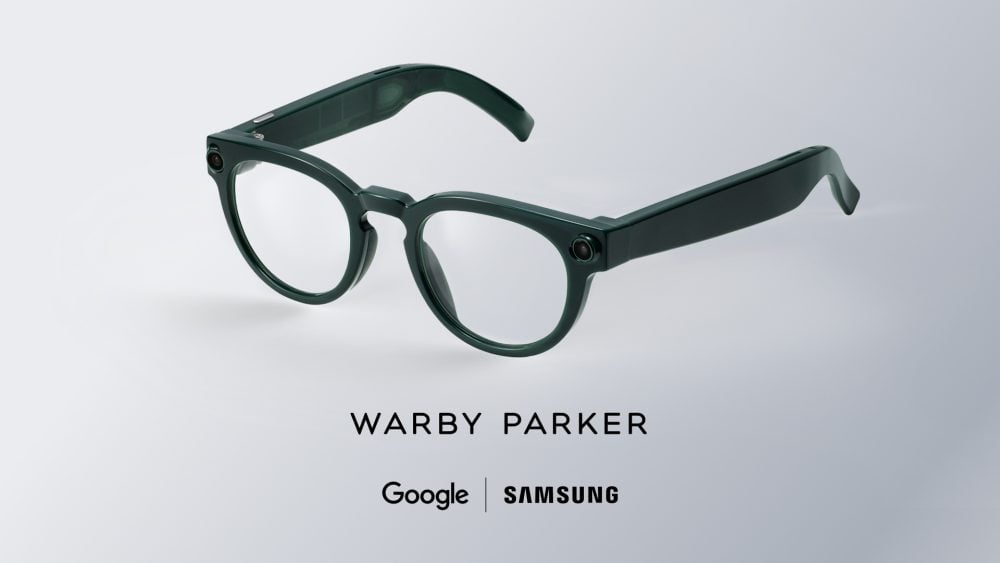
Warby Parker's design in dark green. Samsung says the frames carry an outward-facing LED and an inner LED, and stop recording if the outer one is blocked. Image: Samsung
Counterpoint puts Meta at 94% of the segment
Counterpoint Research gives Meta 94% of the display-less glasses segment in the first half of 2026, which is precisely where Intelligent Eyewear lands. The same tracker has global AI glasses shipments up 263% year on year over that period, with display-less models making up 96% of everything shipped.
Meta spent September widening that lead. It refreshed the camera-equipped Ray-Ban Meta line at Connect on September 23 and added Ray-Ban Meta Audio, a camera-free pair at $349 in the US. Samsung is walking in with a camera, into the part of the category people argue about.
Two LEDs and a thwart detector guard the camera
James Choi, executive vice president and head of the XR R&D team in Samsung's Mobile eXperience business, says the frames carry "a bystander-facing LED indicator and an inner LED" to show when recording is running. Wear detection switches recording off when the glasses come off, and what Samsung calls thwart detection "disables recording if the external LED indicator is blocked", he told Samsung's own press site on July 31. Audio, video and screen-sharing data are not used to train AI models, he says.
Korean regulators have been circling the category in the meantime. The Personal Information Protection Commission reportedly met Samsung in late July over how people nearby should be told that a camera or microphone is live, the newspaper says, and the Ministry of Science and ICT began drafting safer-use guidelines in September over covert filming and exam cheating. Neither body has imposed anything on the glasses, and Samsung has not presented its indicator design as an answer to either.
Samsung's May announcement promised the first collections "this fall in select markets", and November sits at the end of that window. Two Samsung devices described as smart glasses cleared the FCC on September 27, so the hardware has at least reached the stage where regulators have seen it. The price is the one number nobody outside Samsung has.

