
Xreal's 1 Pro+ lifts peak brightness from 700 nits to 1,200, and keeps the One Pro's $599
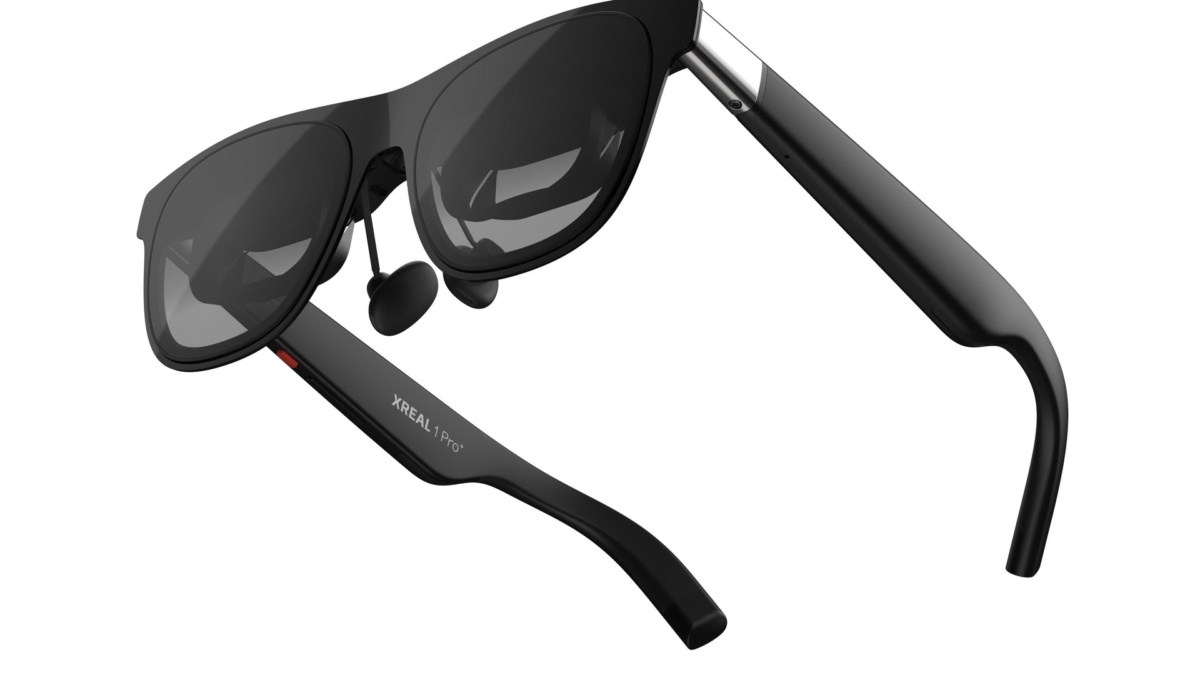
Xreal put a new pair of display glasses on sale on October 15, and the Xreal 1 Pro+ costs exactly what the One Pro it follows costs, $599 in the US. Xreal's own US store published the listing at 11:54 UTC that day, in two frame sizes split by pupil distance, M for 57 to 66mm and L for 66 to 75mm.
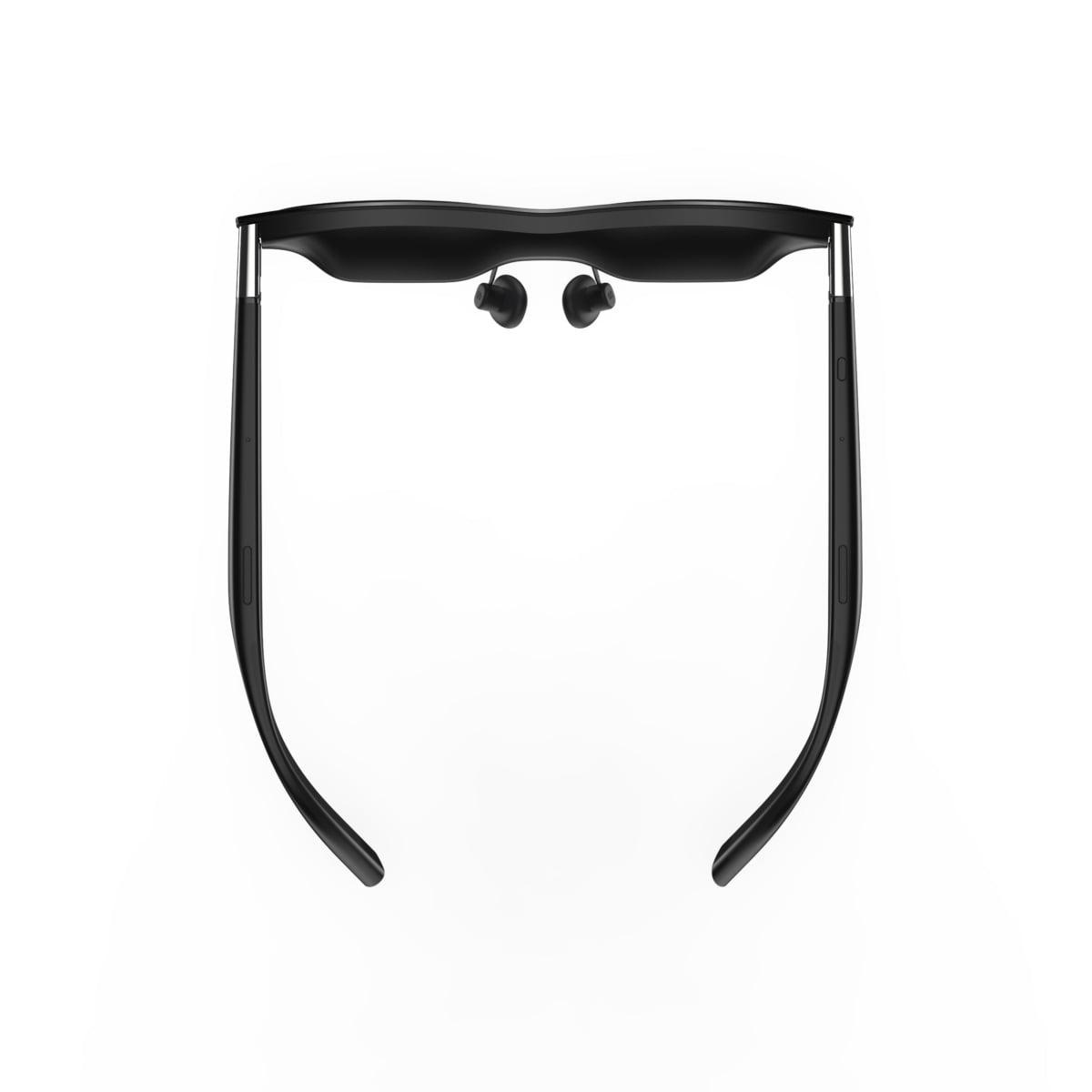
One of the product images Xreal publishes for the Xreal 1 Pro+ on its own US store. Image: Xreal
Brightness is the change Xreal leads on. Xreal says the 1 Pro+ reaches 1,200 nits peak brightness with what it calls AI HDR, and its own cross-product comparison puts the One Pro at 700 nits peak and 87 grams.
Brightness aside, the spec sheet is the One Pro's
Everything else Xreal lists was on the One Pro too: a 57-degree field of view, Sony micro-OLED panels, the X1 spatial computing chip with native 3DoF and 3ms motion-to-photon, up to 120Hz, electrochromic dimming that adjusts the lens tint by itself, sound by Bose and a TÜV Rheinland Eye Comfort certification. Two frame sizes cover "up to 95% of global IPD ranges", which is the same claim and the same 57 to 75mm span the One Pro carried.
The one genuinely new number is the 3D conversion. Xreal says the glasses turn photos, videos, livestreams and games "into spatial 3D at 60fps" on the glasses themselves, with no extra software or accessory, where the One Pro listing offers the same REAL 3D mode with no frame rate attached to it.
X Prism is not new either, since the One Pro's own store listing names "Optic Engine 4.0 with X-Prism Technology". What the 1 Pro+ adds on fit is a redesigned nose pad, which Xreal says has a broader contact area for stability and display alignment.
The One Pro has not gone anywhere
Xreal's US store still lists the Xreal One Pro at $599, on a product page it published in December 2024, and the company's cross-product comparison still runs the 1S at $449, the a01+ at $299, the One Pro and the ROG Xreal R1 at $849, and it does not include the 1 Pro+ at all. So this is a second pair at $599 rather than a swap on the shelf, and nothing Xreal publishes calls the One Pro discontinued.
What Xreal does not give for the 1 Pro+ is a weight or a pixels-per-degree figure, both of which a buyer comparing display glasses tends to want. The 1,200 nits is a peak rather than a sustained or typical figure, and the 6DoF anchoring and gesture input on the page both need the Xreal Eye camera, which is $99 on its own or $648 bundled with the glasses.
Prescription lenses for the 1 Pro+ run $49.90 to $69.90. All of those prices are from Xreal's US store.
Where it sits against the Aura
For scale at the other end of Xreal's own range, the $1,279 Aura runs Android XR off its own puck at 1920 x 1200 per eye and 1,050 nits, and weighs 95 grams. The 1 Pro+ is the cheaper line and a different proposition: it has no compute of its own beyond the X1's 3DoF tracking, and it needs a phone, handheld, console or PC to plug into. Owners of the older line have been pushing at that limit themselves, and an unofficial driver now runs Xreal 1S glasses as a 3DoF SteamVR headset on a Steam Deck.
Xreal gives no ship date for the 1 Pro+. The listing went live on October 15 and the glasses are on sale from its US store now.

