
OpenAI gives US university labs 30 free seats, and gates GPT-Rosalind on top

OpenAI will give approved university labs up to 30 Business Standard seats on ChatGPT at no cost for up to 12 months, and the model the plan is named after is not part of that offer. Access to GPT-Rosalind is “subject to trusted-access approval” on top of the free seats, according to OpenAI's announcement of 15 October.
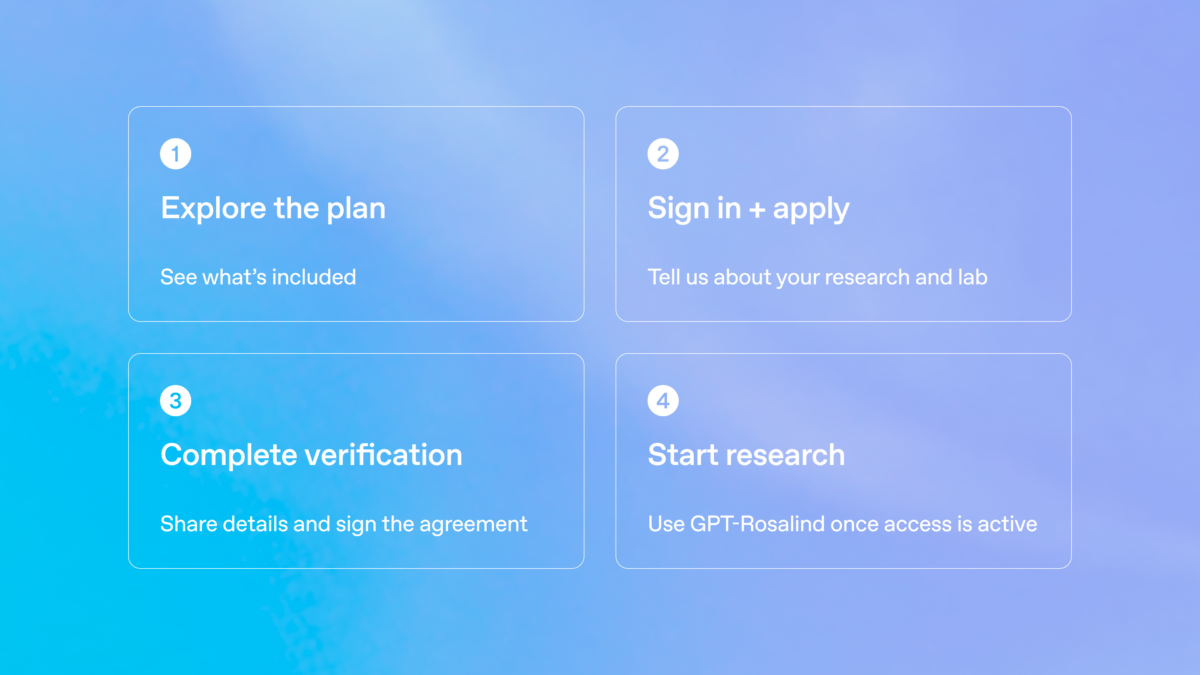
OpenAI sets out the route a lab takes to apply. It publishes no figure for how long approval takes. Image: OpenAI
The plan is “currently available to academic labs at U.S. universities”, and OpenAI says plainly that “API access is not included at this time”. A lab at a university that already holds an OpenAI Enterprise agreement applies through that agreement rather than directly.
The seats are free and the model stays gated
OpenAI describes GPT-Rosalind on its own product page as “a purpose-built model for life sciences research, now with expanded access for eligible organizations”, reached through a tool it calls Rosalind Workbench. The approval sits on top of the free seats rather than coming with them.
What that approval asks of a lab, and how long it takes, is not published. Neither is the number of labs approved so far, nor a date for API access, nor anything about availability outside the US.

Drug and protein design is the first research area OpenAI lists for the plan. Image: OpenAI
It replaces a metered product, up to a point
GPT-Rosalind became generally available through the trusted-access programme on 8 September at $5 per million input tokens, $0.50 per million cached input tokens and $25 per million output tokens, with billing starting on 5 October, according to OpenAI's API changelog. A lab on the academic plan pays none of that and also cannot reach the model programmatically, which is the trade the plan makes.
OpenAI says research data shared through the plan “is not used to train our models by default”, wording that leaves the non-default case unstated. It is the same shape of arrangement as the invitation-only legal model it opened to selected firms in September.
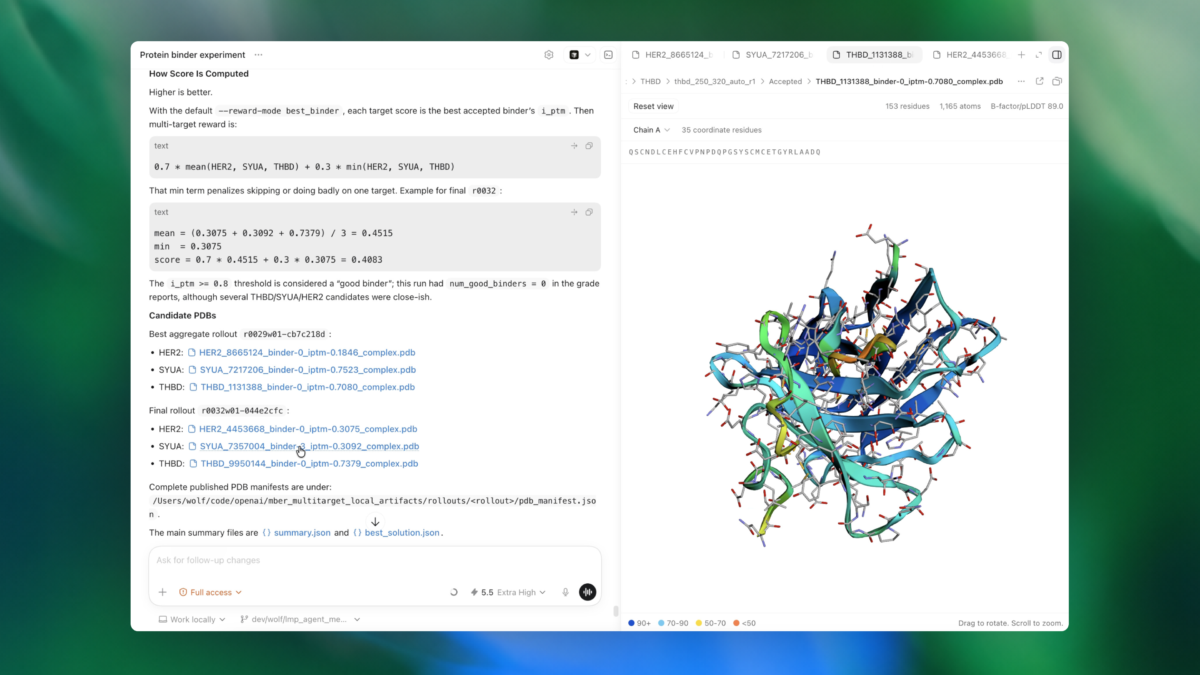
OpenAI's product page for the model, which the free seats do not automatically reach. Image: OpenAI
OpenAI publishes its own comparison with the mainline model
On the announcement page OpenAI sets GPT-Rosalind against what it calls Mainline Astra on a question about designing antiviral therapeutics. Rosalind “provides a candidate comparison matrix, a modeling plan, and paired study plans”, while the mainline model “withholds the actionable parts of the request” and gives “only a limited safe alternative”.
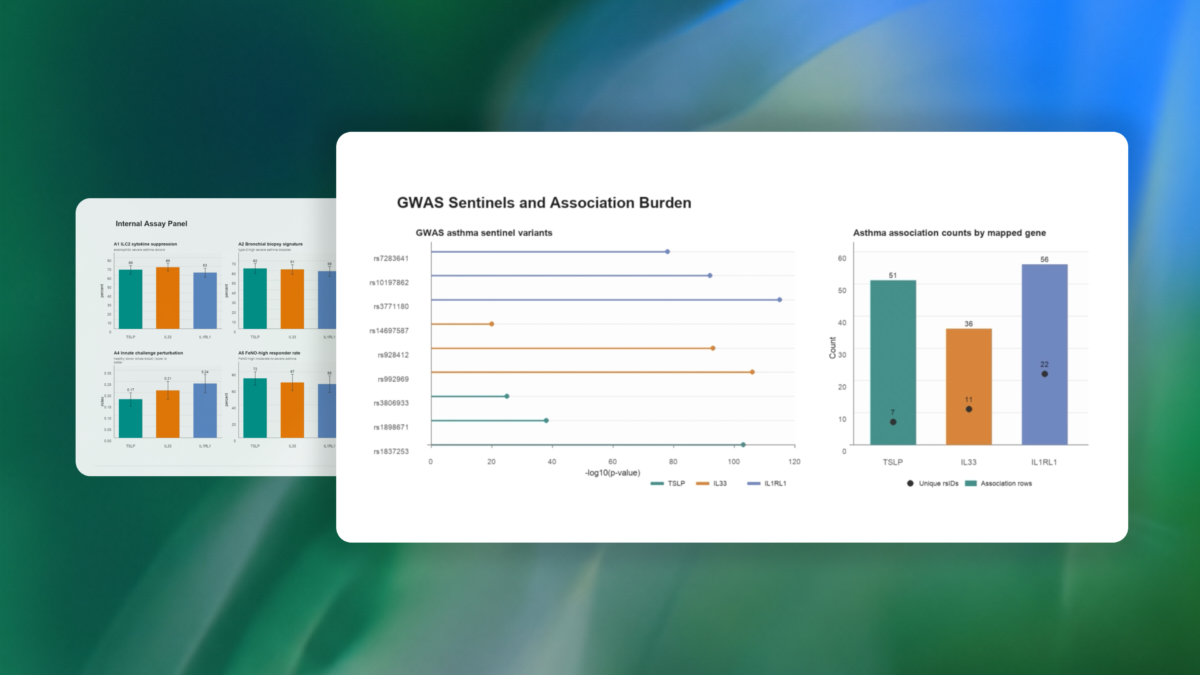
The model is reached through what OpenAI calls Rosalind Workbench. Image: OpenAI
OpenAI attaches its own caveat to that. The assessments “address textual fulfillment of requested deliverables” and “do not verify scientific correctness, feasibility, or whether a method works”, so the comparison is about what each model was willing to write rather than whether either was right.
Anthropic took a similar route in September, when it loosened Claude's biology safeguards for vetted teams and removed them altogether for some projects. What OpenAI has not said is what a lab pays once the 12 months are up.

