
OpenAI's Astra for Law searches 230 million legal URLs, but only for invited firms

OpenAI introduced Astra for Law on September 17, taking GPT-6 Astra and wrapping it in settings, tools and context built for legal work. It gets its own entry in the ChatGPT model picker and its own name in the API, and almost nobody can use it yet.
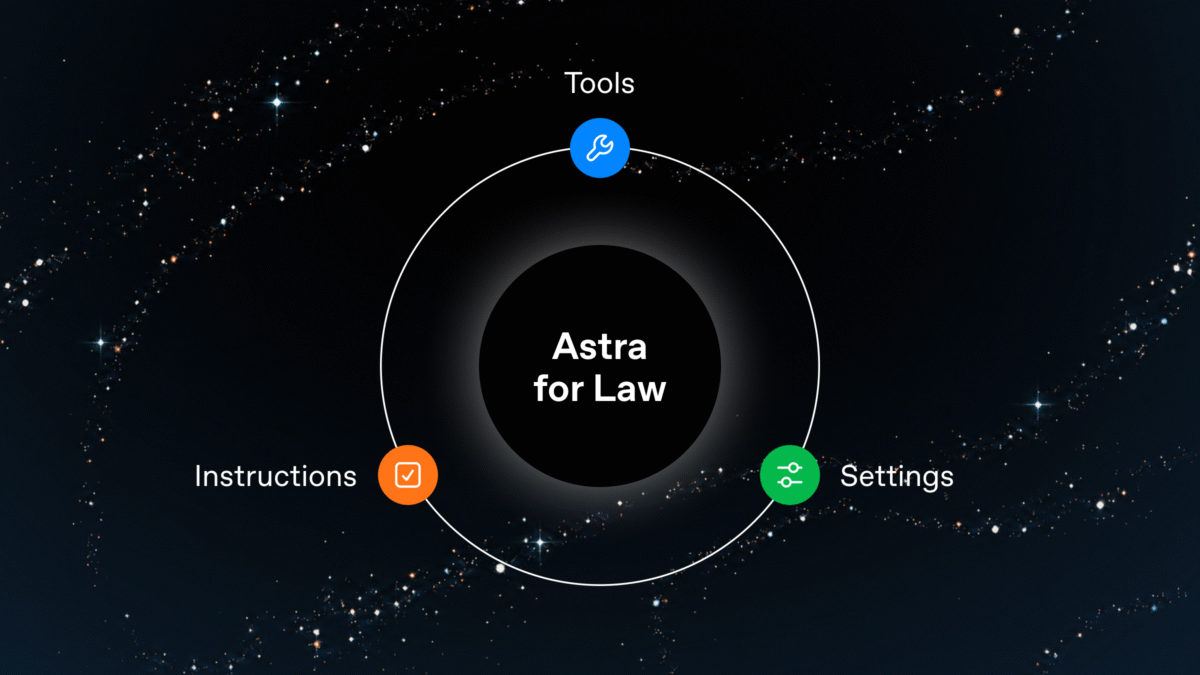
OpenAI describes Astra for Law as GPT-6 Astra wrapped in tools, instructions and settings built for legal work. Image: OpenAI
OpenAI says the configuration "will be initially offered to selected law firms through Trusted Access in ChatGPT and Codex", and is "coming soon to the API". It appears in the picker as "GPT-6 Astra Law" and in the API as gpt-6-astra-law.
The legal search index is what is actually new
The part that separates Astra for Law from the ordinary model is a legal search index the model can call as a tool. OpenAI says it covers US case law, statutes, regulations, court rules and administrative decisions across "more than 230 million URLs, with sources added daily".
Work with the Free Law Project, the nonprofit behind CourtListener, brings in a case-law collection covering more than 99.9% of published US precedential case law. OpenAI says the index complements the licensed content and specialist products firms already buy from providers such as Thomson Reuters.
The benchmark numbers are OpenAI's own run
OpenAI tested the setup on 200 US legal research questions from the private validation set of Vals AI's Legal Research Bench. At the highest reasoning effort for both systems, Astra for Law passed the evaluation's overall correctness check on 54.0% of questions against 38.7% for GPT-6 Astra using web search alone, which OpenAI calls a 40% relative improvement.
On case-law questions it found 24% more reference cases, and retrieved up to 54% more relevant passages from the correct court opinions at matched reasoning effort. The benchmark belongs to a third party, but the run does not: OpenAI tested its own product against its own baseline and published the result itself. Treat it as a vendor figure until somebody outside the company repeats it.
OpenAI names Claude Fable 5.1 in the post
The announcement also carries two side-by-side memos, a litigation prompt and a transactional one, with Anthropic's newest model answering alongside Astra for Law. OpenAI's own summary of them reads: "Given the same prompt, Astra for Law returned two closely matching precedents; in the litigation example, Claude Fable 5.1 returned a holding that had been reversed on appeal, while in the transactional example it reported finding no such case."
That is OpenAI's account of one prompt pair it picked and published, not a scored result against Fable on any benchmark. Anthropic released Claude Fable 5.1 on September 1, and its newsroom carries no response to the comparison.
What firms get, and what is still missing
Eligible firms in the Trusted Access Program get Zero Data Retention on the API, and ChatGPT Enterprise usage excluded from human review by default. OpenAI is working with Latham & Watkins on information permissions, ethical walls, client instructions and firm oversight, and with Wachtell, Lipton, Rosen & Katz on a separate research collaboration.
Alongside the model, OpenAI launched 26 partner-built plugins connecting ChatGPT to tools firms already run, including Relativity, Clio, iManage, Intapp and DeepJudge. Thomson Reuters is bringing HighQ matter context in and previewing a CoCounsel Legal connector, and nine community plugins from LegalQuants, LECG and Skills.law carry 47 custom skills between them. It is the same plugin system custom GPTs are being retired into.
Harvey and Legora will be able to build on the configuration through the API once it arrives. The same post made ChatGPT for Word generally available.
There is no published price, no API date and no coverage of any legal system outside the United States. For now, Astra for Law is a US-only product that most lawyers can read about and not switch on.

