
Google put WebGPU into XR Blocks, and its own spatial UI cannot use it yet
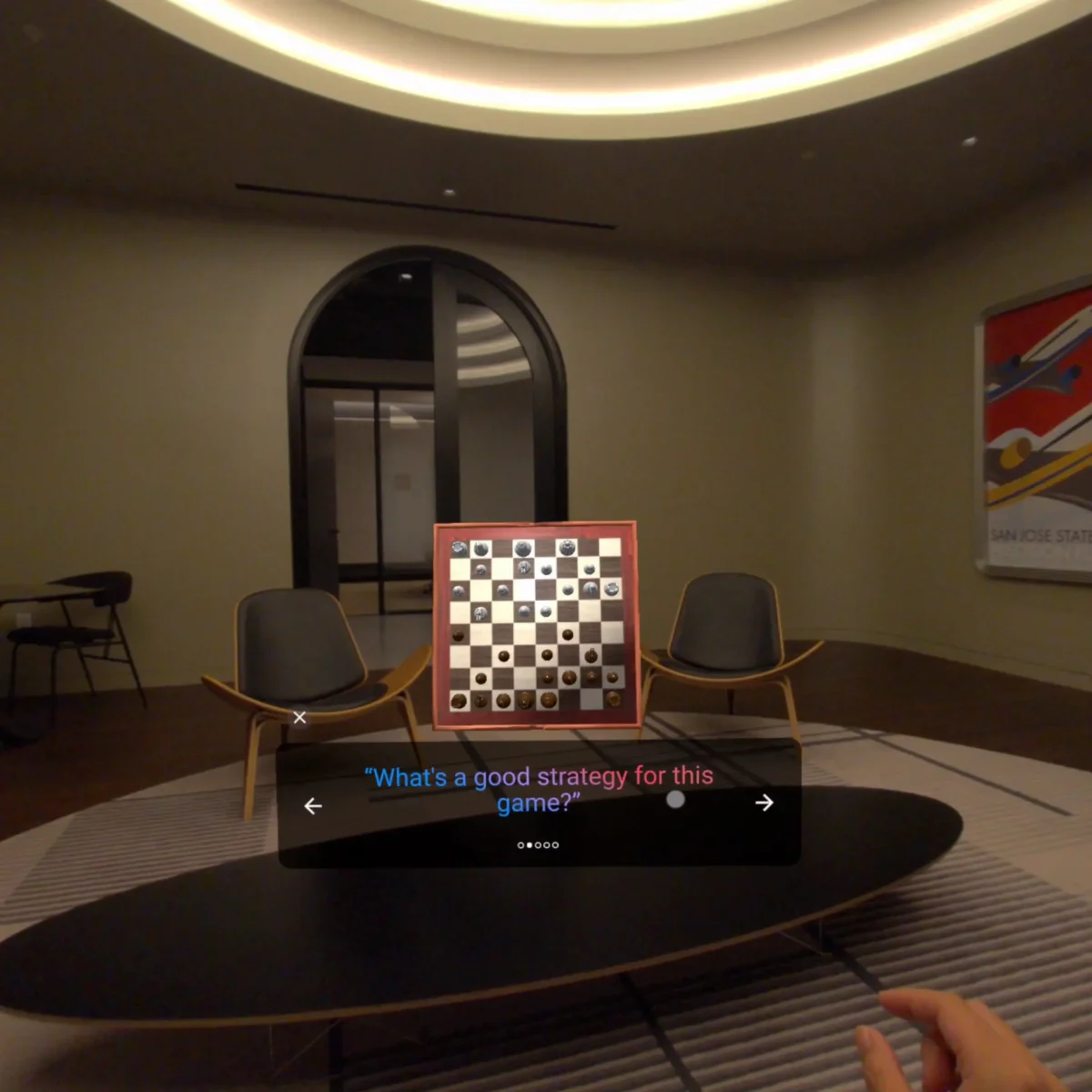
Google's XR Blocks reached 0.22.0 on October 10, and the headline item is that three.js WebGPURenderer now runs in the library's desktop simulator. In the same notes Google writes that "the spatial UI is not yet supported on WebGPURenderer", calling this "initial simulator support, not end-to-end coverage". The panels, cards and text fields that make up an XR Blocks interface stay on the old renderer for now.
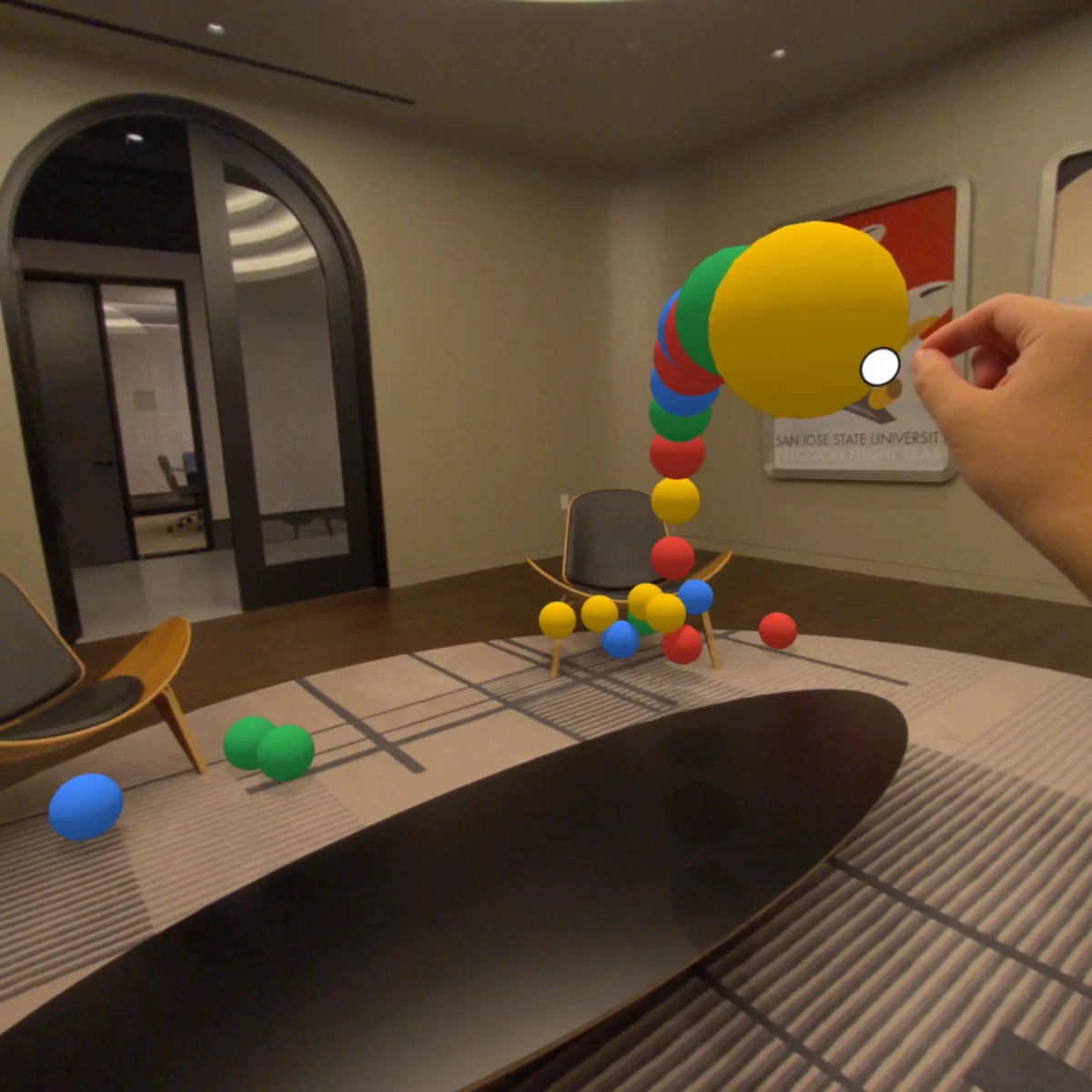
A capture from the XR Blocks ballpit sample, published in Google's own repository, with virtual balls dropping into a real room and a pinching hand at the top of the stream. Image: Google
XR Blocks is Google's WebXR and AI prototyping library, so what it ships is a readable guide to what Google expects a headset or glasses browser to do. The v0.22.0 release is tagged 00:26:54 UTC on October 10 and reached npm at 00:46:25 UTC. The previous publish was 0.21.1 on August 25, so this is the first release in more than six weeks. Both records were read at 21:37 UTC on October 10, when the repository showed 484 stars.
Google puts a Gemma 4 assistant on the device itself
The release adds an on-device Gemma 4 assistant with "spatial scene context and markdown replies", on-device super-resolution, and an EfficientSAM circle-to-search demo. The objects3d pipeline has moved from SlimSAM to EfficientSAM-Ti on LiteRT. There are also offline spatial captions and translation, interactive Teachable Machines training, photo-to-3D reconstruction and "world-aligned metric depth from a single camera photo".
None of that comes with a number. Google publishes no frame rate, no latency figure, no accuracy score and no list of headsets or glasses that can actually run the demos, so "on-device" is the release notes' word and not a measurement. Gemma 4 and the Gemini models named here are existing releases, not new ones.
The default Gemini model moved, and so did three.js
Gemini calls across the SDK and every example have migrated from generateContent to the Interactions API, and the default Flash model is now gemini-3.8-flash. three.js is updated to r186, the build has moved from Rollup to Rolldown, linting from ESLint to Oxlint with TypeScript 7, and eight npm Dependabot security alerts are resolved.
The spatial UI itself gains scroll views, editable text fields and cards that resize from their edge corners, with icon shapes merged into one mesh per fill colour to cut draw calls. The simulator gains day and night lighting and a standalone Chrome profiler with HTML reports. Roomcraft, the library's room-building sample, gains cross-device collaboration that preserves reconnect state and incoming voice across sessions.
Two of the new samples show where Google is aiming. One lets a user "summon AI-generated objects onto the surfaces around you", which puts a generative model and a scene-understanding pass in the same loop. The other adds ArUco tag tracking, the printed black-and-white markers used in robotics labs, bound to the objects3d pipeline with self-resolving device camera profiles. The simulator gains an instructions panel for whichever mode it is in, and hands-mode navigation now runs on Left Shift to move and a right-click to look around.
This is a tagged library release rather than a Google product announcement, and there is no blog post behind it. Two other XR developer releases landed in the same stretch, Meta's Immersive Web SDK reaching 1.0 with gaze-and-pinch input and the second Android XR SDK release candidate. For XR Blocks the WebGPU path is the one to watch, and by Google's own account the spatial UI cannot draw on it yet.

