
The Dutch government will not push for camera glasses rules, or study a public ban

The Dutch government told parliament on September 24 that it will not press in the EU for binding design requirements on camera glasses, and that it will not start its own study into banning them in public spaces. The same answers carry the Dutch numbers: the data protection authority, the Autoriteit Persoonsgegevens, has received six signals and one complaint about camera glasses, and the Public Prosecution Service holds no figures on criminal reports at all.
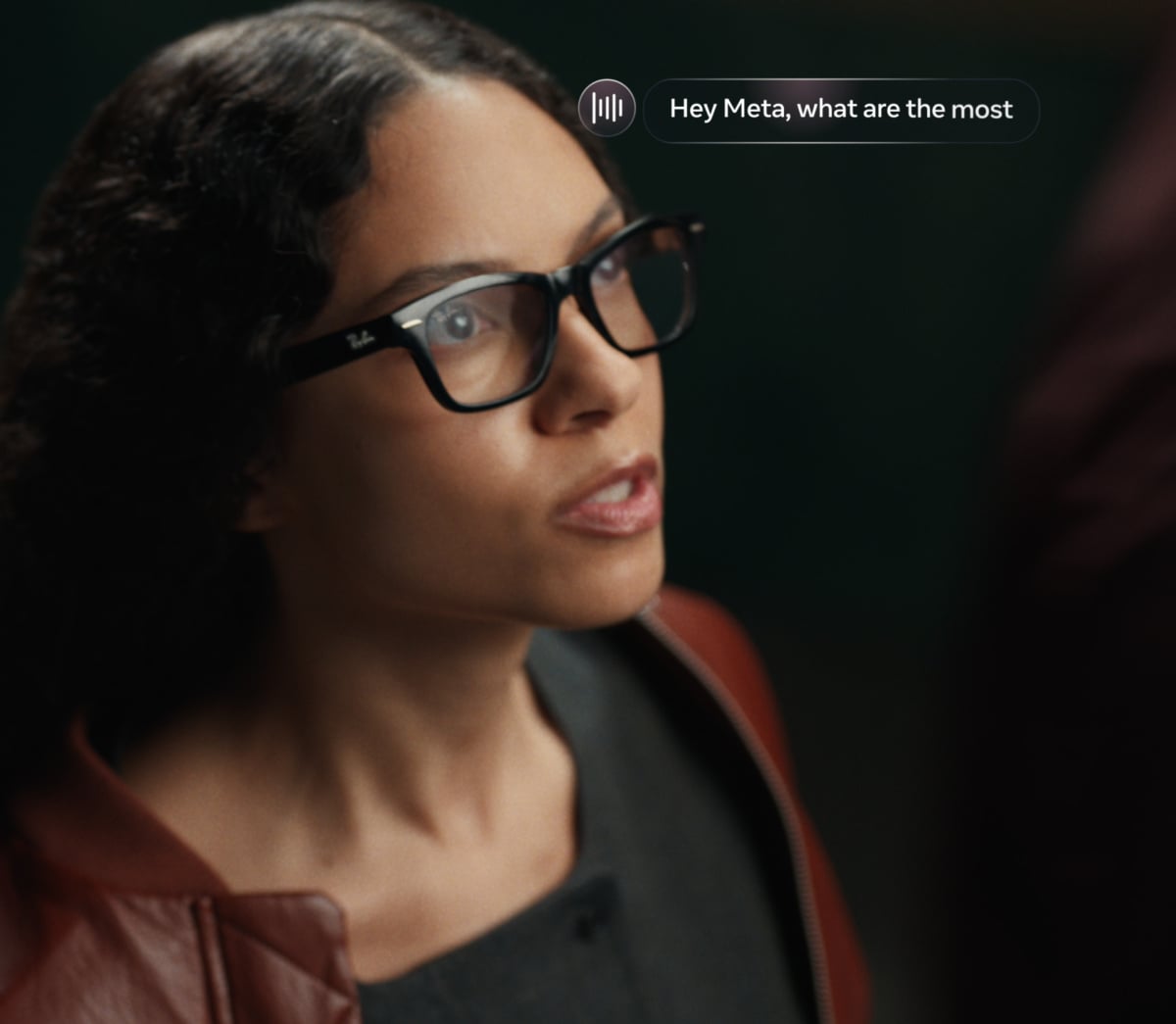
A woman wearing black Ray-Ban Meta frames in a dark room, with a 'Hey Meta, what are the most' voice prompt floating beside her. Image: Meta
The replies come from State Secretary Van Bruggen of Justice and Security and the State Secretary for Economic Affairs and Climate, answering 18 questions that the CDA members Zwinkels and Straatman submitted on August 6 about camera glasses, privacy and public safety.
The government says existing law is enough for now
Asked whether it was willing to argue in Europe for binding design requirements, including a clear recording signal that is both visual and audible and cannot be circumvented, the government replied: "Nee, op dit moment niet." No, not at this time. It considers it desirable to wait for the findings of the European Data Protection Board's study into smart glasses, which it says is due later this year.
The same reasoning covers a ban. A partial or full prohibition on wearing camera glasses in public is described as a far-reaching measure that is only available if no less onerous alternatives exist, and the government states plainly that "het gebruik van de camerabrillen is niet intrinsiek onwenselijk", the use of camera glasses is not intrinsically undesirable. What counts, it says, is acting against unwanted use, and the current legal framework already offers ways to do that. It will wait for the EDPB before starting a study of its own.
On facial recognition the answer is firmer. Without a specific legal basis and compliance with the GDPR and the AI Act, identifying random bystanders in public by private users is not permitted, and the government sees no need for an additional European call to action because the existing EU and national rules already cover it.
Six signals and one complaint
"De AP heeft tot op heden zes signalen en één klacht binnengekregen over camerabrillen," the government writes: the AP has so far received six signals and one complaint about camera glasses. The Public Prosecution Service has no figures on reports made to it.
The picture the government gives of the regulator is busier than those numbers suggest. The AP has said it is concerned and understands the public disquiet, it currently has a number of complaints about camera glasses in handling, and it is working with other European privacy regulators on camera glasses files. More clarity is expected this autumn. Because Meta's EU establishment sits in Ireland, the Irish regulator is the lead supervisory authority, and whether the AP opens an investigation of its own is its call as an independent body.
The government does accept the premise behind the design question. It writes that for many people it is not obvious that a light on a pair of glasses means filming is happening, that the light can be missed in busy or brightly lit surroundings, and that visual impairments, colour perception including colour blindness, and viewing angle all play a part.
Where the rules already bite
Venue operators already have the powers they need, the government says. Organisers and managers generally have enough legal room to keep camera glasses out or limit their use through house rules, contract terms and access policy, provided those rules are knowable, non-discriminatory and proportionate. Someone who refuses to leave can end up prosecuted for lokaalvredebreuk under article 138 of the Dutch Criminal Code. Schools and care institutions, the government adds, can justify a far-reaching ban given their duty of care, and covert filming in changing rooms and toilets is already a criminal offence. No new national guideline is thought necessary.
Germany is the comparison the questions raised. The German prohibition covers the supply and possession of telecommunications equipment shaped like an everyday object and suitable for covertly recording conversations or images, and whether camera glasses fall under it is, in the Dutch government's words, not yet a settled matter. The Netherlands has no equivalent ban.
Elsewhere the action has been on individual cases rather than rules. Paris prosecutors opened a criminal investigation into smart glasses used to film women in September, and Western Australia banned smart glasses in every public school from October 12. The Dutch position, for now, is that existing law is enough, and that the next move belongs to Brussels.

