
Anthropic's 950 Claude agents found an enzyme system in 21 hours, and nobody knows what it does
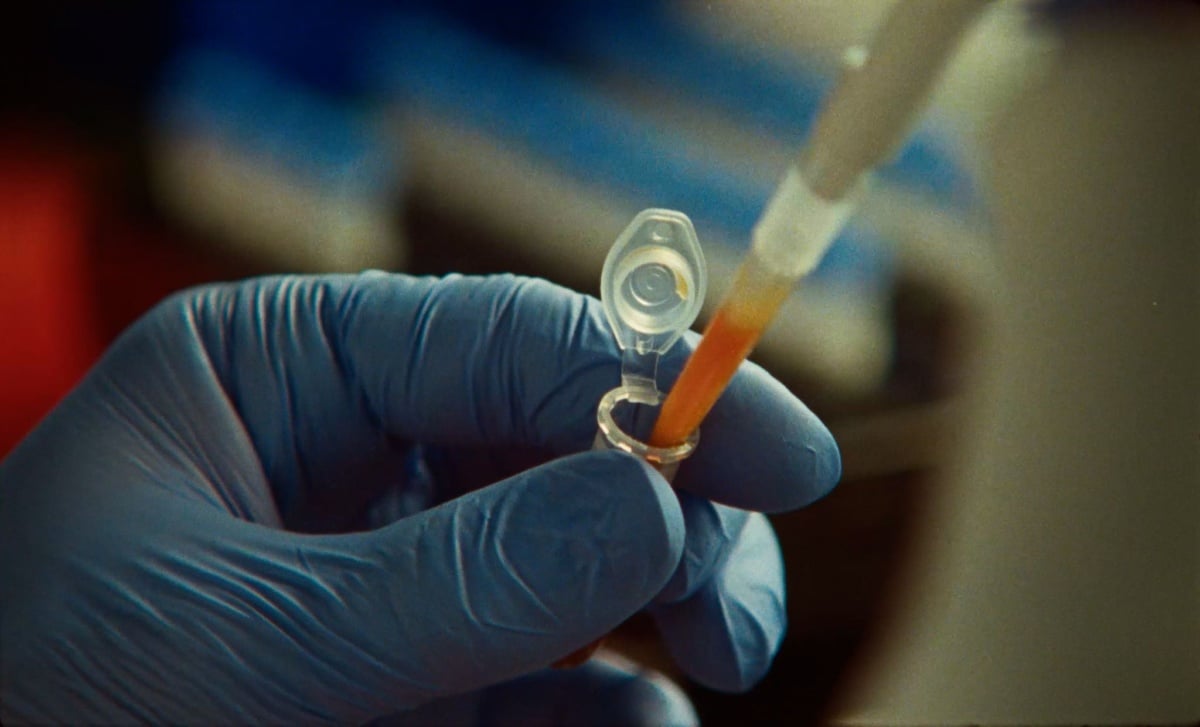
Anthropic says roughly 950 Claude agents, running for 21 hours and burning 210 million tokens, turned up a previously uncharacterised enzyme system in bacteriophage DNA, and the company does not know what it does. Lucas Harrington, who did his PhD in Jennifer Doudna's lab and started Mammoth Biosciences, replied on X that this kind of genome-neighbourhood mining "has been used to discover new biological systems for decades".
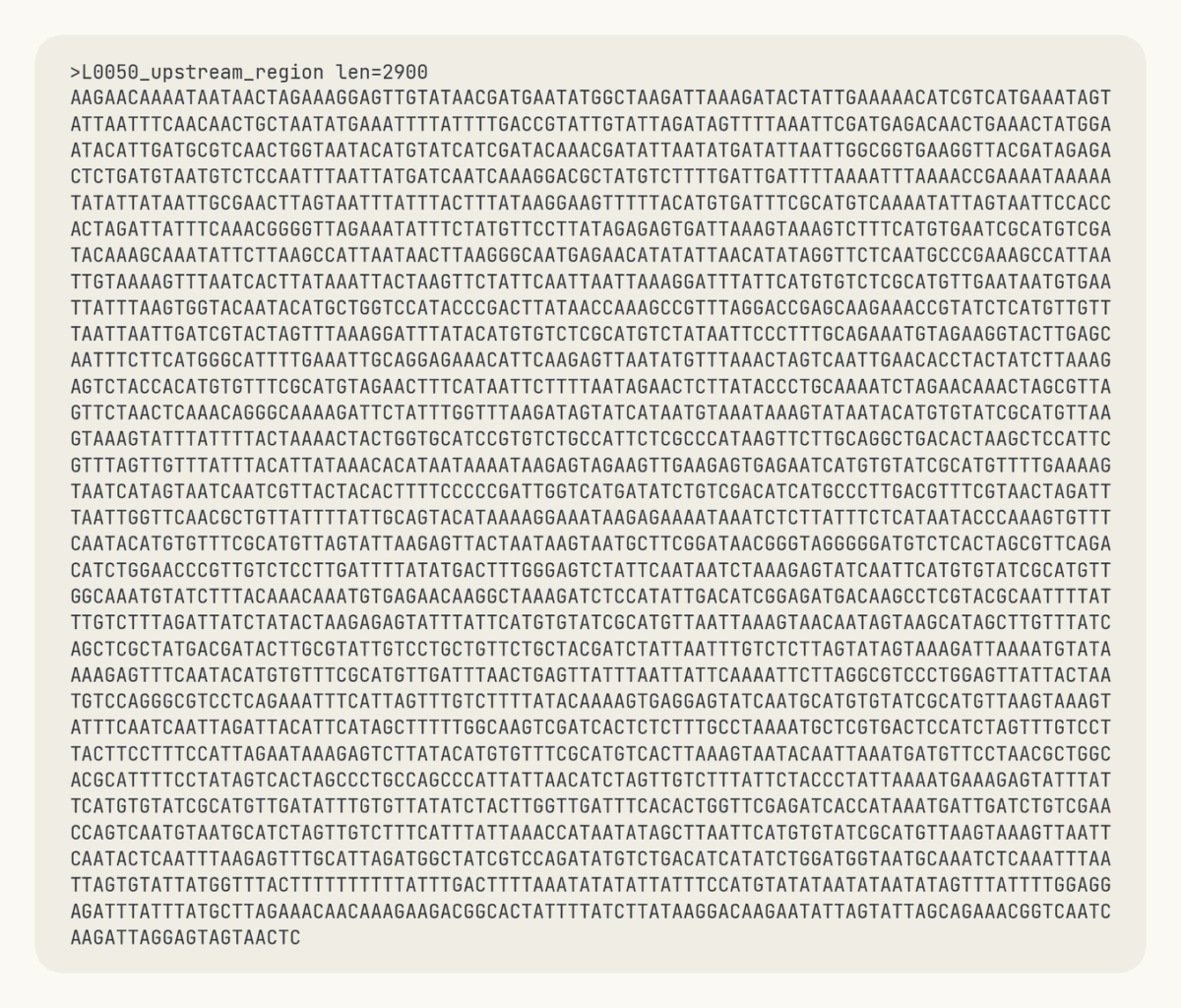
The raw sequence readout an agent was working through when it flagged the repeat array. Image: Anthropic
The write-up, published on September 23, names the system ART, for array-associated reverse transcriptases. It has three parts: a reverse transcriptase gene, a neighbouring accessory protein of unknown function, and a long array of evenly spaced DNA repeats that resembles a CRISPR array.
Anthropic narrowed 200,000 sequences down to one lab test
The agents gathered more than 200,000 reverse transcriptases from public sequence databases, picked out 3,500 new candidate systems and analysed the 20 most compelling to produce human-readable reports, Anthropic says. Most candidates are eliminated when Claude re-examines the evidence, and a survey may end with a single candidate worth testing in the lab, or with none.
Anthropic puts the same analysis at "weeks to months of work" for an expert scientist. It also says the reverse transcriptase itself had been identified in earlier studies, and claims only that Claude "appears to be the first to notice the system's defining features".
The first bench result is that the repeat array is also expressed as a set of distinct short RNAs. That is as far as the biology goes: "Our work to understand the primary function of ARTs is ongoing," the post says.
A CRISPR researcher says the hard part has not been done
Harrington's objection is not that the find is wrong. People have been finding reverse transcriptases beside CRISPR arrays since 2008, he writes, mature tools and published pipelines now do this kind of mining, and "there are papers that discover and experimentally validate dozens of new systems using this approach in a single study". Doing it in phage genomes is nothing new either.
"Finding a weird cluster of genes and repeats is often the easy part," he writes. "The hard part, and where the real discoveries come from, is figuring out what the system actually does."
On the CRISPR comparison he is blunt. Anthropic has shown the repeat array produces RNAs, he writes, "but not what those RNAs do, what the RT does with them, or whether the system has any of the programmable properties that make the CRISPR comparison justified".
Feng Zhang says the pattern merits further investigation
Anthropic's post quotes Feng Zhang of MIT and the Broad Institute, who read the pre-print: "This is an exciting example of how AI agents can contribute to biological discovery. The identification of RNA-repeat arrays associated with reverse transcriptases is genuinely intriguing and merits further investigation." The pre-print has not been peer reviewed.
The campaign ran in Claude Science and Claude Code, which Anthropic calls "the same tools available to any scientist", sometimes with an in-house harness that coordinates many Claude sessions in parallel. Human involvement "was limited to the initial prompt and the lab work", the company says, and the lab work stayed at biosafety levels 1 and 2 with no human pathogens.
Anthropic has been pushing Claude at research all year. It loosened Claude's biology safeguards for vetted research teams earlier in September, and says Claude led 26% of its own AI research work in August.
Harrington says he is rooting for frontier labs to get into biological discovery and would rather they set the bar high now. "Announcing these very early, incremental findings with the framing of a major discovery doesn't help," he writes.

