
An Austrian court threw out a school expulsion over Ray-Ban Meta glasses worn in class

Austria's Federal Administrative Court has overturned a Vienna education authority's decision to exclude a pupil from school over the Ray-Ban Meta glasses he wore in class, finding that the unease of teachers and classmates was not enough on its own. The judgment in case W224 2346501-1 was decided on 3 August 2026 and published in Austria's legal information system three days later, under ECLI:AT:BVWG:2026:W224.2346501.1.01.
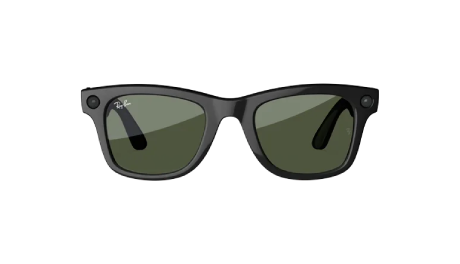
Ray-Ban Meta smart glasses in the Wayfarer style. The judgment names the model as a Wayfarer Gen 2 Custom. Image: Mixed News media library
The court names the hardware. The pupil "wore a 'smart glasses' of the brand or model 'Ray-Ban Meta Wayfarer Gen 2 Custom'" with an associated wristband the judgment calls the "Meta Neutral Band", in its own spelling, and repeatedly did not comply with teachers' requests to stop using them. Everything in the published text is anonymised, down to the school. The judgment is written in German, and the wording quoted here is translated.
The measures escalated from March to the exclusion in June
By decision of 13 March 2026 he was suspended from 16 to 23 March. A second decision of 27 March covered 27 March to 24 April, a disciplinary conference was held on 24 April, and a further suspension ran from 28 May to 12 June. In June the Bildungsdirektion für Wien, the city's education authority, excluded him from the school by formal decision, under paragraphs 43, 47 and 49 of Austria's School Education Act.
The judgment also records an attention disorder, and a medical certificate confirming that the pupil needed to wear that particular pair of smart glasses at school.
The court wanted incidents, not unease
Teachers and classmates felt unsettled, and worried they were being filmed or recorded. The court takes that seriously without treating it as proof: "There is no evidence that recordings of other people were made with the smart glasses, but there are grounds for suspicion," it records, adding that an activity or a recording "need not be recognisable to an outsider", so only a technical expert opinion could settle what the device can do.
It was the authority's findings that failed. The exclusion had been imposed "without establishing concrete incidents of serious misconduct", and without a concrete finding that a lasting danger to physical safety or to morality had been realised. The repeated refusal to take the glasses off did damage trust, the court accepts. "However, mere unease on the part of teachers and classmates does not yet justify an exclusion from school," it holds, and: "What is decisive is not the number of incidents or measures taken, but their severity."
The court left the general question open
The judgment states that it did not examine whether wearing smart glasses in class could ever meet the statutory conditions for an exclusion. It decided this pupil's case on what the authority had established, and it did not admit an ordinary appeal, the ordentliche Revision. The court published its own summary of the judgment in its selected-decisions series.
Austria is the third European jurisdiction this year where camera glasses have landed in front of officials, and the other two produced proposals rather than rulings. Norway has proposed a temporary ban on AI glasses, and two Dutch parties have asked their government to push for a European one. Neither is law, and neither is about one pupil.
One detail survives the redactions intact. The court wrote the wristband's name as "Meta Neutral Band". Meta calls it the Neural Band.

