
An unannounced Xreal folding keyboard cleared the FCC, and its exhibits name Aura

Xreal has an FCC grant for a Bluetooth keyboard it has not announced. The authorisation for FCC ID 2BBNY-X7012 was issued on September 29 by the certification body MiCOM Labs, the grant record gives the device description as "XREAL Keyboard", and two of the documents Xreal filed with the application are titled "30.56.0106.00.001 AURA_QSG_20260523" and "AURA KEYBOARD_SAFETY INSTRUCTION & WARRANTY CARD_20260908".
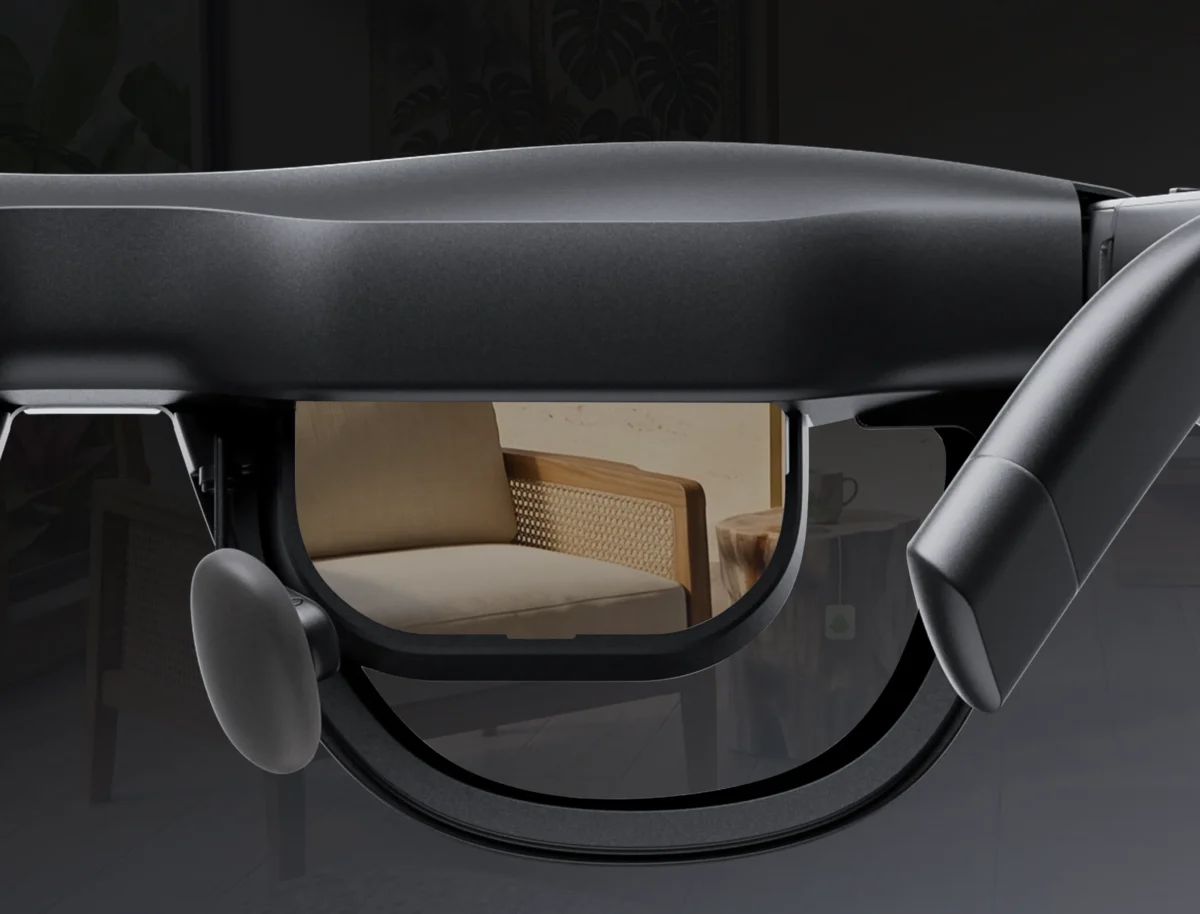
Xreal's render of the Aura glasses, with a cane-backed armchair and a side table showing through the optical see-through lens. Image: Xreal
Aura is the Android XR glasses Xreal is taking deposits on, due in autumn 2026 at no more than $1,500 before tax in the US. Xreal's own Aura page names no keyboard of its own. Under supported external Bluetooth accessories it lists "Keyboards, mice, and game controllers", the same line any Bluetooth host would carry, and otherwise sells a 70 degree optical see-through display, Gemini on Android XR and a Snapdragon-powered compute puck.
A grant is permission to sell a radio
An equipment authorisation says a device's radio complies with the FCC's rules so that it may legally be marketed in the US. It is not an announcement and it does not commit the grantee to shipping anything. There is no price here, no release date, no specification beyond what the application carries, and no statement from Xreal about any of it.
What the record does set out is narrow and technical. The equipment class is DTS, a digital transmission system under FCC rule part 15C. The frequency range is 2402 to 2480 MHz, the Bluetooth band, with a maximum conducted output power of 0.001W. Application date and final action date are both September 29. Testing was carried out by Shenzhen Tongzhou Testing, and the responsible party is listed at Xreal's Sunnyvale address.
The lab photos are public, and they show a tri-fold
Xreal requested long-term confidentiality for the block diagram, the schematics and the operational description, all three of which appear on the mirror as metadata only. The external photographs are not sealed. Over five pages they show a silver metal slab with XREAL printed on the lid, hinged in two places, that opens out into a full QWERTY keyboard: a function row with media, brightness and volume keys, a Fn key, a four-square launcher key, arrow keys bottom right and a USB-C port on one edge. Laid against the lab's rulers it looks to be around 30cm wide unfolded, although that is a reading taken off a photograph rather than a published measurement.
Folding keyboards are a familiar answer to a familiar problem. Glasses that run Android apps need text input from somewhere, and hand tracking and voice are slow for anything longer than a search box. Xreal has shipped accessories for its glasses before, including the $299 AR glasses it launched in July, so a first-party keyboard would not be out of character. None of that is in the filing.
What the record does not say
The grant never states that the keyboard ships with Aura, that it is sold separately, or that it exists in any product plan at all. The single thread tying the two together is how Xreal named the files it submitted, and the quick-start guide among them carries a May 23 date in its title while the safety card carries September 8. A granted device can still be cancelled, delayed or quietly folded into something else, and plenty of FCC IDs never turn into anything a shopper can buy.
This is the second XR filing to surface in a week. Two Samsung devices described as smart glasses cleared the FCC on September 27, with their exhibit photos sealed until 2027. Xreal's are not, which is the only reason anyone can see what the thing looks like.
Aura is still listed for autumn 2026 with a fully refundable $199 priority deposit, the $299 Founder Priority Pass and the $99 launch credit both sold out. Whether a keyboard arrives alongside it, Xreal has not said. What it has done is get the radio signed off.

