
Witcher 3's path-traced hair is RTX 50 only, and Nvidia's 430 FPS claim runs at 6X
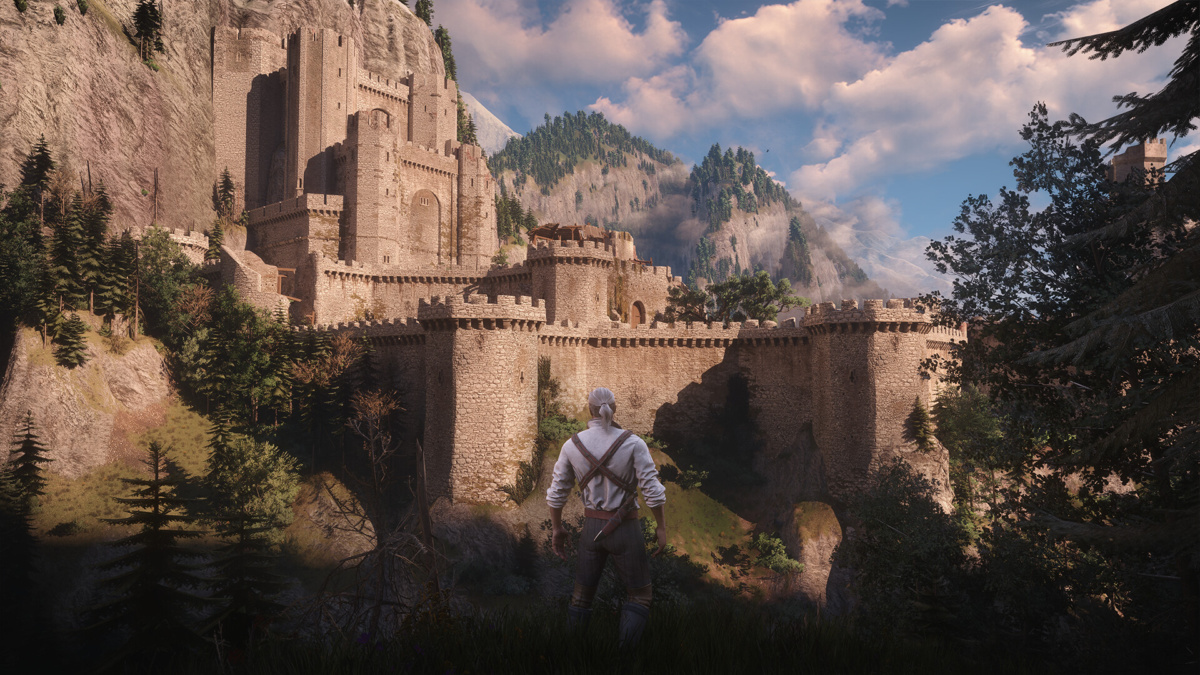
Nvidia says the path-traced hair added to The Witcher 3: Wild Hunt - Remastered runs on GeForce RTX 50 cards and nothing older, and the highest frame rate it has published for the game, up to 430 FPS at 1920x1080, assumes six-times multi frame generation is switched on. Both claims come from Nvidia's post of 29 September by Andrew Burnes, and every figure in it is the company's own.

HairWorks covered Geralt, horses and monsters in the 2015 game. Image: CD Projekt Red Image: CD Projekt Red
The hair technique is Linear-Swept Spheres. Nvidia says its team added LSS path-traced hair rendering for "Geralt and all HairWorks-enhanced NPCs and enemies on GeForce RTX 50 Series GPUs, which introduced support for LSS primitives via their fourth generation Ray Tracing Cores".
Spheres and tubes stand in for tessellated triangles
Nvidia's reasoning is cost. Each strand of hair is built from tessellated triangles, and with so many strands "creating the bounding volume hierarchy (BVH) builds for ray tracing becomes computationally expensive, while memory usage balloons", so LSS uses spheres and tubes instead.
RTX 40 owners get the other half of the path-tracing work. Nvidia says Shader Execution Reorder has been added for GeForce RTX 40 and 50 Series GPUs and "notably improves performance when path tracing", while the LSS hair stays on the newer generation.
What is being rebuilt is a decade old. HairWorks put "up to 115,000 DirectX 11, tessellated hair strands" on characters in the 2015 game, by Nvidia's account, reacting to movement and external forces.
Every frame rate here is Nvidia measuring Nvidia
On the Ultra+ path-traced preset and "using DLSS 4.5 6X Multi Frame Generation and Ray Reconstruction", Nvidia quotes up to 385 frames per second on an RTX 5090 and up to 245 FPS on an RTX 5080. It attaches no resolution to those two numbers. At 2560x1440 it claims up to 420 FPS on the 5090, 320 on the 5080 and 269 on the 5070 Ti; at 1920x1080, up to 430 FPS, with the 5080 above 410, the 5070 Ti at 380, the 5070 at 320 and the 5060 Ti at 235.
None of those are rendering rates. At a 6X multiplier most of the frames reaching the monitor are generated rather than drawn, and upscaling is running underneath, so the figures describe the whole pipeline with Nvidia's own settings dialled in. Nvidia says Dynamic Multi Frame Generation allows "up to 6X Frame Generation on GeForce RTX 50 Series GPUs", adjusting the multiplier to reach a frame rate the player picks or a V-SYNC cap.
The remaster drops the hybrid renderer
The 2022 Next-Gen Update was built on "a hybrid DirectX 11-DirectX 12 renderer", and Nvidia says the remaster is "exclusively DirectX 12". Turning on path tracing together with the Ultra+ preset also activates DLSS Ray Reconstruction by itself on GeForce RTX cards, which is Nvidia's stated behaviour rather than a toggle the player sets.
Nvidia says the same upgrades will carry over to The Witcher 3: Wild Hunt - Songs of the Past, an expansion it dates to 2027. The remaster reached players as an update to the same Steam entry the game has had since 2015, which is why it arrived carrying a Deck Verified badge and a 2018 Proton issue, and CD Projekt Red's own launch guidance on the AMD side named a Radeon driver that had not shipped.
What no figure here describes is the game running without upscaling and generated frames. Nvidia publishes no native-resolution number for the Ultra+ path-traced preset, and the hair claim it leads with applies to one generation of cards.


I have a 3090 Ti Suprim, telling me I cant take advantage of tech built in the last 3 years?? Definitely not playing it or paying for it then. 🤷♂️