
Walkabout Mini Golf’s studio peaked at 36 people, and is now down to 17

Mighty Coconut’s team on Walkabout Mini Golf grew from one person to 36 at its peak and now stands at 17, and Lucas Martell, the game’s creator, says revenue has been falling while costs kept rising. “The team grew from just me at the very beginning, to 3, to 8, then 12, and eventually to our biggest point where we had 36 people all on Walkabout,” he writes in a follow-up post published on September 30.
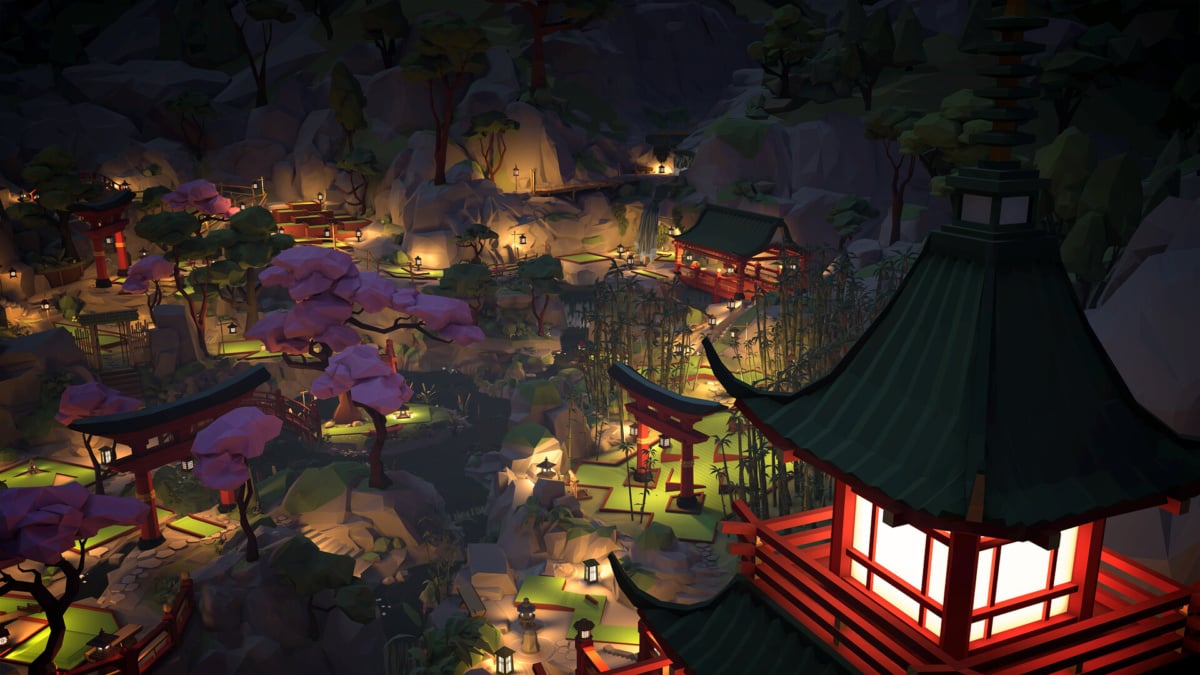
Mighty Coconut’s own store screenshot of a Walkabout Mini Golf course. Image: Mighty Coconut
“But since that peak, revenue has gone down while costs have continued to go up, and we’ve been spending more than we’ve been making,” Martell writes. It follows the studio’s second round of job cuts this year, announced two days earlier.
The game itself is not at risk, he says. “Walkabout is not in danger of shutting down. We are still one of the better selling VR games. But VR is in a very tough place right now.”
Martell blames hardware prices and free-to-play
People are still buying, Martell says, “but at the same time, not as many people are buying the game and the DLCs as they used to”. He puts that down to conditions across the whole of VR rather than to anything specific to Walkabout: “expensive hardware prices, the Quest ecosystem has tilted heavily towards free to play for younger gamers, and all of the big tentpole games from other studios have been cancelled”.
He does not name the cancelled games. “That means fewer new players are coming into VR, and there’s nothing on the immediate horizon that looks to change that,” he writes, and he is only partly hopeful about what comes next: the glasses form factor many companies are focusing on is “a step in the right direction”, but “this first iteration will be too expensive for a mass-market product”.
Martell gives no revenue figures and no unit numbers, so the size of the drop is his description of it rather than a measurement. The studio had downsized once before, in January 2026.
Charging more is off the table
Fans have suggested raising prices, and Martell rules it out on the evidence of the studio’s own past rises. “We’ve seen past price increases bring in more revenue per purchase, but also reduce the number of people purchasing to the point where it had little or even a negative effect,” he writes.
A die-hard fan base regularly offers to pay more, he says, but it is “a relatively small percentage of our players”, and it is an offer he does not want to take: “I don’t want us to become a niche game that caters only to its most loyal fans and becomes too expensive to attract a wide audience.” He likens that approach to free-to-play mobile apps, which he says work by “leaning very hard on that 1% of players”.
The price is going the other way for now. Walkabout Mini Golf VR’s Steam listing in the US showed $14.99, down 40% from $24.99, when read at 12:16 UTC on October 2, as part of the Steam Autumn Sale that runs to October 8. The Steam version has been out since July 15, 2021.
The next few courses are nearly done, then scope comes down
A full slate of courses is still in the pipeline and work has begun on more games, Martell says, but the courses “are going to have to be more focused so that we can polish them properly with the team we have”. The next few releases will still be quite large, because the studio works so far ahead that those courses are nearly finished.
Everything after those is sized to what, in his words, “this smaller team of 17 people” can complete. He describes nothing as cancelled, and the 10 departures announced on September 28 run “over the next several months” rather than immediately.
Martell’s ask of the community is not money. Anyone looking for a way to help should keep playing, leave reviews and welcome new players in, he writes, calling that “the long term approach that will keep things sustainable for years to come”. By his own account the game went “from being a very small game to being a system seller” across six years, and an interview with its creator in 2022 caught the studio on the way up.

