
Rust has swapped Unity's built-in renderer for its own, with a month to switch back
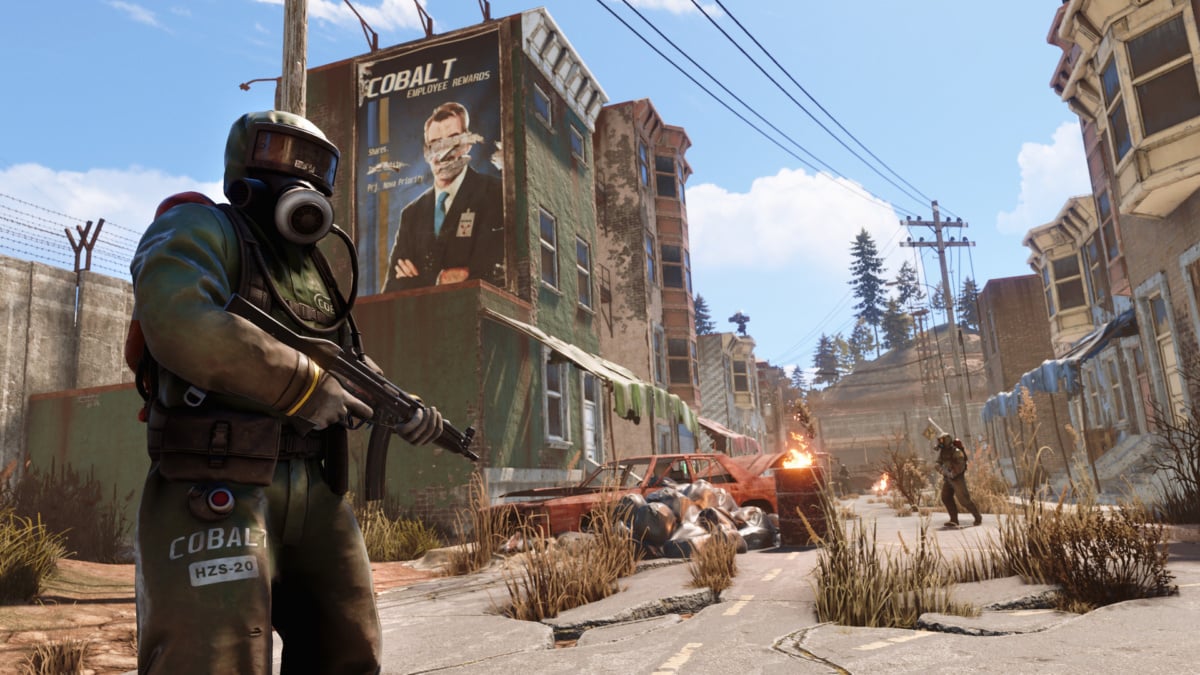
Facepunch Studios has taken Rust off Unity's Built-in Render Pipeline and put it on a renderer the studio wrote itself, and for one month players can switch back. Facepunch's Livestock devblog, dated 01 October 2026, calls the replacement the Rust Render Pipeline and describes it as "a custom Scriptable Render Pipeline made specifically for Rust by our graphics team".
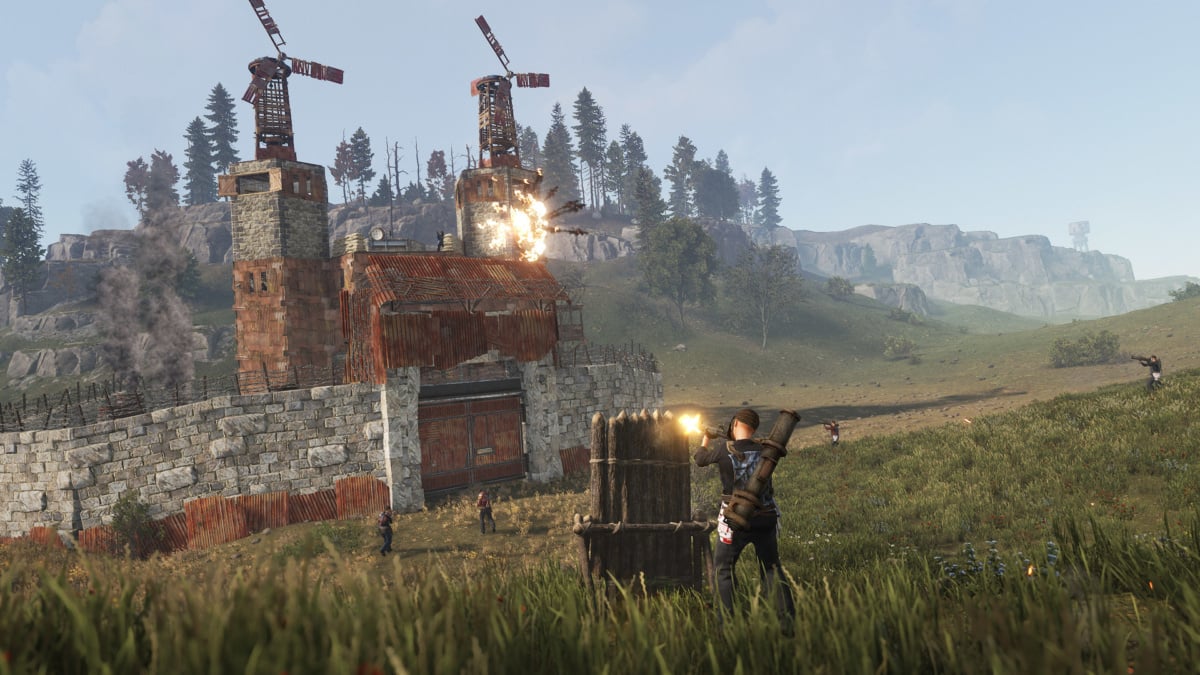
A stone and sheet metal base under fire on a hillside, with two windmills on its towers. Image: Facepunch Studios
The studio is blunt about why the old one had to go. "Because Rust has been around for so long, we were still using Unity's old Built-in Render Pipeline, which has worked for the most part but has been very limiting in the optimisations we can apply and the effects we can render," Facepunch writes.
Moving off it was not a tidy job. "This wasn't easy, as we had to remake almost every effect in the game to work with this new pipeline," the studio says, and the stated payoff is control: "This gives us a lot more control over the rendering of Rust as a whole."
None of this is a jump to a newer Unity. A Scriptable Render Pipeline is Unity's own framework for building a renderer in place of the one that ships with the engine, so Rust is still a Unity game that now draws its own frames.
The toggle is there for a month and no longer
Facepunch has put the switch in the game's experimental settings. "The Rust Render Pipeline can be toggled via a setting under the experimental tab so players can switch back and forth between pipelines in case there are any issues initially," the devblog says.
The window is explicit. "This setting is only going to be here for the first month in case anyone encounters graphical or performance issues that we missed while testing. Hopefully, after the next patch, we'll be able to remove this fully and have RRP as the default once we know that no serious issues remain."
Facepunch gives no date for that next patch, and no criteria beyond "no serious issues". The one firm commitment is the direction: RRP becomes the default and the old path goes, once Facepunch is satisfied.
The only performance claim Facepunch makes is a vague one
There is no frame rate figure anywhere in the write-up. "At first, you should see slightly better performance in most areas of the game, as the new pipeline comes with less overhead," the studio says, and that is the whole of it: no benchmark, no hardware, no before and after.
Facepunch frames the gain as a floor rather than a ceiling. "However, this is just the beginning," it writes, saying that once the old pipeline is gone it can optimise further, and that it has "plans for improving the quality of graphics in the game where we weren't previously able to do due to the old pipeline".
The same update puts real numbers on memory instead. Facepunch says it stripped a duplicated hands mesh out of every viewmodel in the game, "removed 133 meshes and saved roughly 100MB of memory in total", and moved the in-game store's artwork to a backend fetch with BlurHash placeholders, worth "-250MB compared to last release build when starting the game" and "~450MB when closing the store menu and letting it unload resources after ~1min".
That sits alongside the hard ceiling Facepunch put on how much NPC work fits into one server frame in the same update.
The whole devblog went up on Steam as well, posted to the game's hub on October 1 at 17:31 UTC. Rust has been on Steam since February 8, 2018, developed and published by Facepunch Studios, and for most of those years it drew every frame through the renderer Unity ships in the box.

