
Rust caps NPC work per frame, and Facepunch says its new navmesh is at least twice as fast

Facepunch Studios has set out why adding more animals to Rust should not cost its servers frames, and the answer is a ceiling written into the game on how much NPC work fits into a single frame. The studio's Livestock announcement, posted to Steam on October 1 at 17:31 UTC, says only a subset of the NPCs is handled each frame, up to a hardcoded maximum time, that going over budget costs reaction speed rather than frame rate, and that a rewritten, multithreaded navigation system is at least twice as fast as it was, on the studio's own account.
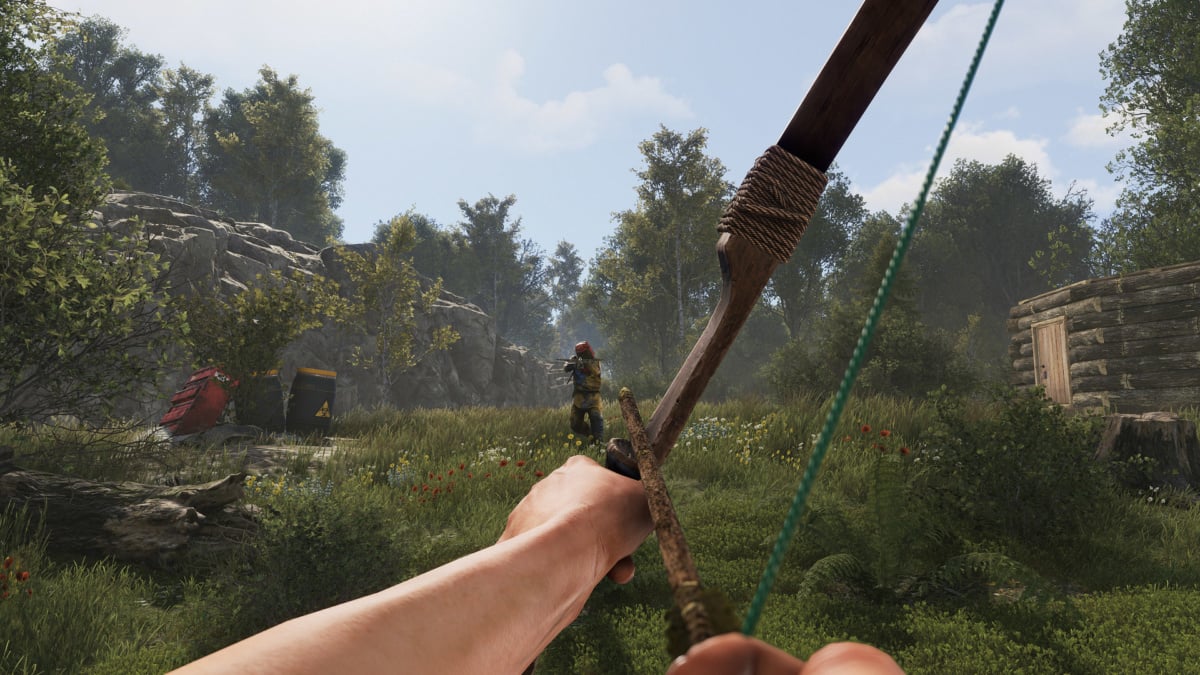
Rust is built around fortifying a base, which is what makes NPCs being allowed into player structures a change in behaviour. Image: Facepunch Studios
Facepunch's own wording is exact: "Each game frame, only a subset of the NPCs are processed, up to a hardcoded max time per frame. So when we increase the population, the server doesn't directly lose FPS, instead NPCs just become slower to react because we distribute the load across frames automatically when over budget."
The trade is reaction time against frame rate. A bigger animal population is paid for in how long a cow takes to notice you, not in the server frame rate every player on the map shares, and the overflow is spread across later frames automatically.
Facepunch does not publish the number. The post gives no value for the per-frame budget in milliseconds, no population figure at which the ceiling starts to bite, and no before and after measurement of how late NPC reactions get.
Facepunch says the new navigation system is at least twice as fast
The other half of the explanation is a rewrite of how NPCs find their way around. "We still spent time multithreading and optimising the new navigation system, at least doubling its performance since the last patch," the announcement says, crediting the gain to spreading the work across threads.
Treat that as the studio's claim about its own code. No benchmark, server size, player count or frame time is attached to it, and "at least doubling" is as precise as Facepunch gets. The same update does put numbers on a different piece of multithreading: Facepunch's own devblog gives before and after millisecond figures for making the game's inverse kinematics multithreaded, and says that change saves "around 1ms of frame time with 100 players in the scene". The navigation work gets no equivalent.
Engine numbers in a patch note come from whoever wrote the code either way, as they did with the bitrate sweep behind Steam's new Pyrowave convars.
NPCs can now walk into player bases
The navmesh work changes behaviour as well as cost. "When the new navmesh is enabled, NPCs can enter player structures and respect doors opening/closing, so the sky is the limit," Facepunch writes, which in a game built around fortifying a base is a meaningful shift in what the AI is allowed to do.
The wording is conditional, though. Facepunch describes the navmesh as something that gets enabled and does not say whether it is on by default on every server, so what any given server does with it is not settled by the post.
The animals themselves are cows and sheep. Both produce dung, cows produce milk and sheep produce wool, and both can be harvested for meat, bones and leather like any other animal in the game. They have genetics and needs, can be bred, and Facepunch warns that "the genes won't behave exactly like plants, so old techniques may not apply".
There is a vendor for them. A grown cow or sheep can be sold at a Stable, where Facepunch says the player gets a randomised offer based on the animal's gene quality and can reject it and get two more, at which point the vendor "will get annoyed and won't want to buy the animal for 15 minutes".
Rust has been on Steam since February 8, 2018, and Facepunch Studios both develops and publishes it. On how the whole thing holds up once the servers fill, the studio commits to nothing beyond the obvious: "As usual, we'll be monitoring server performance and fixing problems as they appear."

