
Qwen-Image-2.1 generates transparent images from open weights, but research use only
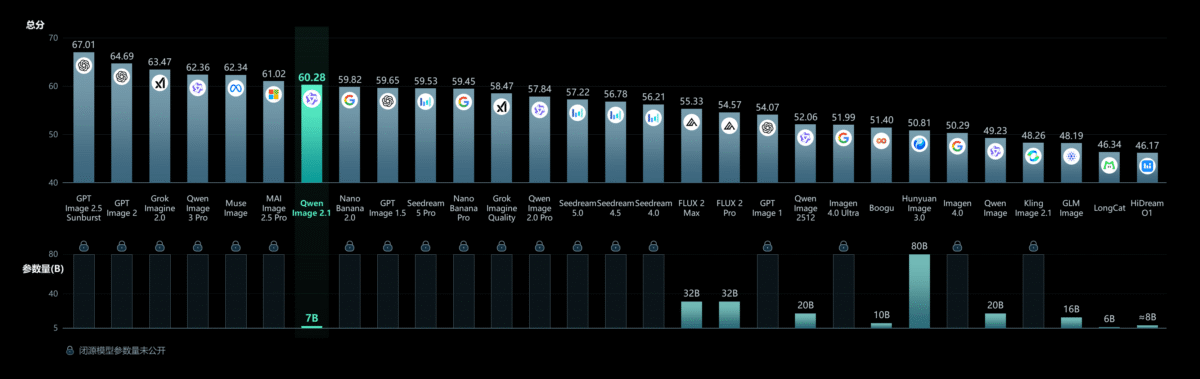
Alibaba’s Qwen team released Qwen-Image-2.1 on September 20, an image generator with 7 billion parameters in its visual generation component that writes transparent PNGs straight out of the model. It gives anyone cutting UI panels, stickers or decals for a VR or AR project a usable alpha channel without a separate background-removal pass, and the weights are a free download, but the licence covers research and evaluation only.
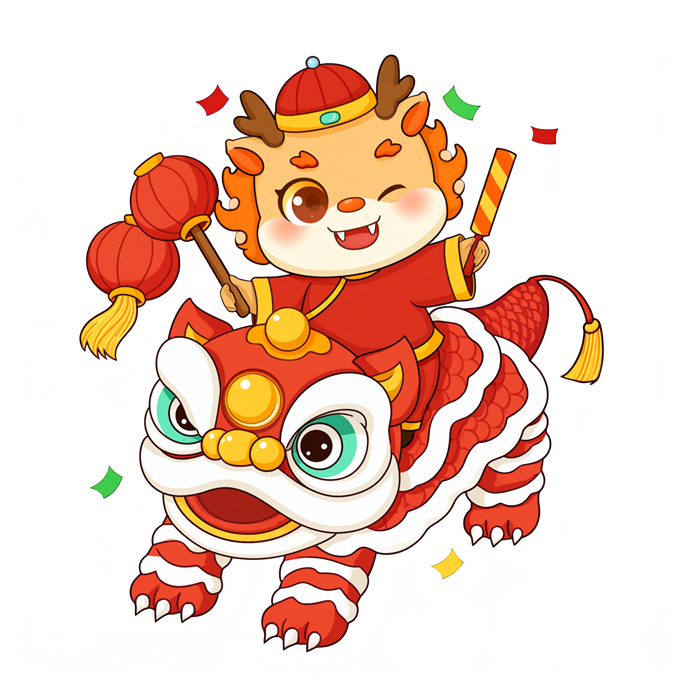
Qwen's own showcase for native transparency: the model writes the alpha channel itself rather than cutting a background out afterwards. Image: Qwen Team, Alibaba
The project README calls it "a unified text-to-image generation and image editing model", so one checkpoint handles both jobs. Weights are on Hugging Face and ModelScope, and Diffusers, ComfyUI, vLLM-Omni, SGLang and LightX2V all added support on release day.
What is inside the model
The generator is a 32-layer single-stream DiT with block-causal attention, paired with Qwen3-VL 8B as the text encoder, which takes both the written instruction and any input images. Transparency comes from the VAE: a 64-channel RGBA autoencoder with 16x spatial compression.
Output is native 2K. The defaults are 2048 x 2048 at 40 denoising steps, with 2752 x 1536 offered for 16:9 and matching sizes for the other ratios.
Qwen publishes no VRAM figure for any of this. The README’s only concession to smaller cards is a line of code that offloads parts of the model to system memory, so treat any claim that it fits a particular consumer GPU as untested until someone measures it.
Editing accepts up to 10 reference images
The editing side takes as many as 10 reference images for multi-subject composition, and local changes can be aimed by drawing a circle on the image, painting an annotation or supplying a mask. Qwen says the model also pulls subjects out of photographs and holds identity steady for people and products across edits.
Transparent generation needs a specific prompt format telling the model the image has an alpha channel and a transparent background. Two separate prompt-rewriting checkpoints, both fine-tuned from Qwen3.5-VL 9B, expand short prompts into the long descriptions the model prefers, one for text-to-image and one for editing.
Open weights here means downloadable, not unrestricted
The Qwen Research License Agreement grants rights "FOR NON-COMMERCIAL PURPOSES ONLY", and it defines non-commercial as "for research or evaluation purposes only". Commercial use needs a separate licence from the company, requested by email, and Hugging Face lists the model under the qwen-research licence rather than Apache or MIT.
Two further conditions matter for anyone building on it. A model trained or fine-tuned on Qwen materials has to carry "Built with Qwen" or "Improved using Qwen" in its documentation, and "Qwen" cannot be the primary name of a derivative product.
Alibaba is running two tracks here. Qwen3.8-Omni-Flash, the audio model released two days earlier, keeps its weights closed and sells access through Alibaba’s API. Qwen-Image-2.1 hands over the files and puts the restriction in the licence instead. For XR work the nearer comparison is the generative texture tooling Meta built into its Horizon Desktop Editor, which stays inside Meta’s platform. Qwen’s runs on hardware you own.
Weights, code and the licence text are all public. The download is free; using it to make anything you sell is not.

