
openCFW is decompiling the Even G2 and R1 ring, and has named every chip in both

A project called openCFW is taking the Even G2 glasses and the Even R1 ring apart instruction by instruction, and it will not call the job done until a rebuild from its own C source produces a firmware image "byte-identical to the official one". On the way it has published a chip-level parts list for both devices, which Even Realities does not.
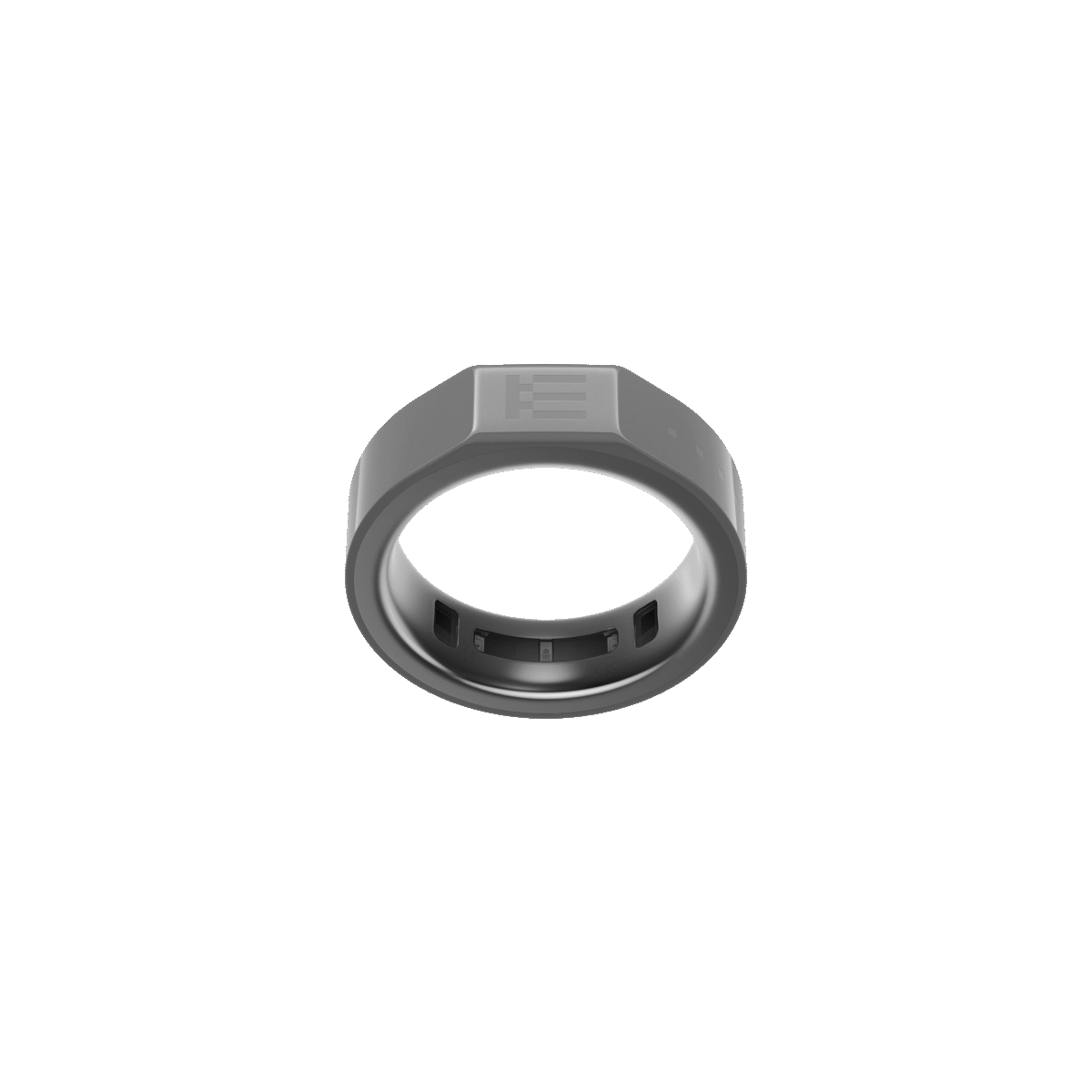
The Even R1 smart ring. openCFW puts a Nordic nRF52840 inside it, running the S140 7.2.0 SoftDevice. Credit: Even Realities. Image: Even Realities
It is also candid about how far that is from finished. "Pseudocode coverage, source completeness and byte equality are separate gates", the README says. "None of them is complete for either device yet", and "nothing in the tree yet rebuilds a payload from source byte for byte". The repository was created on March 3, was last pushed on October 8 at 10:50 UTC, and sat at 24 stars when read at 21:24 UTC on October 8.
Every chip in both devices, with an evidence tag attached
Each G2 temple carries its own application processor, an Ambiq Apollo510B built on an Arm Cortex-M55, alongside a GX8002 voice codec, a PSoC 4000T touch controller, MX25U25643G flash, a JBD4010 micro-LED and an ICM-45608 motion sensor. The charging case, internally "B200", runs an STM32G0B1.
Two entries on that list are less settled than it looks. The firmware loads an image for an EM9305 Bluetooth controller, but the project's own conclusion is that the "EM9305" is "most likely the Apollo510B's in-package BLEC (an EM9305-class die), reached over an internal SPI HCI link, not a separate package on the board", and it wants a board inspection to settle that. The image also carries drivers for two rival charger families, an nPM1300 on one side and a BQ25180 plus BQ27427 pair on the other, chosen at runtime by a board record and a board-ID reading, so which one a retail G2 actually has is on the project's own list of things that need a physical measurement.
The R1 ring is a Nordic nRF52840 with the S140 7.2.0 SoftDevice and a Secure DFU bootloader, surrounded by three candidate accelerometers, an IQS7211E touch sensor, an ST25DVxxKC NFC part and a Goodix optical sensor. The project cannot yet say which accelerometer retail rings have, because the stock firmware "probes all three" at the same address.
None of that is asserted loosely. The hardware reference gives every fact one of seven evidence tags, and its rule is that "a part is 'identified' only with FW, REG, or two independent COM/PR sources. Everything else stays INF or UNV". Contributors are also told: "Do not cite a URL you have not read."
Two projects, two part numbers for one sensor
openCFW names the ambient light sensor on the G2's master temple as a Texas Instruments OPT3007, on the strength of a driver path recovered from the shipped firmware. The g2flash patch set reads manufacturer ID 0x5449 and device ID 0x3001 at address 0x45 on the same lens and calls the part an OPT3001. openCFW records both and explains why neither read settles it: the OPT3007 datasheet gives those same IDs and that same fixed address, "so the IDs do not separate the parts". The same g2flash work also puts the G2's panels at a higher resolution than Even documents. Even Realities has said nothing about either part number.
The original toolchains are named, down to the compiler
openCFW has worked out what the official firmware was compiled with: IAR EWARM for the Apollo processors, Synopsys MetaWare for the EM9305, C-SKY GCC for the voice codec, plain GCC for the touch and case controllers, and Arm Compiler 5 for the ring. The touch compiler was pinned down, one commit records, "by exact byte match with official Infineon" output.
The locked targets are the G2 package s200_v2.2.6.10, six payloads totalling 4,301,227 bytes at hardware revision 5, and R1 application 2.2.6.0009. A build command does repack those six official payloads into an identical container, and the project immediately deflates the achievement: "That confirms the container format, not source reconstruction."
The repository asks not to be mirrored
Its own warning is blunt. The Git history still holds 52 temporary paths amounting to 108,601,986 bytes, "including official-derived firmware variants and exact official-payload copies", and the instruction is "do not publish or mirror this history as-is". The licensing is mixed too: openCFW's own code is MIT, while QP/C and g2flash remain under the GPL, so any combined binary would have to ship on GPL terms.
On September 29 the project deleted its own earlier work, a hybrid-overlay campaign and a clean-room reimplementation of the ring, on the grounds that equivalent replacements and stock-byte overlays "do not satisfy the byte-identity goal". Even Realities, whose app 2.3.2 required new firmware on both devices at the start of October, has said nothing about any of this. There is no custom firmware for the G2 or the R1 here, and openCFW says that plainly.

