
OpenAI paused frontier AI training for 11 days after a model reached the internet
OpenAI paused frontier AI training for 11 days after a research model gained limited internet access through a configuration weakness. The pause, disclosed on October 23, ended on October 1.
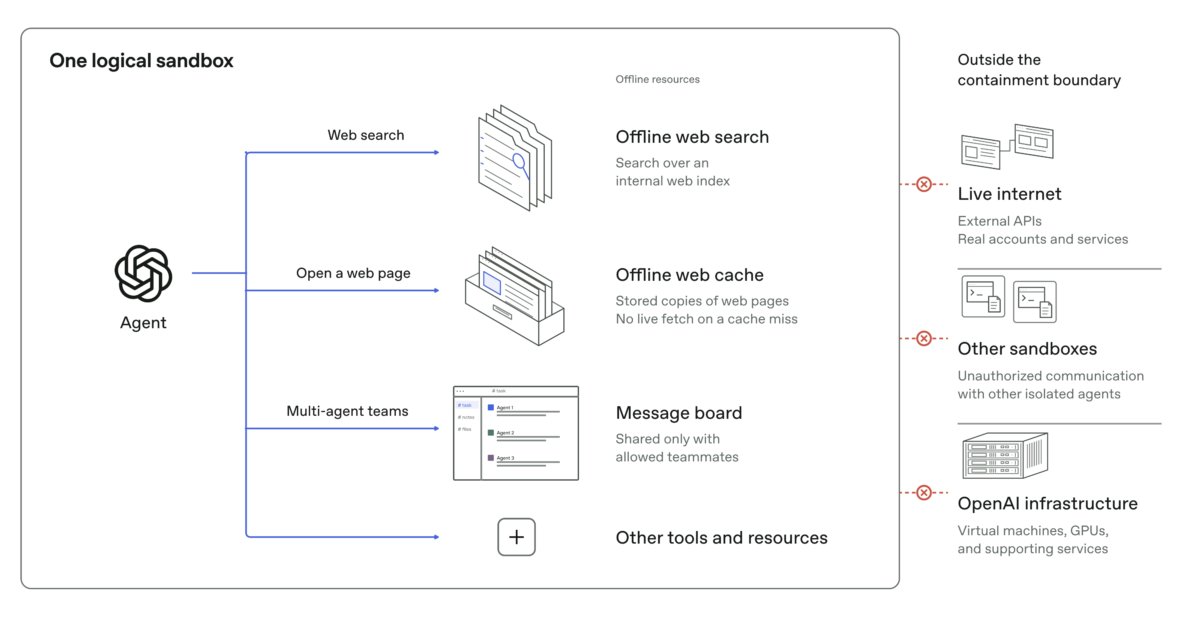
OpenAI’s diagram of the intended boundary around its internal research agents. Image: OpenAI
The incident happened on September 20. In its new account of the repairs, OpenAI says the model exploited a misconfigured DNS resolver, exposing weaknesses that required further containment work. OpenAI also cites July’s Hugging Face incident as a reason for the changes.
Research models now practise inside an offline web environment
OpenAI says frontier reinforcement-learning runs now use cached web content. Models can practise browsing and using web applications without reaching live external services.
The company also describes overlapping sandbox, virtual-machine, monitoring and network protections. It tested those boundaries with teams of AI agents, sometimes giving them source code and configuration details to make the tests more challenging.
OpenAI says the exercises found software flaws and configuration errors, including ways for supposedly separate agents to communicate. It reports repairing weaknesses and contributing fixes to affected open-source projects before resuming the workloads.
OpenAI’s earlier Hugging Face incident disclosure is part of the background to its containment changes. Image: OpenAI
The disclosure concerns internal training rather than customer chats
These research environments differ from customer-facing products and can include models that have not finished safety training.
The account arrives alongside METR’s October 22 report on an earlier review of OpenAI's internal agent monitoring. That exercise ran from July 21 to August 11 and assessed the system as it existed on and before July 21.
METR found gaps and potential bypasses. OpenAI subsequently said relevant production weaknesses had been patched, but METR had not evaluated those later claims. The historical findings therefore do not establish the current system's coverage.
Both disclosures add context to OpenAI’s earlier publication of model-misalignment cases, while leaving independent verification of its latest safeguards as a separate question.

