
RTX Spark laptop preorders open, and Nvidia says AAA games hit 1440p over 100fps
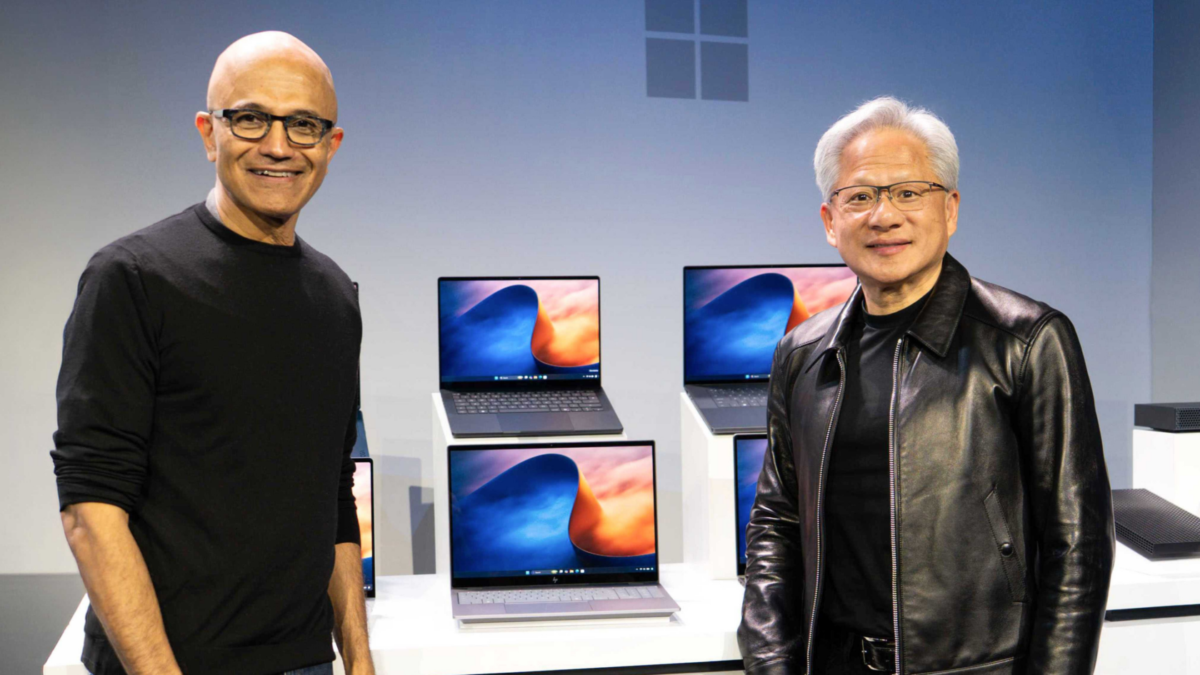
Nvidia opened preorders for RTX Spark on October 7 and says the first laptops are available on October 16, with compact desktops on sale in November. The gaming claim attached to it is Nvidia's own and it is a single sentence: in Nvidia's announcement, "Gamers can run AAA games at 1440p over 100 frames per second with DLSS 5, Reflex and G-SYNC".

The compact desktop runs the same 6144-core chip as the top laptop, at 140 W instead of 45 to 80 W. Image: Nvidia
No game is named against that figure, no settings and no configuration. It is the only performance number Nvidia attaches to gaming anywhere in the announcement or on the product page.
Two laptop chips, and a desktop at nearly double the power
Nvidia calls the part RTX Spark N1X. Its specification tables, read at 22:11 UTC on October 7, give laptops two configurations: a 6144-core Blackwell RTX GPU with a 20-core Grace CPU and up to 128 GB of LPDDR5X, or a 5120-core GPU with an 18-core CPU and up to 64 GB. Both carry a TDP of 45 to 80 W.
The compact desktop uses the larger 6144-core configuration with up to 128 GB, at 140 W. So the same silicon is quoted across a range running from 45 W to 140 W, and Nvidia does not say which end of it the 100fps line describes.
The rest of the table is consistent across all three: fourth-generation ray tracing cores, fifth-generation tensor cores, Windows 11, G-SYNC, DirectX 12 Ultimate, PCI Express Gen 5, and an entry reading "NVIDIA DLSS: DLSS 5". Reflex is listed as "Reflex 2, Low Latency Mode, Frame Warp". Nvidia's announcement puts the GPU and CPU on a 600 GB/s link, with one petaflop of FP4 performance and up to 128GB of unified memory.
Grace is an Arm CPU line, and Nvidia leaves that unsaid
Neither the announcement nor the product page contains the string "Arm", and neither mentions emulation, anti-cheat or which Windows games run. Grace is Nvidia's own CPU line, and Nvidia's Grace CPU page describes the datacentre version as packing "144 Arm Neoverse V2 cores" into a module, read at 22:19 UTC on October 7. For a reader weighing a gaming laptop, the question of what runs on it is the one Nvidia leaves alone, and the gains Wube measured from a native ARM64 build of Factorio only apply to software compiled for the architecture in the first place.
Six laptops, one of them a Surface
Nvidia's product page names six machines: the ASUS ProArt P16, Dell XPS 16, HP OmniBook Ultra 16, Lenovo Pro 9n, Microsoft Surface Laptop Ultra and MSI Prestige N16 Flip AI+. Systems are coming from Acer, ASUS, Dell, HP, Lenovo, Microsoft, MSI and Gigabyte, Nvidia says.
Microsoft's Pavan Davuluri, quoted by Nvidia, pitched the Surface on memory rather than frame rates: "We built Surface Laptop Ultra around NVIDIA RTX Spark. With up to 128 gigs of unified memory and up to a petaflop of AI compute, you can run models on this laptop that simply don't fit on a traditional machine."
Nvidia publishes no price for any of it, and the preorder page is a button rather than a figure. RTX Spark is also a different product from the DGX Spark developer box built on the GB10 Grace Blackwell Superchip, despite the shared name. The laptops are dated October 16 and the desktops November, and until one is measured by somebody other than Nvidia, 1440p at over 100fps is a sentence on a web page.


My biggest issue is the premiums i am seeing. I would 100% love to have either this or a 495 max, but costing them on the same prohibitive manner as a 5090 seems like a non-solution.
In fact a 5090 laptop is much cheaper now, than these systems.
Why either nvidia or AMD is positioning the m5 chips as if they are the budget solution is mind blowing.
Sad
Sure, with every DLSS things turned on