
Factorio's native ARM64 build runs 11% faster on Steam Frame, Wube says
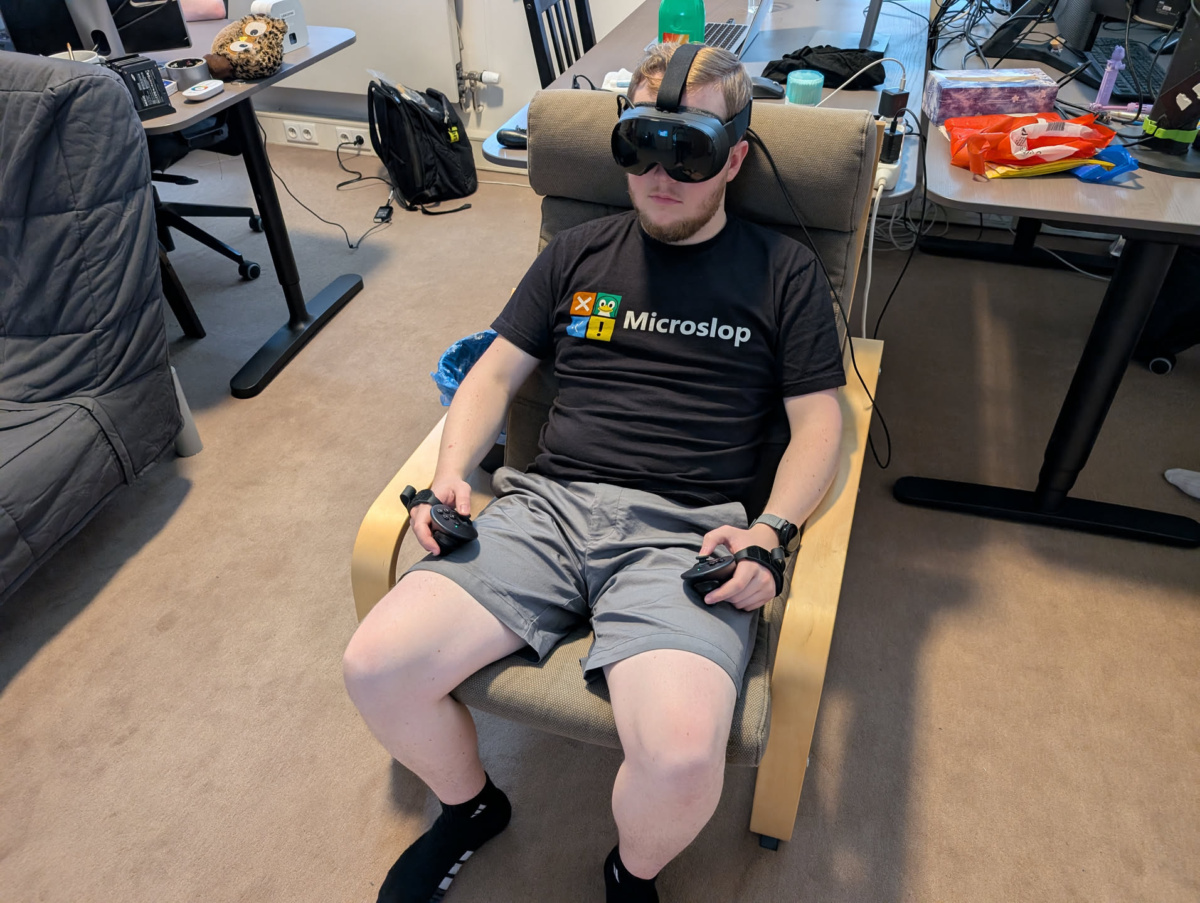
Factorio now has a native ARM64 Linux build, and on Steam Frame it runs about 11% faster than the x86 version going through Valve's FEX translation layer. Wube Software published the numbers in Friday Facts #446 on September 18, alongside the news that the game has passed Valve's compatibility review for the headset.
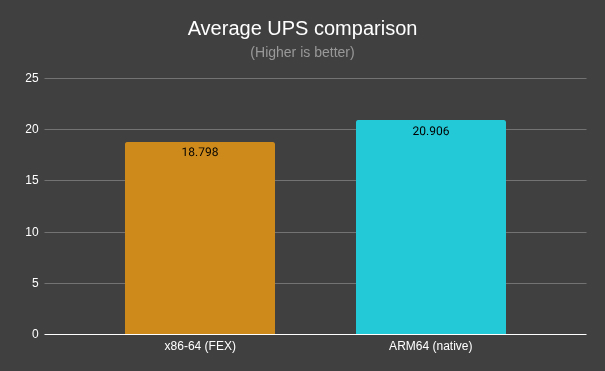
Wube's own Steam Frame benchmark, measured on a 4,000-train megabase at 10,000 science per minute. Image: Wube Software
The build is live on Steam's experimental branch in version 2.1, and a standalone ARM64 download, including a headless server build, is on factorio.com. Wube says players should opt into experimental to get it on a Frame or any other ARM64 Linux machine.
Wube's own benchmark puts native ARM64 11% ahead
The chart in the post measures average updates per second on a 4,000-train megabase running at 10,000 science per minute. The x86-64 build under FEX averages 18.798 UPS, and the native ARM64 build averages 20.906.
These are the developer's own measurements on its own build, not an independent test. They time the simulation rate of one save file on the CPU, so they say nothing about graphics performance, about other games, or about what a different ARM64 port would gain.
Wube ran the same map on two other machines. A Raspberry Pi 5 with 8GB gained about 28% over x86 running through box64, and a MacBook Pro M1 Pro on Asahi Linux gained about 35% over x86 through FEX, which the post calls the most dramatic of the lot.
Wube is complimentary about the layer it just beat. "The performance of the FEX translation layer is very impressive," the post says, which is a fair reading of a gap of two updates per second.

Great on Frame is the store page where Valve collects the games its review process marks as Verified. Image: Valve
On Steam Frame it is a flat game on a very large screen
Factorio does not become a VR game here. It runs at 720p with graphics settings identical to the Steam Deck, holds 60fps in most situations and dips in busy scenes, and Wube says lowering the settings did not help, which it reads as a more fundamental limit in how the game's OpenGL renderer meets the Frame's software stack.
Input is the part that reads as genuinely new. 2D games on the Frame get no VR features, but Factorio still answers mouse movement and clicks while in gamepad mode, so the headset's laser mouse works for selection tools and rapid clicking through menus, and a Steam Controller, mouse or keyboard can be connected instead.
Wube says certified, Valve's own word is verified
"Factorio is officially Steam Frame Certified," Wube writes, and calls that certification "a guarantee from Valve and Wube that the game works great on the Frame". Valve labels the same thing differently. Its Steamworks documentation calls the scheme the Steam Frame Standalone Verified program and hands each reviewed game one of four badges: Verified, Playable, Unsupported or Unknown. Verified means the game "passes all compatibility checks" and needs no configuration work from the player. The store gathers that top tier on a page called Great on Frame.
The bar is published. A 2D title has to run at a minimum of 30fps at 1280x720 during normal play, a VR title at a minimum of 72fps at 1728x1728, and the default controller configuration has to reach all of the game's content without the player changing settings.
Getting there cost Wube a platform-wide change. Factorio had been targeting version 1.0 of the Steam Linux Runtime, which has no ARM64 version, so the studio moved every player to runtime 4.0 and updated the Steamworks SDK in 2.1.15, which needed one hotfix.
Valve sent two development kits, one to Wube's Prague office and one to the developer's home in the US, and Factorio first booted on a Frame in February 2026. Wube says it spotted the game on the Great on Frame page in the background of Steam Frame reviews by Gamers Nexus and Dave2D.
Eleven years of requests, unblocked by a headset
Wube also had to work around Valve's own priorities. Valve has "prioritized support for Windows games running via Proton+FEX and Android games running via Lepton", the post says, so the infrastructure for native ARM64 Linux games is thinner, and Factorio now ships both binaries to every Linux player with a shell script choosing the right one.
Wube's Sanqui writes that players have asked for an ARM Linux port for at least eleven years, and that hardware was the obstacle rather than interest. An Ampere Altra server could not be sourced and Hetzner's ARM64 virtual servers were constantly out of stock, so the studio settled on cross-compiling from x86-64 with a Raspberry Pi 5 as its dedicated test runner.
That Pi can host a server but cannot play the game with graphics, because its OpenGL support is too limited. The Frame, by contrast, is a full ARM64 Linux PC, which is the argument Wube makes for doing the work at all.
Steam listed 143 Steam Frame Verified games on September 18, fewer than half of them VR, and the flat half of that list is where Factorio lands. It is on the experimental branch now.

