
GitHub starts enabling unconfigured Copilot features under a new default policy
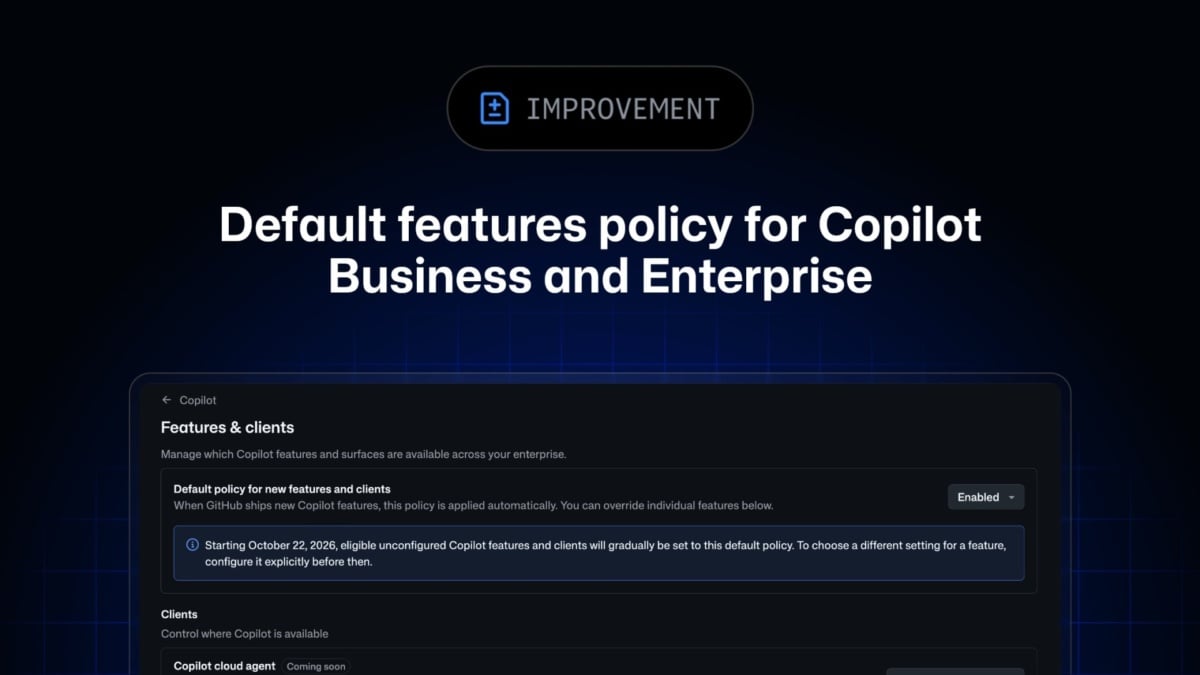
GitHub has begun applying a global default to eligible Copilot features that an organisation has left unconfigured. Administrators who have not changed the default may see generally available features enabled as the policy takes effect.
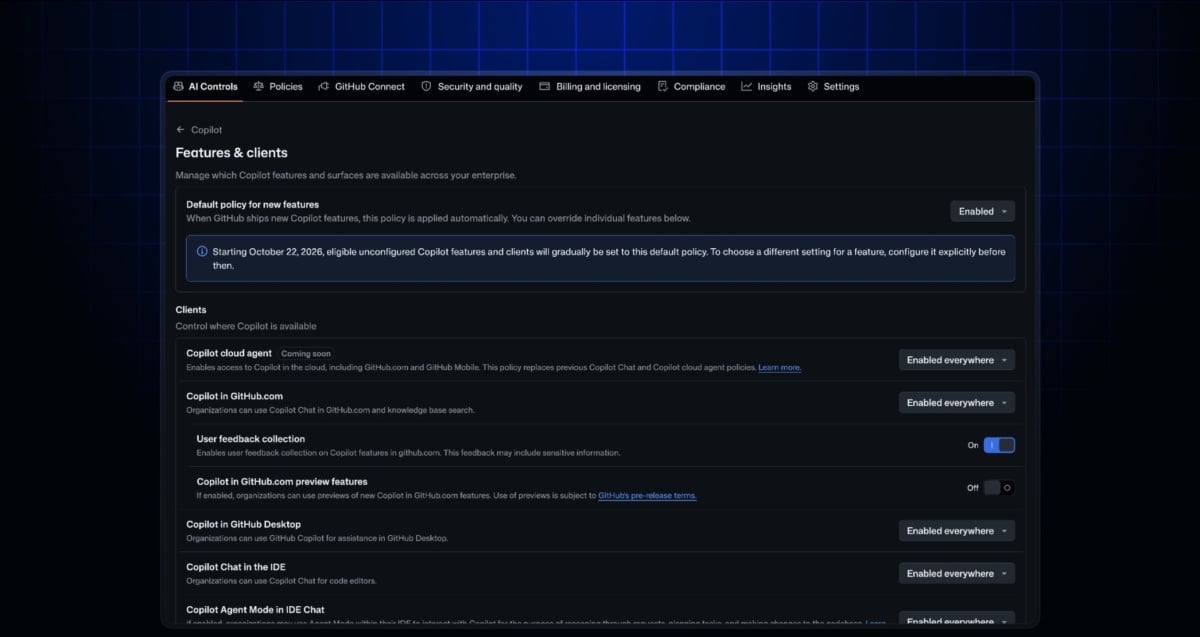
GitHub’s Features and clients page shows the default policy and rollout notice. Image: GitHub
The rollout runs from October 22 through October 26 for Copilot Business and Enterprise. Individual organisations may therefore see the change at different times.
Explicit feature choices survive the one-time policy rollout
The policy affects eligible settings on the Features & clients and MCP servers pages. An administrator's existing decision to enable or disable a feature is preserved.
For settings still marked Unconfigured, GitHub applies the selected global policy. At enterprise level, that can enable them, disable them or leave organisations to decide. GitHub's documentation says the feature default is enabled unless an administrator changes it.
Administrators can review the control under AI Controls, Copilot, Default policy for new features. They can also make explicit decisions for individual features instead of relying on the shared default.
The initial conversion is a one-time change. Altering the global default later does not automatically rewrite feature policies that have already been set.
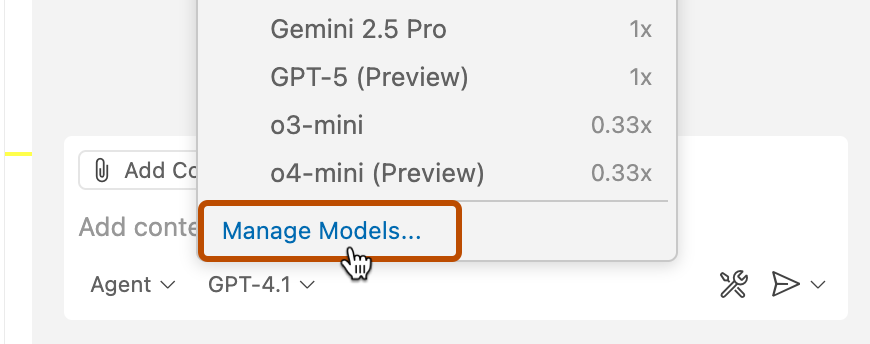
Model availability is a separate control from the feature policy, illustrated here by GitHub’s model-management documentation. Image: GitHub
Preview features remain opt-in while new public features inherit the default
The rule applies to eligible generally available capabilities, not preview features. If an organisation opted into a preview, that choice remains when the feature becomes generally available.
Otherwise, a feature follows the default when it becomes eligible. This makes the setting relevant beyond the October rollout: it also governs how new public features become available without a separate admin decision each time.
The change is separate from which model a user chooses inside a chat. It controls organisational availability of capabilities, including supported client and tool connections.
Those connections are increasingly relevant to workflows such as the coding-agent integrations offered by Unity. Administrators can preserve their intended setup by checking unconfigured policies before the rollout reaches their organisation.

