
Cognition says Nvidia's Vera Rubin rack gave it up to 4.8x the token throughput of GB200
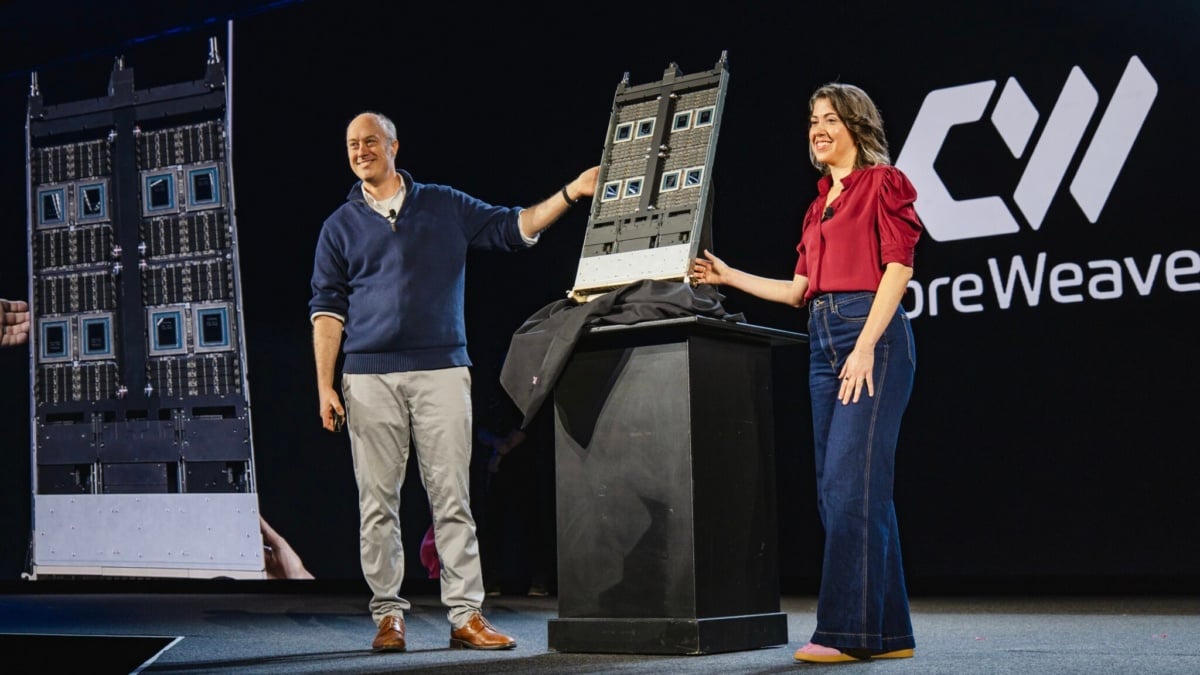
Cognition, the lab behind the Devin coding agent, says Nvidia's Vera Rubin NVL72 rack delivered "up to a 4.8x increase in total token throughput for SWE-2 inference workloads over GB200 NVL72" in its early tests. The figure comes from Nvidia's post of September 30 about CoreWeave's deployment.
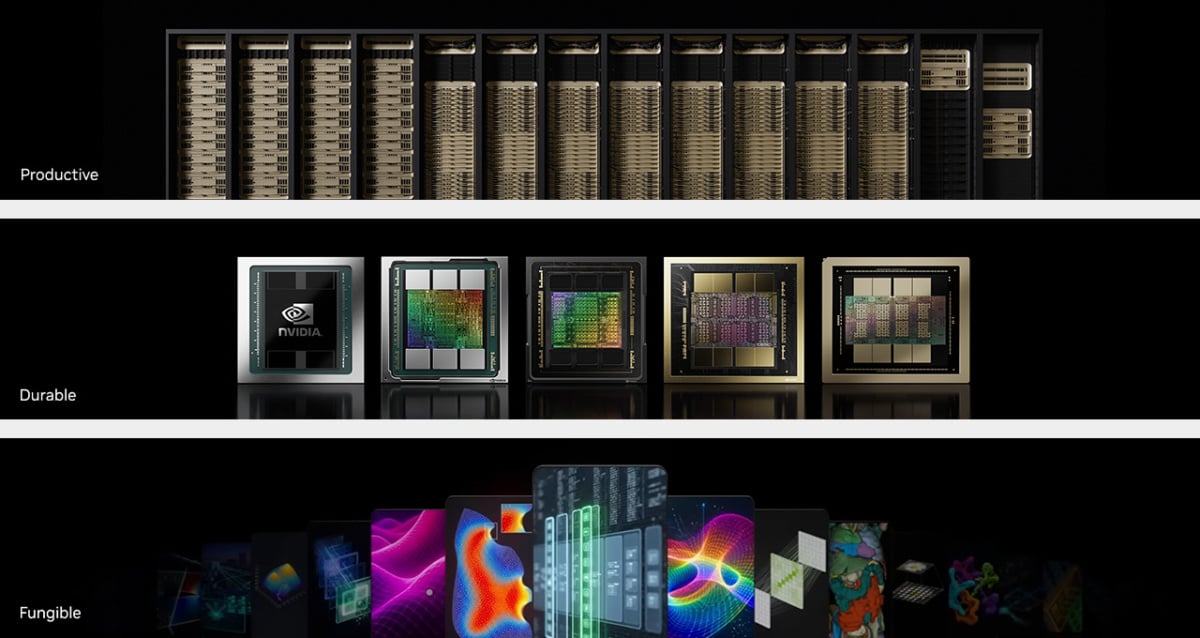
Nvidia's graphic for its productive, durable and fungible argument about AI factories, with five of its GPU generations in a row. Image: Nvidia
CoreWeave announced availability of Vera Rubin NVL72 systems with Spectrum-X 102.4T Ethernet networking at its Fully Connected event in San Francisco, with Cognition named as "the first customer running production workloads on Vera Rubin". CoreWeave received its first Vera Rubin production racks in September.
The 4.8x is a ceiling on one workload, not a general speed-up. Cognition built the test by sampling a subset of tasks from FrontierCode and setting AI agents to solve them, then measured SWE-2 inference against a GB200 NVL72 baseline, the Blackwell-generation rack it already runs on. The number is the customer's own, from early tests, and no one outside the two companies has checked it.
The CPU side carries the rack-level numbers
CoreWeave will also offer Nvidia Vera, which Nvidia calls "the first CPU built for AI agents". CoreWeave's deployment "puts 128 CPUs and 11,264 cores in a single rack, enough for more than 11,000 concurrent environments at one core each", Nvidia says, which is arithmetic on the core count rather than a measured concurrency result.
Two measurements sit alongside it, and neither names the hardware it is measured against. Nvidia says tests show more than 3x faster agentic sandbox startups on Vera CPU, and that "on Terminal-Bench, CoreWeave saw a 1.7x performance gain on Vera CPU across all passing tasks". Sandboxes are the isolated environments an agent runs code in, so startup time is the tax paid every time one spins up, and those sandboxes run alongside the training jobs they support. Nvidia says the environments are hardware-isolated, with Spectrum-X Ethernet switches and BlueField-4 DPUs handling the traffic between them.
Nvidia's argument is that old racks keep earning
Ian Buck, Nvidia's vice president of hyperscale and high-performance computing, uses CoreWeave's oldest hardware to make the case. "CoreWeave's NVIDIA V100 GPUs are still running customer workloads nearly a decade after Volta launched, even as CoreWeave brings Vera Rubin NVL72 into production", he says.
Cognition's own framing is about cost rather than peak performance. "Agentic coding is a complex workload: long contexts, high concurrency and token volumes where cost per token decides what we can ship", says Silas Alberti of Cognition's founding team. The company scaled to thousands of GPUs on CoreWeave in nine months, Nvidia says, running training, reinforcement learning and production inference for Devin on the same provider.
Agent tooling is where the demand is being claimed: we reported on October 4 that OpenAI says its own models optimised Astra Ultrafast's inference on Nvidia GPUs, the Blackwell generation Cognition's baseline belongs to.
What is still missing
Nvidia gives no price for a Vera Rubin NVL72 rack, no count of how many CoreWeave has installed, and no general availability date beyond the announcement itself. There is no independent benchmark, no power figure and no comparison at matched cost rather than matched rack. CoreWeave also launched Forge, which it describes as a connected environment for training, evaluating and improving models and agents. Until a second customer publishes numbers, 4.8x is one lab's early reading on one coding workload.

