
Astro Bot Rescue Mission runs on a Quest 3 alone, and its author measures 30fps
A PlayStation VR exclusive is running on a Meta Quest 3 with nothing else attached. AstroQuest, a one-person project, puts Astro Bot Rescue Mission on the headset through a PS4 emulator, and its author's own figures put the standalone build at 30 frames a second in levels and 45 in lighter scenes.

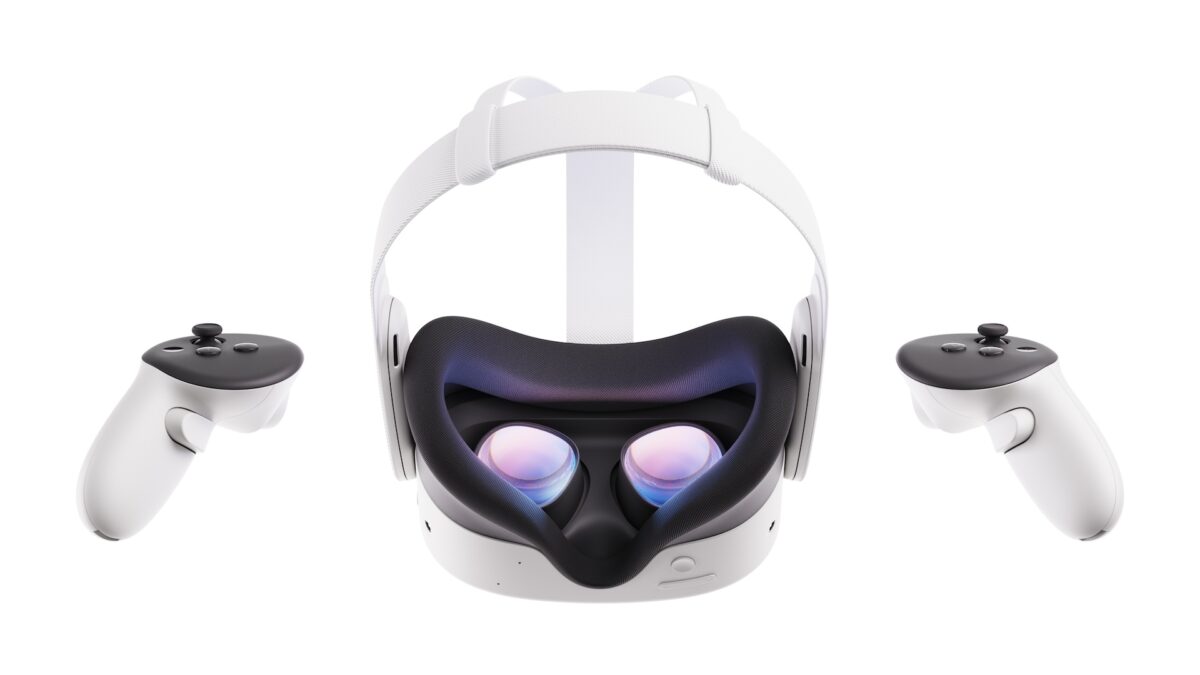
A white Meta Quest 3S head-on against a black background, with two clusters of camera lenses on the faceplate. Image: Mixed News media library
The same comparison table gives the per-eye picture on the headset as 816x870 to 1440x1536, against 960x1080 to 1440x1536 on a PS4 with a PlayStation VR. Every one of those numbers is the author's, nobody else has published measurements of the project, and the repository was read at 22:56 UTC on 6 October.
It needs a dump of a game you already own
The project ships no game data. Its README says you need "your own copy of ASTRO BOT Rescue Mission, dumped from your own PlayStation 4", and answers the obvious follow-up with one line: "This project gives no information on how to get games."
Underneath it is shadPS4, in an ARM64 build for the headset. AstroQuest adds what the game expects a PlayStation VR to provide: head tracking and reprojection, the camera's view of the controller taken from the Quest's hand tracking, the 3D sound engine, the microphone, and fixes for the game's timing and resolution under emulation.
The microphone is there because the game asks you to blow at things, as it did on PS VR. On the Quest's own Touch controllers the right one is the controller the game sees, and pressing X and Y together does the blowing.
The author calls it a work in progress
The README describes AstroQuest as "built and tested by one person on one Quest 3 and one PC", with the first two worlds played through on the headset alone and rough edges expected. It also warns that on the standalone build "the headset's mobile GPU is pushed to its limits", so visuals run at lower resolutions and fidelity than on PS4 hardware or in the project's PC mode.
That PC mode is the faster one. Running the game on a Windows PC and viewing it in the headset through Virtual Desktop gets the console's 60 frames a second and up to six times its resolution, the README says, and a Bigscreen Beyond and a Pimax Dream Air have been reported working through SteamVR.
The release history is short and fast. Version 0.11 arrived on October 3 at 13:03 UTC and 0.20 on October 6 at 18:45 UTC, with four more listed in between. The Quest 3S is untested: the README says it has the same chip and should work, but that nobody has tried.
Quest and Steam Frame owners keep finding the same seams
Running other platforms' VR software on a headset it was never built for has become a small genre of its own. A separate project moves Quest games onto a Steam Frame and publishes the six it cannot get running, which is the same trick pointed the other way.
Sony has never put Astro Bot Rescue Mission on anything but PlayStation VR, and none of this changes that. What AstroQuest supplies is a price in frames and pixels for running it elsewhere: half the console's frame rate on the headset that leads Steam's own VR survey, and a floor of 816x870 per eye.

