
A camera-free smart glasses startup just hit $1 billion, and Meta should notice

Even Realities has raised $150 million at a $1 billion valuation, giving the smart glasses market another serious player at a time when Meta, Snap, Samsung and Google are all trying to define what people will actually wear on their faces.
The new funding round was led by Meituan and Tencent, with earlier backing from major China investors, including HSG, formerly Sequoia China. Even Realities is based in Shenzhen, was founded in 2023 by former Apple engineers, and is already selling its smart glasses in markets such as the U.S., Japan, South Korea, Europe and the Middle East.
The company’s pitch is different from the camera-first direction we have seen from Meta Ray-Ban glasses and Snap’s AR hardware. Even Realities is selling display-first glasses that put information in front of your eyes without adding a camera to the frame.
Even Realities is building smart glasses without a camera
The company’s latest flagship, Even G2, uses a heads-up display built into the lenses. It can show notifications, calendar details, translations, teleprompter text, navigation prompts and AI-generated conversation help.
The glasses are controlled through the Even app and the optional Even R1 smart ring, which lets users tap, scroll and control the interface without touching the frame.
The missing camera is the main product decision. Even says the G2 relies on microphones for input instead of a camera, which makes the glasses less awkward for people around the wearer. That could matter as smart glasses move from early adopters to offices, meetings, restaurants and public spaces.
Even’s CEO Will Wang confirmed that smart glasses are among the most personal computing devices people can wear, so privacy has to be part of the hardware and software design.
Voice features such as translation reportedly transcribe audio into text instead of storing recordings, while user data is encrypted and the company says its infrastructure is built for strict European privacy standards.
Even G2 puts the display before the camera
| Product detail | Even Realities G2 | Details |
|---|---|---|
| Camera | No camera | Less social friction and fewer privacy concerns |
| Display | Built-in heads-up display | Shows information directly in the wearer’s view |
| Controls | Even app and optional R1 ring | Navigation without touching the glasses constantly |
| Battery | Up to two days, with charging case | Designed for daily use rather than short demos |
| Price | $599 before tax | Premium, but below many full AR headsets |
| Prescription support | -12.00 to +12.00 | Useful for people who actually need everyday glasses |
Even has invested heavily in optics, which is the hardest part of this category. The company’s Even HAO, or Holistic Adaptive Optics, brings the microchip, waveguide and prescription lens design together from the start instead of treating the display and lenses as separate parts.
That approach makes sense for a product people are expected to wear all day. A smart glasses display has to be readable, light, subtle and comfortable, without making the frame look like a developer kit.
Smart glasses are moving beyond experiments
The smart glasses category is no longer a side bet. Counterpoint Research says the global intelligent eyewear market grew 83% year over year in Q1 2026, driven by stronger demand for AR and smart glasses.

Even Realities says more than half of its users are in the U.S., which is also its fastest-growing market. Its customer base reportedly leans toward male professionals between 30 and 50, with the company saying about a third of surveyed users are executives.

The pricing also shows where Even is positioning itself. G2 starts at $599 before tax, but prescription lenses or the R1 ring can push the average order closer to $1,000. That is not cheap, but it is still within the range of premium eyewear, smartphones and productivity devices.
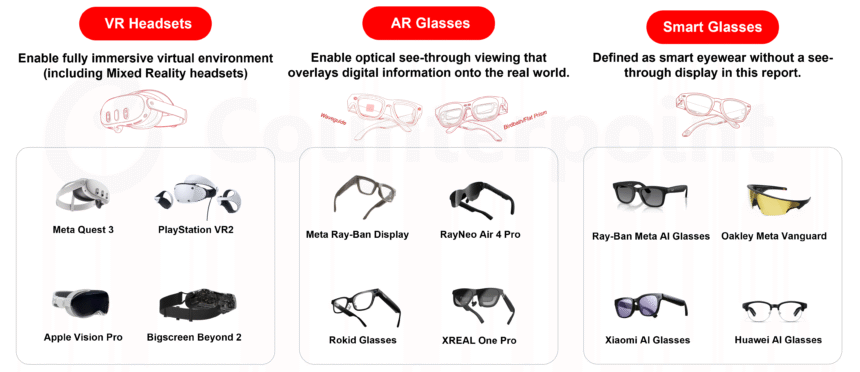
That puts Even in the same smart glasses race we have been tracking across Meta, Samsung, Snap and Google in our broader smart glasses coverage.
Even says it beat its own 10,000-unit target with the first G1 glasses and has grown from about 30-40 employees in 2024 to 300-400 today. The new funding gives it more room to expand hardware, AI features, developer support and international sales.
But like we have reported in our previous articles at MIXED, the company still faces the same problem as every smart glasses maker, which is to convince the consumers. People need a reason to wear them every day.
I mean, yes, the Notifications and translation are useful, but they may not be enough on their own. Conversate, Even’s AI copilot for real-time conversation prompts and summaries, could become a stronger use case for executives, sales teams, doctors, translators and people who spend much of their day in meetings.
What do you think could work for these companies?

