
URXR One display glasses raised $1.29M on Kickstarter, and nothing has shipped
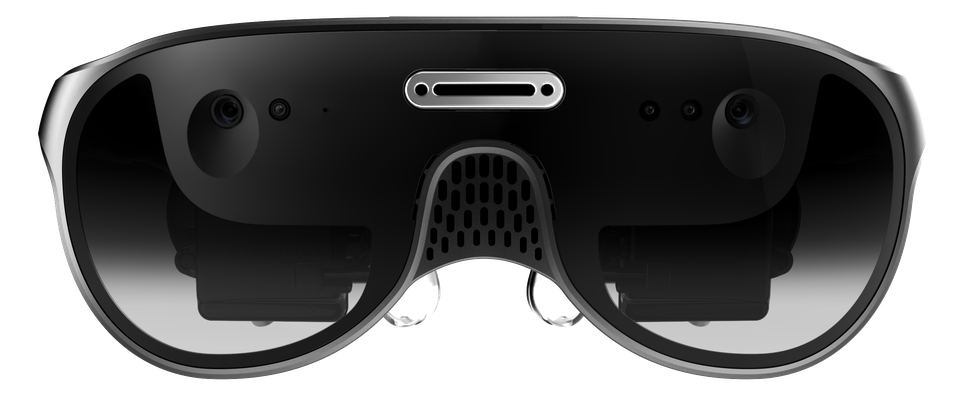
Unseen Reality's URXR One, a pair of 93-gram display glasses with no battery and no computer of their own, closed a Kickstarter on September 18 with $1,292,710 pledged by 1,585 backers against a $50,000 goal. Nothing has shipped, and the first units are not due to leave the factory until mid-October.
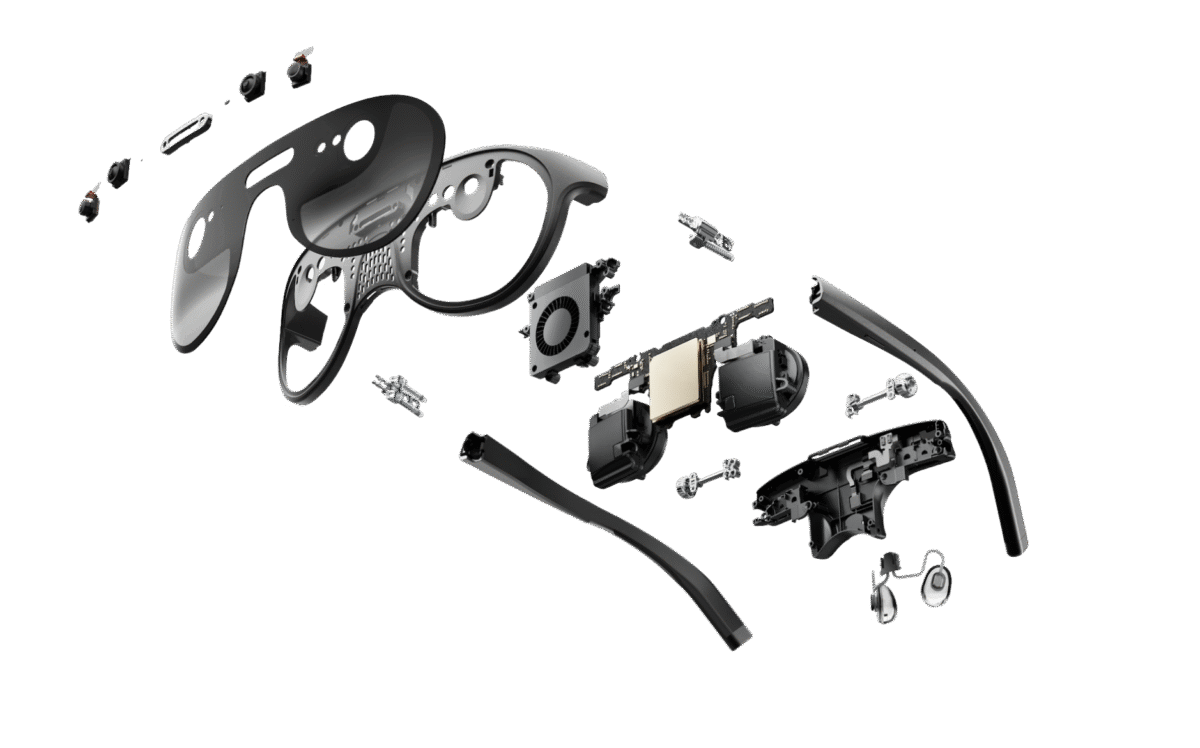
Unseen Reality's own exploded view of URXR One. No independent teardown exists. Image: Unseen Reality
Every figure below is the company's own claim, on the campaign page or on its own site. No independent review unit exists, and late pledges are still open.
The pitch is weight, not intelligence
URXR One weighs 93 grams and runs no apps of its own. There is no battery in the frame and no operating system to learn: video and power arrive over a single USB-C DisplayPort cable from a laptop, phone, tablet or gaming handheld. What the frame does carry is a dedicated spatial chip, which Unseen Reality says runs 6DoF tracking, see-through and reprojection on the glasses rather than on the host device.
The claimed spec sheet is aimed squarely at people who want a wearable monitor. Each eye gets a 1.03-inch micro-OLED panel at 2,448 x 2,064 and 90Hz through mini pancake optics, for a stated 36 pixels per degree across a 90-degree diagonal field of view. The company's spec list adds dual-camera SLAM with a 1,000Hz IMU, 3DoF and 6DoF modes, hand tracking, a four-microphone array with no speakers, and video see-through at 2,328 x 1,728 and 90fps with under 10ms of latency.
None of that has been measured by anyone outside the company. Xreal sells shipping display glasses from $299, so URXR One is asking for more than two and a half times the money on the strength of optics and tracking nobody else has put on a bench.
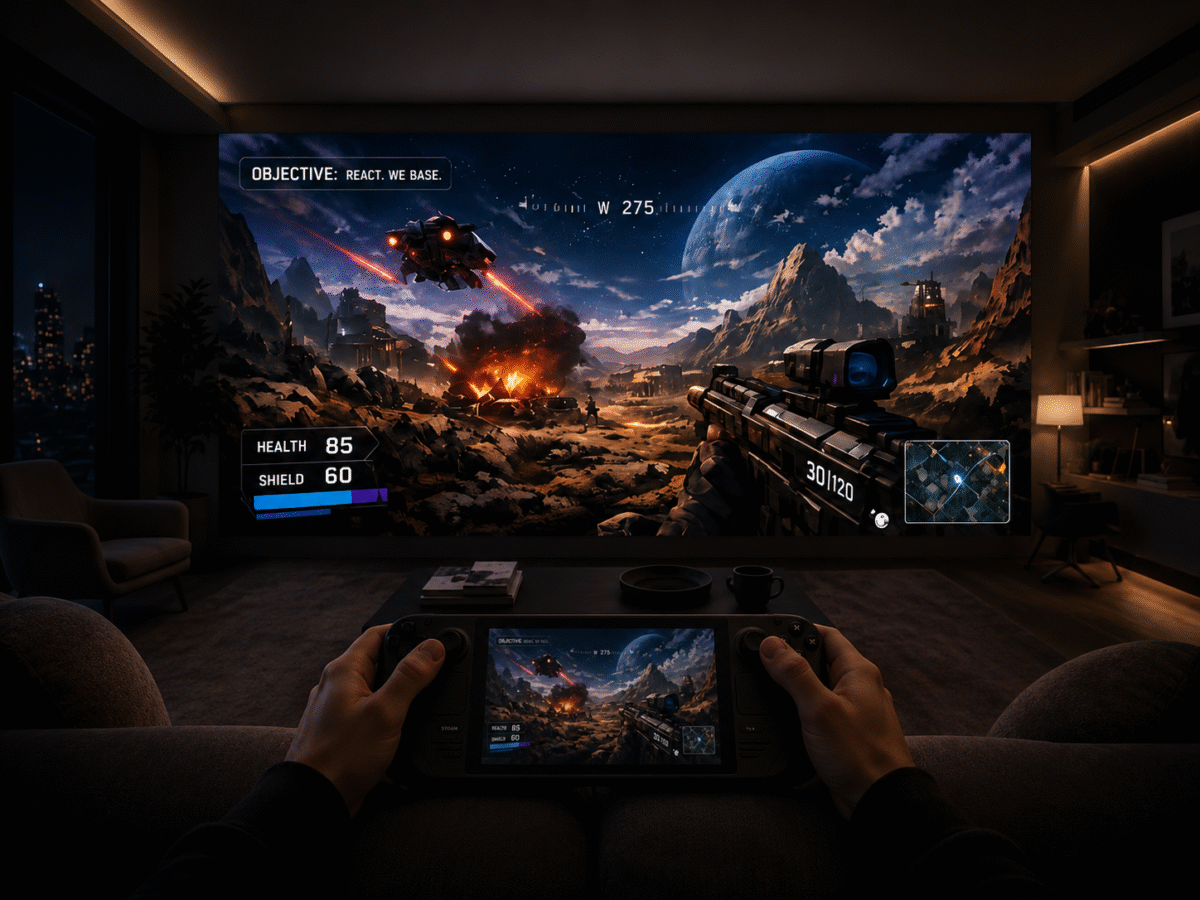
The company's illustration of a handheld driving the glasses over USB-C. Image: Unseen Reality
Backers paid $699 or $799, and the retail price is unsettled
The 75 Early Bird units went at $699 and sold out. Most backers took the $799 Kickstarter Special, 1,162 of them, and 55 more took a $1,550 Duo Pack for two pairs. Both single-pair reward descriptions call $899 the "planned retail price". Unseen Reality's own site gives the MSRP as $999 and presents the $799 campaign price as a $200 saving, and the late-pledge tier still open on Kickstarter, named Full Retail, is $999. The retail figure is not fixed.
Shipping is in none of the pledges. The company says final shipping costs will be calculated closer to fulfilment and that international backers cover their own customs duties and import taxes. The Power Hub, a 10,000mAh battery that sits between a phone or a Switch and the glasses, is listed at $69 on Unseen Reality's site.
Unseen Reality lists four ways the plan could slip
The campaign's risks section is more useful than its feature list. The company says it has working CNC prototypes and a locked supply chain, but that "the move from EVT to mass production always carries schedule risk".
The other three are dependencies it does not control. Apple's MFi certification for the Power Hub is still an application, and Unseen Reality says some iOS features may be limited until it completes. URXR Connect, the companion app that puts up to three virtual screens around you, needs access to iOS extended-display APIs and Apple's review, although the simpler Bypass Mode works without any app. Nintendo Switch support needs the Power Hub and a third-party display adapter the company does not sell.
Steam Deck sits in a similar spot. Unseen Reality's own compatibility table marks Steam Deck support as depending on Linux USB-C DisplayPort behaviour, with verification in progress, so nobody should buy a pair for a Deck on the strength of that line.
The schedule is the whole story now
Unseen Reality unveiled URXR One at AWE in June and has set itself mid-October for the glasses, with Windows and Mac support for URXR Connect at launch and iOS and Android support planned for December. The Early Bird, Kickstarter Special and Duo Pack tiers list October 2026 delivery, while the Full Retail late-pledge tier lists November.
Crowdfunded XR hardware slips routinely. A closed campaign with $1.29 million in it is a measure of how many people want a lightweight wearable screen, and nothing at all about whether one arrives in October.

