
AU$60 Temu smart glasses can be hijacked over Bluetooth, and the app leaks the owner's email
A pair of AI smart glasses bought for AU$60 on Temu can be taken over by a stranger over Bluetooth alone, with no password in the way, according to an ABC News investigation published on September 22. A second failure, on the website of the HeyCyan app the cheap glasses run on, lets anyone look up an owner's email address and date of birth from the device ID number.
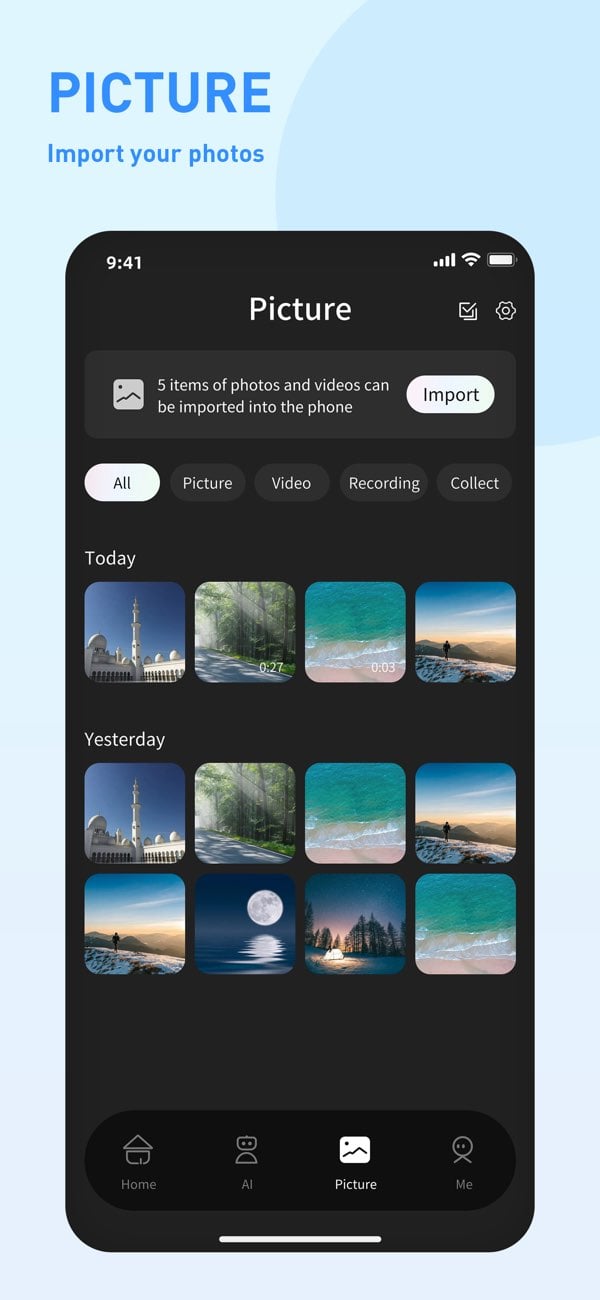
HeyCyan's own promotional screenshot of the gallery. The photos still held on the glasses are what the testing was able to pull down. Image: HeyCyan
The testing was carried out for the broadcaster by NSB Cyber and Abstract Shield. David Crees, who runs Abstract Shield, led it and found more than a dozen flaws in six days across the glasses, the phone app and the app's website. "There wasn't a single thing that they had done correctly," Crees says.
The glasses hand over stored photos without a password
"Another person with the same app can log into the glasses without a password," Crees says, because the glasses never set one. When a pair is switched on but not connected to its owner's phone, an attacker in Bluetooth range can race to connect first, then copy the photos and videos already on the device, take new ones, and intercept audio and images in transit.
Crees compares it to earbuds, where pairing AirPods or Samsung buds to a new phone means holding a button on the device for several seconds. These glasses ask for nothing. Their device ID is also broadcast to anything in Bluetooth range while they sit unpaired, and that number is the key to the email address and date of birth on the app's website.
Two pairs were tested. One cost AU$60 on Temu, the other AU$110 from Sydney importer BDI Technology through Big W Marketplace.
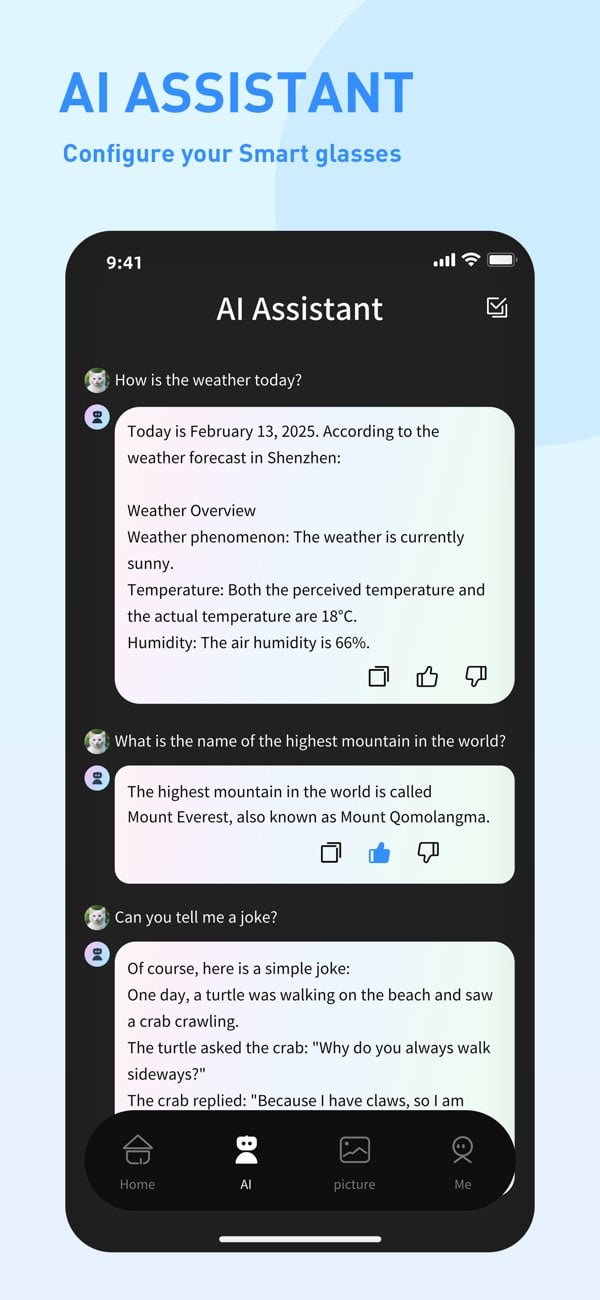
HeyCyan's own promotional screenshot of the AI companion. What people say or type to it goes first to a server in Shenzhen, the ABC found. Image: HeyCyan
One app runs the whole price bracket
Comparable glasses have been on sale in Australia in recent months through Dick Smith, Kmart and Amazon, and all of them appear to rely on the same companion app, HeyCyan, whose developer is Shenzhen Qingcheng Future Technology Co in mainland China.
Speech, typing and images handed to the built-in AI companion go first to a server in Shenzhen, and on from there to another Chinese server or to the US depending on the task, without the owner being told. HeyCyan's privacy policy names only Singapore. The ABC says it contacted the developer repeatedly and got no reply; some flaws appear to have been patched after the findings were shared, and most have not.
"There is a high degree of uncertainty when it comes to where the data is going," says Evan Vougdis of NSB Cyber, who oversaw the research.
Kimberlee Weatherall, who studies technology regulation at the University of Sydney, told the ABC the glasses breach Australian privacy law. "It's really disturbing to read the extent of the failure to take even basic steps to protect personal data," she says.
Two cheap pairs, not a verdict on the category
Only those two devices were examined, and neither carries a brand a reader would know from a keynote. Nothing in the testing touches the glasses sold by Meta, Snap or Xreal, and none of it should be read across to them. Meta's cheapest AI glasses start at $299 in the US, a different price bracket from either pair tested.
What the testing establishes is exposure rather than a breach. Two devices at the cheapest end of the market shipped with no working protection on the glasses, the app or the website behind them, and nobody has shown that a stranger's photos were actually taken.
BDI Technology has stopped selling smart glasses. Crees does not think the rest can be patched: "You'd have to update 300 different brands of glasses and the app and the website ... The only real solution that I see is a recall."

