
Steam Frame's camera port hides a PCIe Gen4 lane, and 6W eats over a quarter of its battery
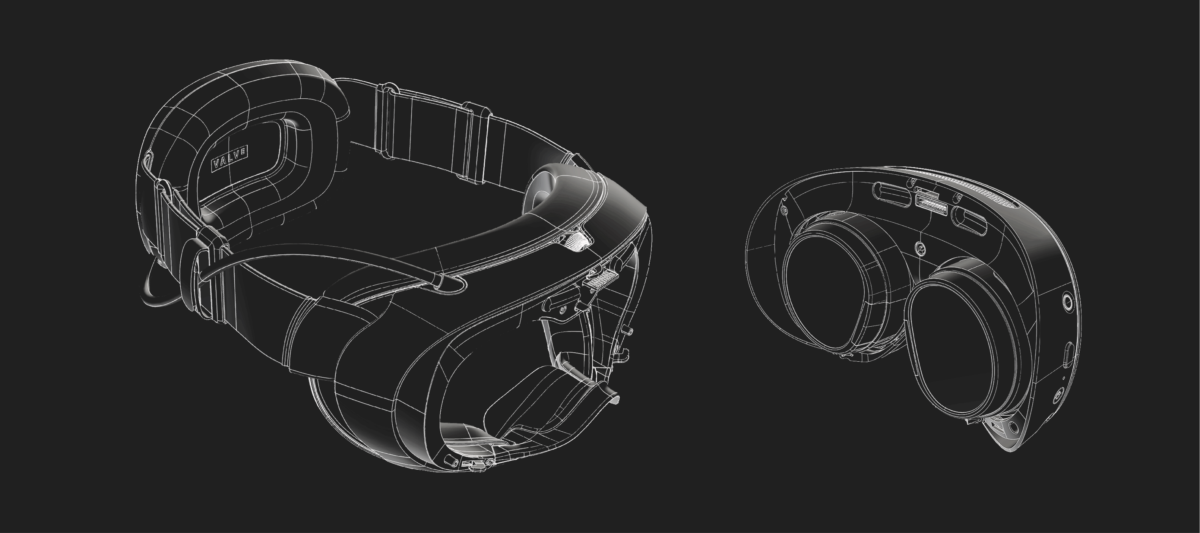
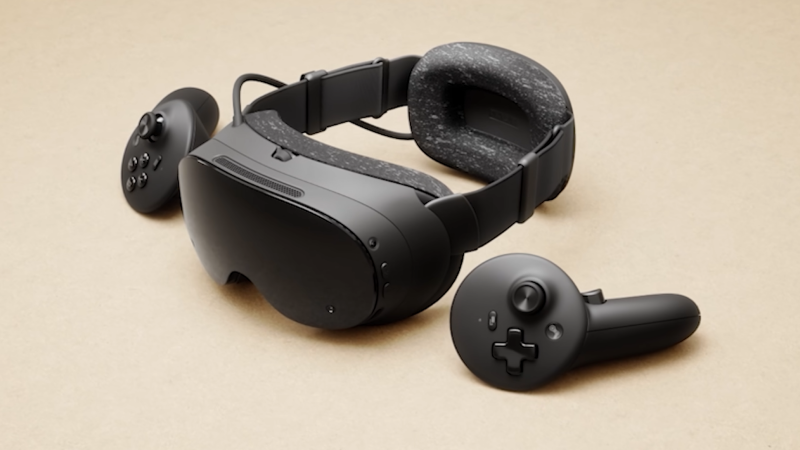
Valve published the Steam Frame's CAD files and its electrical interface on October 9, and the engineering document that came with them puts a single PCI-Express Gen4 lane in the headset's nose-bridge connector, sharing pins with the left camera. The same document warns that "the allowable 6W of use will consume over 25% of the available battery capacity, so minimizing consumption is recommended".
The nose-bridge connector sits on the visor's inner face. Valve's document calls it the auxiliary port. Image: Valve
Valve's post puts it in one line: "Steam Frame CAD files and electrical interface information are now available for non-commercial use." The detail is in the files. They sit in Valve's own GitLab, in a project described as "Public Steam Frame CAD and Electrical References", created on September 16 and filled by a single commit on October 2.
The PCIe lane shares the left camera's pins
The document is headed "Project Frame External Interfaces" and covers what Valve calls the auxiliary port in the nose bridge. It is an extract: Valve published pages 8 to 14 of 14. "The connector has a single PCIE Gen4 lane exposed," it reads. "This includes the TX, RX, and CLK differential pairs."
Those pairs are muxed onto the left camera's own pins, so nine pins on the connector carry two functions depending on what is plugged in. The camera side is two four-lane D-PHY v1.2 interfaces running at up to 2.5 Gbps per lane, routed at 85 ohms differential with intrapair matching inside 150um and interpair inside 350um. Switching the lane on costs camera bandwidth rather than adding to it. Valve writes that "only the 'Left' camera signals are switched out for PCIE", which "enables a singular camera to be functional", and in that state the left camera drops to a single lane in combo mode while the right keeps all four.
The electrical warnings are blunter. PCIe Reset, Wake and CLKREQ are 1.8V signals and "are not 3.3V tolerant". Valve names the FXWA9306L8X as "one example part that has been verified to translate WAKE and CLKREQ with the chipset", and asks designers to add 0.22uF capacitors to their TX lanes for PCIe compliance.
The port stays dead until a peripheral identifies itself
Plugging something in does nothing by itself. "Power is not applied to the connector until the detect pin (pin 44) is connected to ground via the peripheral," Valve writes, and then one of three probes has to succeed: a valid I2C response for a known camera configuration, which Valve gives as "Arcturus RGB" at addresses 0x34 and 0x20; Reset and Strobe shorted together on the peripheral, which Valve describes as "power only or PCIE only"; or a valid I2C response from a temperature sensor or an EEPROM. "Without one of the three above probings succeeding, power will be removed from the port." For a non-camera PCIe device Valve recommends NXP's P3T1084 temperature sensor and links its datasheet.
The rail behind the port is pins 28, 30 and 32, specified as "3p1V / 2A current limited" with a limit at about 3A, a 700us soft start and roughly 20mVpp of ripple. Valve also records a change it made during production: "the early devices had a 1A continuous rated part", and this "was made a running change to the 2A part at ramp to enable higher current draw". An early Frame may therefore not feed an accessory as hard as a later one.
Six watts is the ceiling the port allows, and over a quarter of the charge is Valve's own estimate of what taking it costs, on a headset whose 20.9 Wh cell iFixit found glued in place. An accessory for this port is something an owner budgets power for rather than plugs in and forgets.
The licence lets you build one, not sell it
The repository's licence file is Creative Commons Attribution-NonCommercial-ShareAlike 4.0, and Valve's own preamble spells out the limit. You may use and modify the materials "for creating your own accessories or other modifications", with attribution, without claiming or implying association with or endorsement by Valve, and "do not use the Materials for commercial purposes". Commercial enquiries go to a steamframecompatible address at Valve.
The same file carries a warranty warning: "please be aware that opening the outside enclosure of your Steam hardware will void a warranty, as will attaching any hardware that is not 'Steam Frame Compatible' to any of the electrical interface ports", linking Valve's hardware warranty page. That label is not hypothetical. Valve has listed a $149 colour passthrough camera from Arcturus Vision as Steam Frame Compatible since September, and the compatibility label is what the licence ties the warranty to.
Valve shipped two reference designs with the files, and both are USB 3.0 hub examples. The Altium one is in three parts, a breakout to a mezzanine connector, a flex, and "a PCI to USB adapter... that uses the UPD720202K8-711", with an EEPROM on board because "for any non-standard devices EEPROM is critical to identification". Of the KiCad design Valve says: "We do not recommend using this for a real accessory, because of the rigid connection to the expansion port."
Valve says it is "looking forward to seeing what our customers and partners will make." Under the licence in the same release, make is the operative word, and selling anything built from the files means emailing Valve first.

