
Newsom vetoes the bill that would have made disabling a glasses recording light a crime

California governor Gavin Newsom has vetoed SB 1130, the bill that would have made it a crime to disable the recording light on a pair of camera glasses. He returned it to the Senate on September 30, and his veto message says the measure "defines several terms too broadly or imprecisely", rather than arguing that the state should leave worn cameras alone.
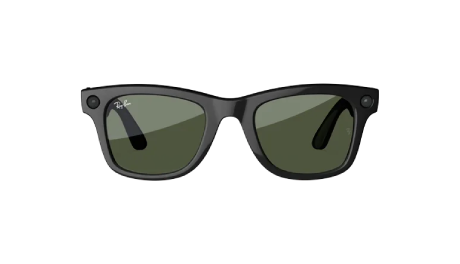
Ray-Ban Meta glasses carry a recording light because Meta puts one there, not because California requires it. Image: Meta
The bill's core was a new section 632.8 of the Penal Code, and it carried two prohibitions. A person "shall not disable any light, sound, or other indicator on a wearable recording device that indicates that the device is capturing sound or video", it read, and a person could not operate such a device to record anyone inside a place of business where that person had a reasonable expectation of privacy without their explicit consent. Either violation carried a fine of up to $1,500, up to a year in county jail, or both.
A second half would have reached the shop shelf. From January 1, 2028, the enrolled text barred manufacturing, selling, delivering, holding or offering a wearable recording device for sale in California "without a light, sound, or other indicator that is sufficiently prominent so that a reasonable person in the vicinity would be alerted to the capturing activity", with a civil penalty of up to $2,500 for a knowing violation. A separate ban on selling, buying or using technology built to switch such an indicator off carried no 2028 date at all.
Newsom objects to the drafting, not the idea
Newsom does not argue that worn cameras should go unregulated. Wearable technology "is rapidly advancing, with articles that closely resemble ordinary eyewear and other accessories containing cameras, microphones, and artificial intelligence systems", Newsom writes, and reports of disturbing, invasive and potentially dangerous conduct using it "have surfaced and demand a legislative response".
His problem is the wording. SB 1130 defined a "wearable recording device" as anything designed to be worn on or attached to the body, rather than held, with the capacity to record or transmit sound or video, and Newsom says that "could include certain smartwatches or other worn devices widely used in public spaces and capable of recording, which could lead to significant confusion and unintended consequences". He adds that existing California law already criminalises recording a person in an area where they have a reasonable expectation of privacy.
The bill did carve out police body cameras, employer-issued headsets and two-way radios, ordinary wireless headphones, hearing aids and other assistive devices. Smartwatches were not on that list.
Nothing changes for any glasses on sale
Because the 2028 mandate never took effect, no product has to change. The small white light on a pair of Ray-Ban Meta glasses remains a manufacturer's design choice rather than a legal requirement, and so does the indicator on the Meta Ray-Ban Display that went on sale in the UK and four other markets in September.
That leaves the argument where it was. Meta's chief technology officer argued in September that a few bad actors should not set the terms of the debate about camera glasses. California's legislature wrote an answer to that argument, and the governor has sent it back.
The Senate has not finished with it
The measure is still formally alive. The legislature's own status record lists two actions on September 30, "Vetoed by the Governor" and "In Senate. Consideration of Governor's veto pending." An override needs a two-thirds vote in each house, and California's legislature rarely takes one.
SB 1130 came from Senator Reyes, was introduced on February 17 and amended nine times before the Senate concurred in the Assembly's amendments on August 31 by 29 ayes to 10 noes. It was enrolled on September 4 and presented to the governor on September 9 at 2 p.m.
For now, the light that tells a stranger a pair of glasses is filming is whatever the company that built them decides it should be.

