
JSAUX puts an E-Ink screen on the Steam Machine for $99.99, shipping in October
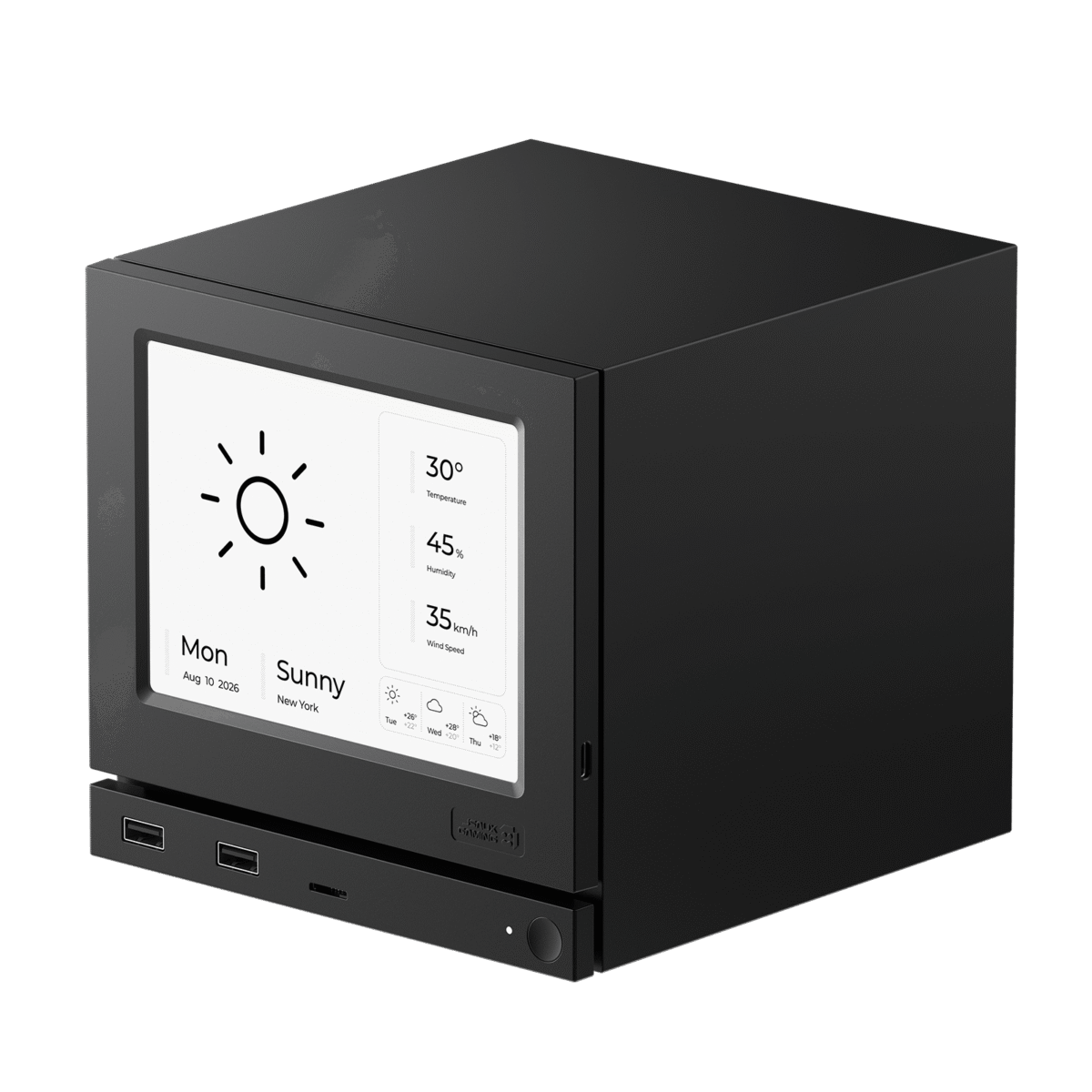
JSAUX has opened orders for two replacement front panels for the Steam Machine, each with a screen built into it: an E-Ink version at $99.99 and a colour Pixel Matrix version at $89.99, both in US dollars on the company’s own store. Nothing has shipped yet, and JSAUX’s store page says both are expected to ship in early October.
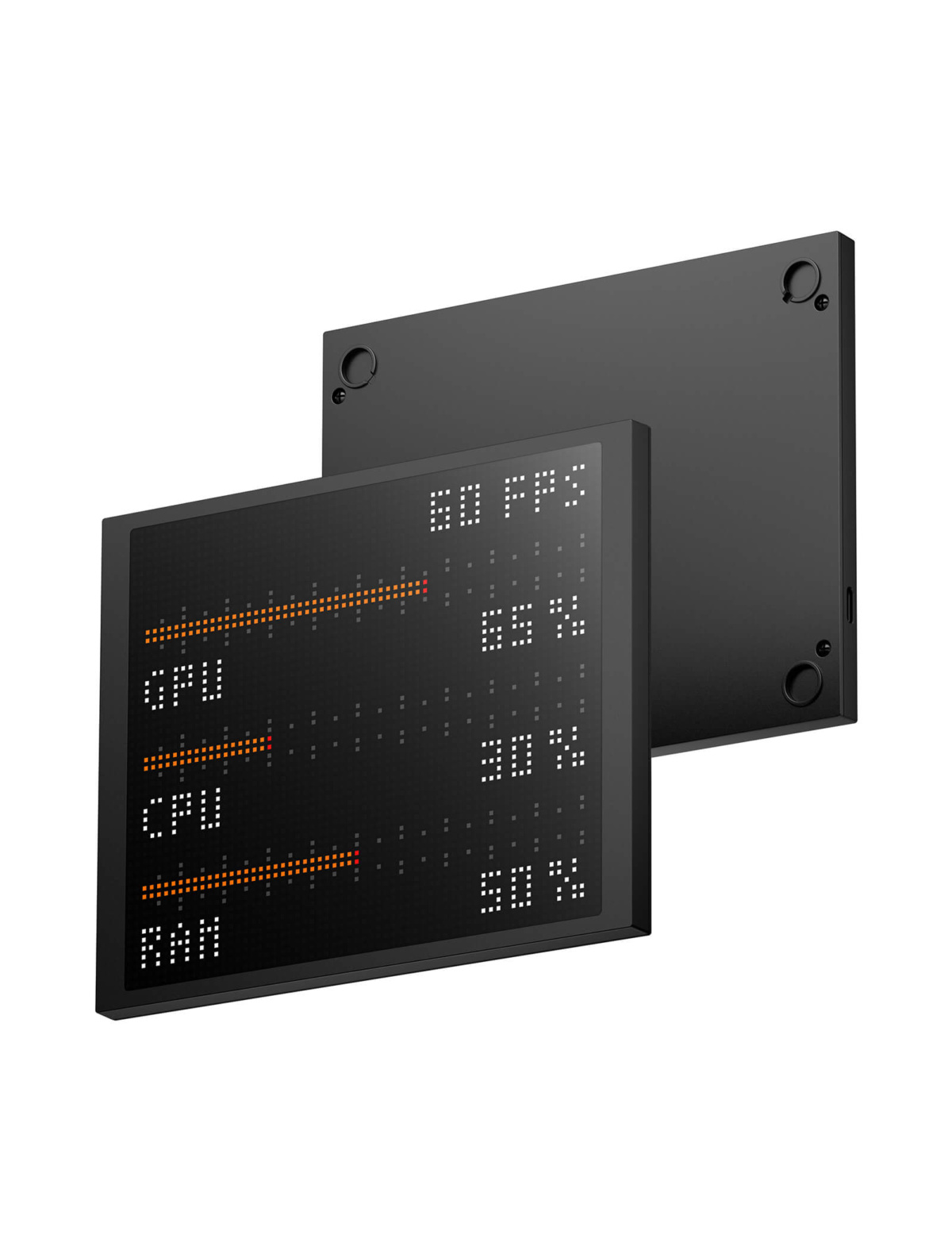
JSAUX’s render of the Pixel Matrix Faceplate, a 64 x 54 RGB grid showing frame rate and system load. Image: JSAUX
Both panels are magnetic and replace the standard plate on the front of Valve’s console. Nobody outside JSAUX has used either one, so every specification and battery figure here is the company’s own claim.
The E-Ink panel runs on its own battery
The $99.99 E-Ink Faceplate is a 5.83-inch monochrome screen at 640 x 480, with 4 or 16 levels of greyscale and a refresh JSAUX puts at roughly 500 to 800 milliseconds. It connects over Bluetooth 5.0 rather than to the console, and carries a 500mAh battery of its own, charged over USB-C.
JSAUX says that battery is good for up to 22 days, on the basis of one refresh per minute, or 1,440 refreshes a day. An E-Ink screen holds a static image without drawing power, so the number tracks how often you ask the panel to change rather than how long the machine is switched on.
The Pixel Matrix panel is wired, and shows live stats
The cheaper $89.99 Pixel Matrix Faceplate is a 7-inch full-colour RGB grid of 64 x 54 pixels, coarse enough that JSAUX’s own renders show pixel art and blocky readouts rather than fine detail. It draws power and data over USB-C at 5V, up to 3.5W, through a flat cable with a right-angle connector that JSAUX says follows the console’s profile.
The cable is the trade: because it stays plugged in, JSAUX lists live refreshing, so the front of the machine can carry frame rate and CPU, GPU and RAM load while a game is running. It also takes GIF uploads, where the E-Ink panel is limited to static images.
Each panel needs its own JSAUX app
The E-Ink version is driven by an app JSAUX calls MonoInk, with seven preset modes: composite, clock, weather, performance, calendar, game time and custom. The Pixel Matrix uses a separate app, MatrixLink, with eight: dashboard, hardware, weather, clock, playtime, countdown, chronograph and custom.
JSAUX lists both panels as compatible with the Steam Machine and SteamOS, says the E-Ink panel keeps running in the background across Desktop and Game Mode, and says both accept open-source code for custom multi-zone layouts. Setup runs through an installation guide on JSAUX’s site for now, and the company says it plans to put the software on Steam at some point, without naming a date.
These are third-party panels, not Valve’s
Valve neither sells nor endorses either faceplate. It has published its own Steam Machine repair guides on iFixit without putting spare parts on sale, which leaves anything that bolts onto the console to third parties like JSAUX.
JSAUX is pitching both panels at a console that sits out in the open, which is how Valve has presented the Steam Machine from the start: a living-room box it calls the perfect host for a Steam Frame headset, even though it cannot stream VR games to one yet. How a 64 x 54 grid or a half-second E-Ink refresh holds up in a living room is a question for the first units to answer.
The E-Ink Faceplate is $99.99 and the Pixel Matrix Faceplate is $89.99 on JSAUX’s own store, with shipping expected to start in early October.

