
Jensen Huang is gone, and Nvidia’s AI future could leave gamers behind
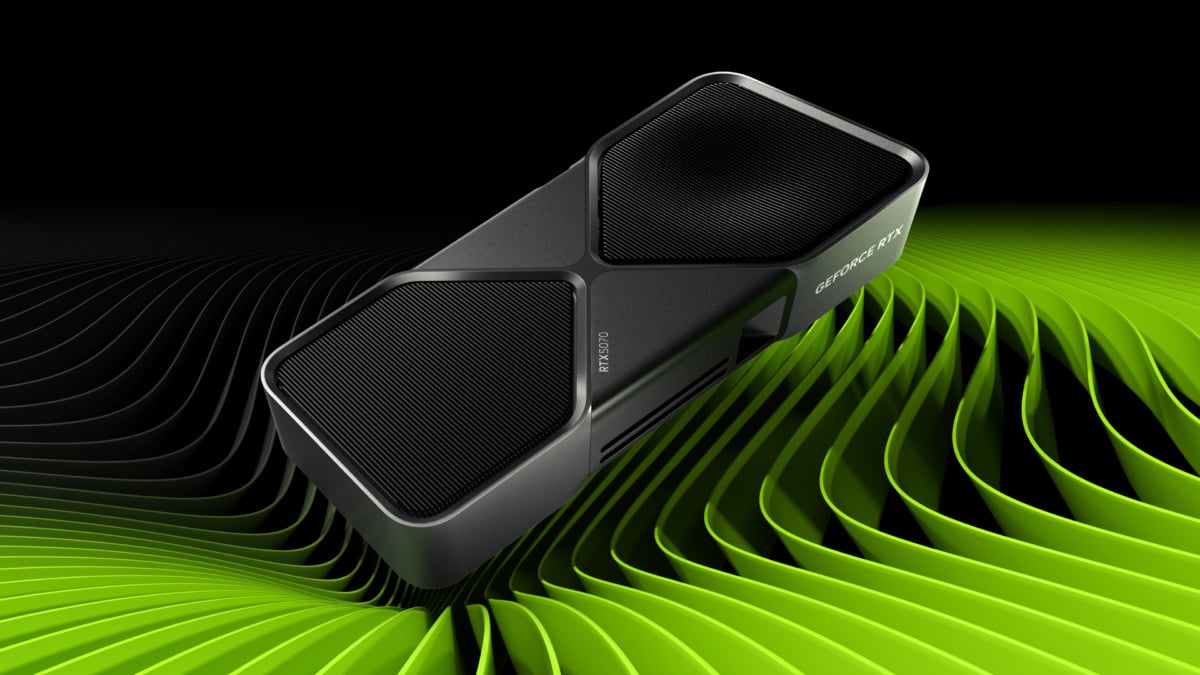
Commentary: Jensen Huang is gone from Nvidia, and the timing raises a worrying question for PC gamers. The company that made GeForce a defining name in gaming now earns the overwhelming majority of its revenue from data centres. Its next permanent chief will inherit a business whose biggest customers buy AI infrastructure, not graphics cards for a home PC.
That does not mean Nvidia has announced an end to GeForce. It has not. The concern is more gradual: gaming can remain a real business while becoming less important every time executives decide where the next engineering team, memory contract or marketing budget goes.
Huang’s resignation as CEO, president and board member is effective immediately. CFO Colette Kress is interim CEO while the board searches for a permanent successor. Nvidia’s new chair says the company expects its operations, customer commitments and product roadmap to continue without interruption. That is an important assurance, though it does not tell us what any unannounced GeForce generation will look like.
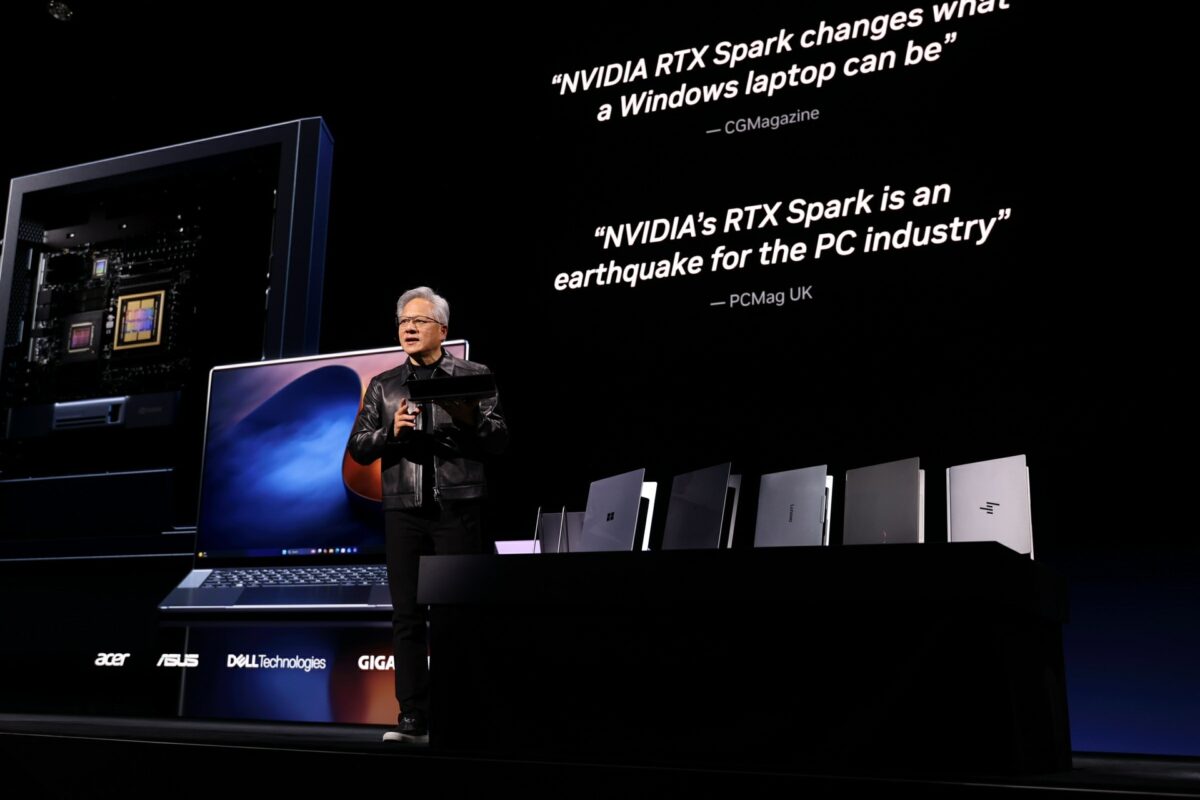
Jensen Huang at Nvidia’s GTC Berlin keynote in October 2026. Image: NVIDIA
The revenue gap is impossible to ignore
In the quarter ending July 26, Nvidia reported $96.2 billion in revenue. Data Center accounted for $89.0 billion, or about 92.5% of that total. The category includes networking and other data-centre products, so it would be wrong to call every dollar a sale of an AI training GPU. It is still a remarkable picture of where the company’s business sits.
Nvidia now reports another category called Edge Computing, worth $7.2 billion that quarter. It includes more than gaming, including workstations and other products. It would be misleading to label that entire figure GeForce revenue or to calculate a gaming share from it.
The last separately reported full-year Gaming number was hardly small: $16.0 billion in fiscal 2026, up 41% year over year. That is a substantial business, and it is a reason not to pretend Nvidia has already abandoned PC gaming.
But size is relative when a single quarter of data-centre revenue can exceed that old annual gaming figure several times over. If gaming needs an expensive engineering project and AI customers need another, gamers have reason to wonder which one will command the most attention. That is a concern about incentives, not evidence that a specific team has lost funding.
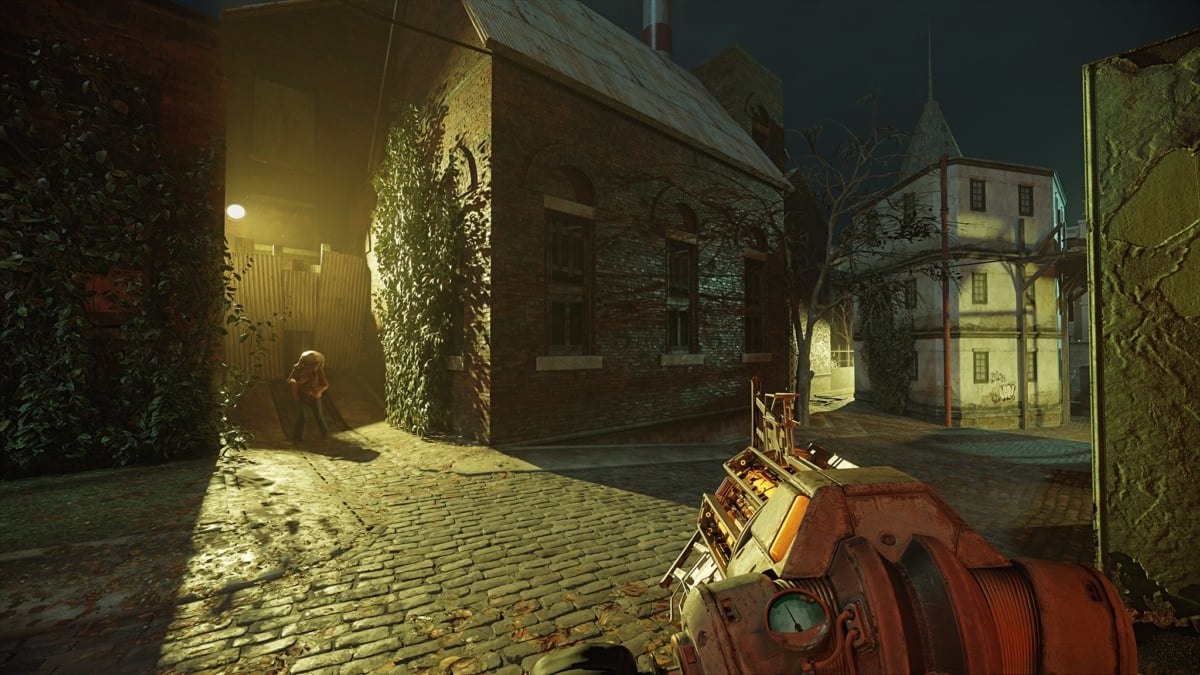
Nvidia uses a Half-Life 2 RTX image to illustrate ray tracing on GeForce hardware. Image: Nvidia
Jensen built the AI giant too
There is a temptation to cast Huang as the person who kept Nvidia focused on gamers, with his departure marking the moment everything changed. The dates do not support such a neat story. The surge in data-centre sales and Nvidia’s change in reporting categories both happened while he was still running the company.
He also introduced the GeForce RTX 50 series as Nvidia expanded aggressively into AI. Gaming and AI were already intertwined in his vision: features such as DLSS use AI to reconstruct images and generate frames. Huang’s record gives both sides of this argument something to point to.
What changes now is that a founder who spent more than three decades shaping the company no longer has the final say. The board has not named a permanent CEO or announced a gaming-specific strategy change. Kress has been Nvidia’s CFO since 2013; her financial background alone tells us nothing about whether she would reduce investment in GeForce.

Nvidia’s GeForce RTX 5090 Founders Edition. Image: Nvidia
Memory is where the pressure reaches your PC
Gamers do not need to wait for a future strategy presentation to see the tension. On Nvidia’s August earnings call, Kress said memory scarcity was being driven in large part by the AI buildout. She also said memory-price increases had exceeded Nvidia’s earlier expectations.
In its quarterly filing, Nvidia said higher memory and system prices had tempered consumer PC sales. For someone building a PC, the cost of a graphics card is only one part of the bill. RAM and the rest of the system matter too.
GPU prices show a separate concern in retail checks. In Hardware Unboxed’s October survey, the cheapest in-stock RTX 5080 it found in the US was $2,200, compared with $1,580 in September. Those were snapshots of the lowest available models, not today’s price or an average of every card. They also predate Huang’s resignation, so they cannot be blamed on it.
The mechanics deserve care. Data-centre accelerators and GeForce cards do not simply use interchangeable memory packages: many current GeForce cards use GDDR, while high-end AI accelerators can use high-bandwidth memory. Pressure across the wider memory supply chain can affect costs without proving that a particular GeForce card was delayed or that a specific price increase was caused by an AI order. Nvidia has not disclosed the allocation needed to make that calculation.
That is the concern for gamers. The same AI expansion that drives Nvidia’s growth can contribute to a component squeeze, while a company serving customers with enormous infrastructure budgets has different incentives from someone trying to keep a mid-range gaming PC affordable.
AI graphics can help, but the details matter
AI itself need not be the enemy of PC gaming. Upscaling can make demanding games playable at a higher output resolution, and frame generation can make motion look smoother. Nvidia’s work on these tools has given players options they did not have before.
But a generated frame and a conventionally rendered frame are not the same measurement. More displayed frames do not necessarily mean the game responds to your inputs at the same rate. Reviews and Nvidia’s own presentations should keep showing base performance, image quality and input latency alongside the impressive headline frame-rate number.
There is also the question of who gets new features. Nvidia says DLSS 4 Multi Frame Generation is for RTX 50-series cards and laptops, while other DLSS 4 model improvements reach older GeForce RTX generations. Hardware differences can make some limits real. For someone who bought an expensive card a generation ago, it still matters whether useful software improvements reach the hardware they already own.
Memory capacity is another practical choice. Nvidia launched the RTX 5060 Ti in 8GB and 16GB versions. Those are different products at different launch prices, not a promise about what either costs today. How much VRAM future cards carry, and at what real street price, will matter more to many buyers than an AI feature they may never switch on.
What the next CEO needs to show gamers
There are reasons for caution in both directions. Nvidia still sells GeForce cards, releases Game Ready drivers and works with developers on PC games. Its board expects the existing roadmap to continue. None of that guarantees every future product will be affordable, but it is real evidence that gaming remains active today.
AMD and Intel also offer alternatives, although switching graphics vendors can involve trade-offs in features, game performance and software. A healthy choice of GPUs matters most when no single company can assume gamers will accept whatever it offers.
Four things are worth watching: whether future GeForce cards are available near their announced prices; whether lower-priced models get enough memory; how long existing cards receive useful driver and feature support; and whether Nvidia continues to show performance without leaning entirely on generated frames. Those are measurable questions, not predictions about a product Nvidia has not announced.
Huang’s exit does not prove that Nvidia will become an AI-only company. It removes the person most closely associated with its gaming history at a moment when the commercial pull in the other direction is stronger than ever. For gamers, the next set of decisions will matter far more than the next keynote slogan.

