
FrameMate mirrors a Steam Frame to an Android phone, and says the link isn't encrypted
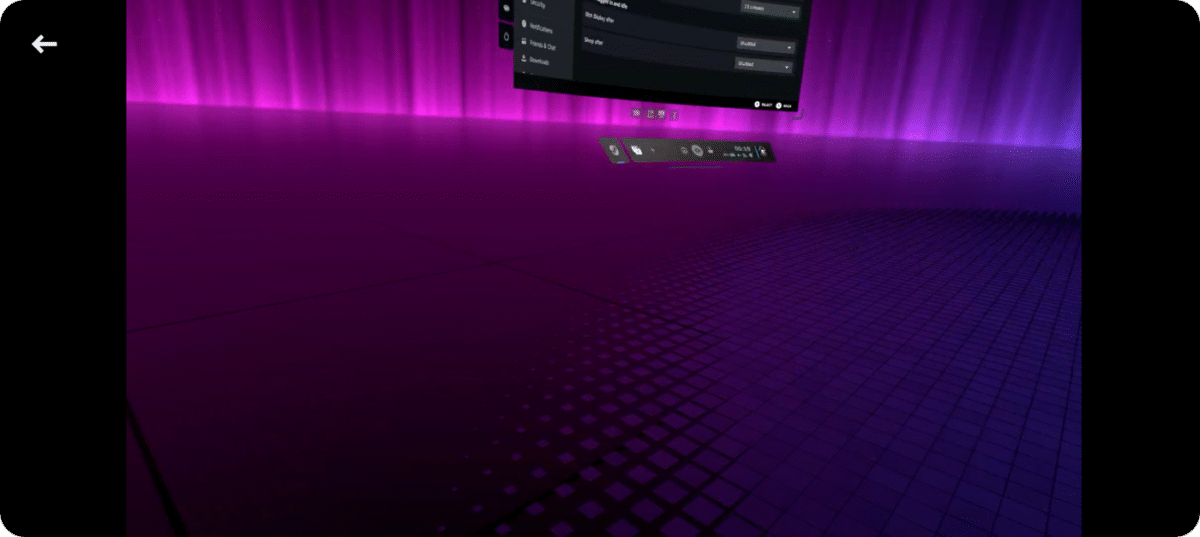
FrameMate, an unofficial companion app for Valve's Steam Frame, published its first release at 09:33 UTC on 3 October and mirrors what the headset is showing to an Android phone. Its README says the picture is "the actual view in the headset, passthrough included".
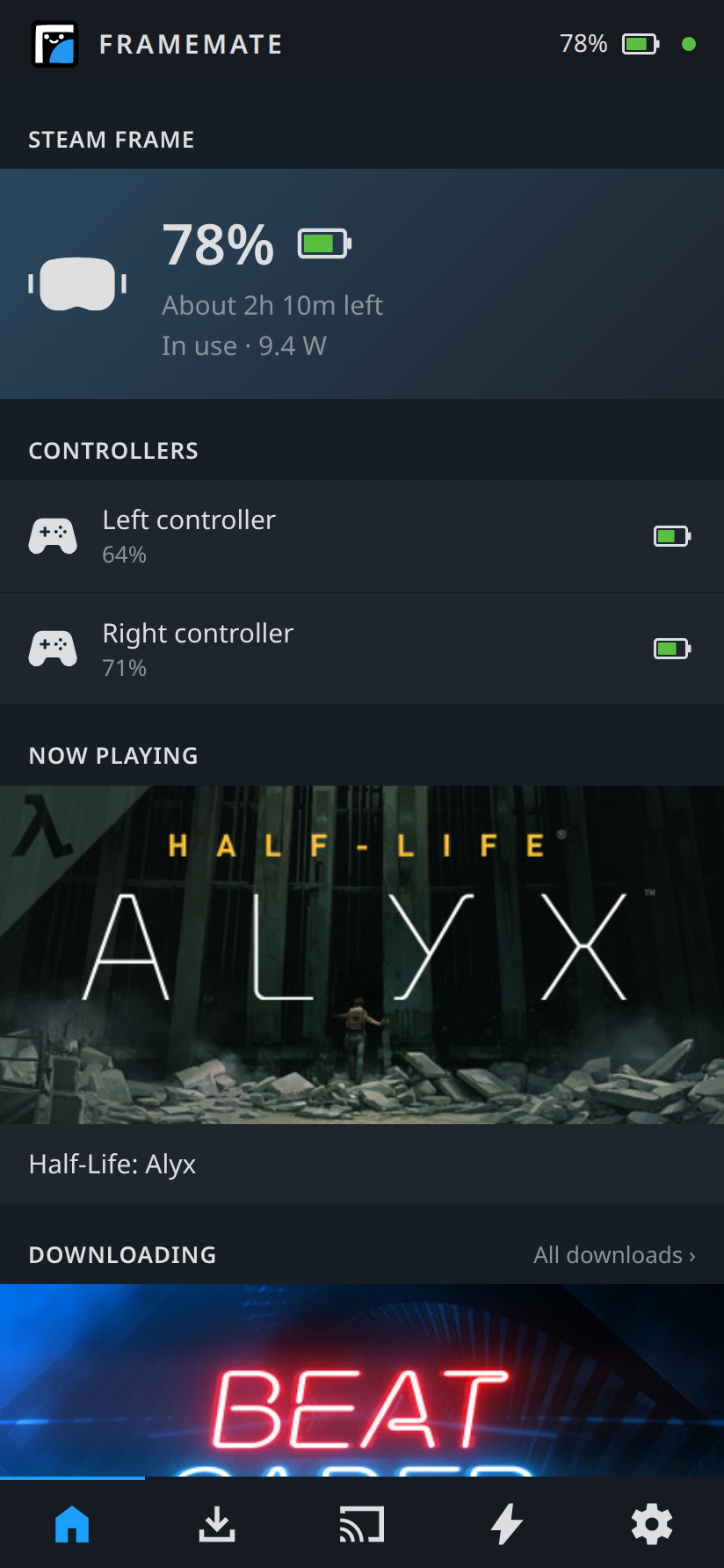
The home view lists headset and controller batteries, the running game and any active download. Image: FrameMate
The project is blunt about what that connection is not. The agent "listens on port 7380 and talks plain HTTP/WebSocket, protected by the token", the README says, and it tells owners not to expose that port to the internet. "The connection isn't encrypted, so others on the same network could read the token and what's sent, including Mirroring."
What the app reports from the headset
There are two pieces: a Flatpak agent on the Frame, described as "a single static binary (~5 MB, a few MB of RAM) that idles at practically zero CPU", and an APK on the phone. Pairing is a printed access token typed into the app.
The phone then lists headset battery with charging state, time remaining and current power draw, both controller batteries "including while they sleep", the running game with its Steam artwork, and the Frame's download queue with progress and speed. Downloads from your other PCs are left out. A system view carries the performance profile, network throughput, SteamOS and Steam client versions, and the temperature and health of the 20.9 Wh battery iFixit found glued in.
A plain-text status page also runs on the Frame itself for any browser on the network, and the agent exposes a small API: the full state as JSON on one endpoint, the same state pushed over a WebSocket on another, and the mirror as an fMP4 stream. Mirroring is hardware-encoded on the headset, which the project says keeps the load low.
It leans on undocumented Steam internals
"Unofficial. FrameMate relies on undocumented Steam internals. A Steam or SteamOS update can break parts of it until the agent is updated," the README says, adding that it has been "Tested on SteamOS 0.4.3 (beta branch)", the beta Valve credits with up to 12% more Steam Frame battery life. It closes with a second line: "FrameMate is not affiliated with or endorsed by Valve."
The repository showed 72 stars and four forks when read at 21:13 UTC on 3 October, about 12 hours after the first release went out. That is a count of attention on a project published on 3 October, not a measure of how well it works.
Android only, and no encryption yet
Three releases landed on 3 October: v0.1.0 at 09:33 UTC, v0.1.1 at 11:13 and v0.1.2 at 20:56. The last of them adds an update check in the app, IPv6 support in the agent, a troubleshooting guide and a licence change to GPL-3.0-or-later. There is no iPhone build, and the developer, GitHub user nailuj05, gives the reason: "I do not have the devices or infrastructure to build and test an iOS version."
The agent does not need the Frame's Developer Mode, and the project notes that while that mode is on, SteamOS's devkit service "exposes Steam's debugging interface to your whole network (port 8081)", a port FrameMate says it never uses. Battery figures match what Steam shows rather than the raw gauge, which the README warns is lower.
The developer's own list of things not built yet runs to six items, among them TLS with pinning and QR pairing, a progressive web app version of the phone client, and controls for pausing and reordering downloads. Until encryption is one of them, the project's own instruction stands: use FrameMate on networks you trust, "like your home Wi-Fi, not on public or shared ones".

