
Android XR SDK's second release candidate adds no new APIs, only eight bug fixes
Google pushed the Android XR SDK to a second release candidate on October 7, and there is not one API change in it. Across the three libraries that moved there are eight entries, every one a bug fix, and most of them a memory leak, a context leak or a race condition.

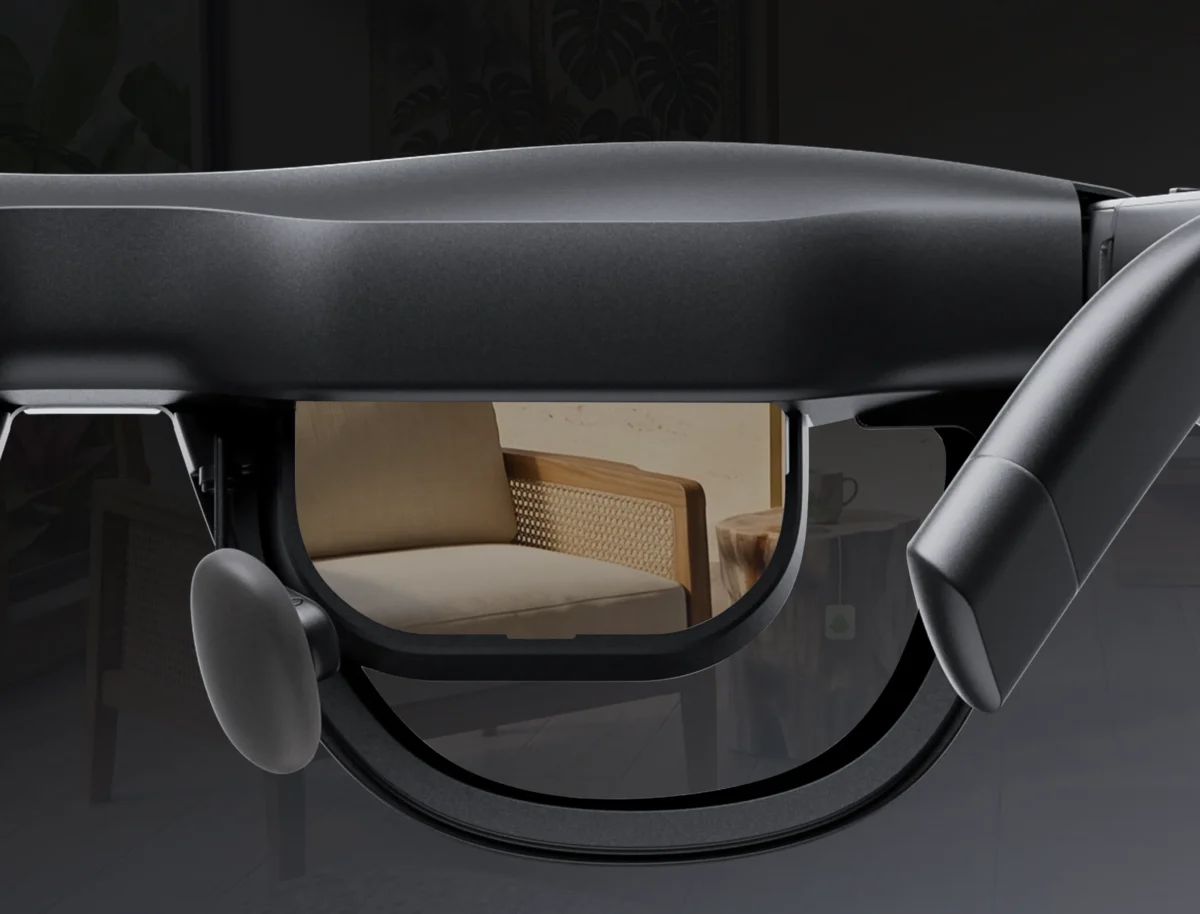
A close view of the Xreal Aura rim and tinted lens, with a small camera at the corner. Aura is one of the glasses built on Android XR, and Google's release notes name no device. Image: Mixed News media library
SceneCore, ARCore for Jetpack XR and XR Runtime all went to 1.0.0-rc02 in Google's own release notes, dated October 7, 2026, with the matching date on the ARCore for Jetpack XR notes and the XR Runtime notes. Google's Maven repository stamps eight artifacts across the three libraries at the same moment, 17:06 UTC on October 7. All four pages were read at 22:03 UTC that day.
Every SceneCore change is a cleanup
SceneCore's rc02 carries five entries, all of them bug fixes, and all five are tagged with the same change ID, Ie35b1. Three concern things the runtime was holding on to: Google says it "Fixed a potential memory leak by removing the perceptionRuntimeCache", "Fixed a memory leak in Scene by removing the sceneCache", and "Fixed a potential context leak by using applicationContext for OpenXR native handles to ensure the native runtime does not hold references to an Activity context".
The fourth is threading. Google "Fixed race conditions in XrInstanceManager by introducing proper synchronization and initialization locking". The fifth rewires object disposal so that entity cleanup runs when an app calls dispose() rather than whenever the garbage collector gets round to it, "preventing duplicate execution upon garbage collection".
ARCore for Jetpack XR has two entries and the same flavour. One covers a session that failed to configure "when augmented image tracking was unsupported"; the other bundles improved memory management, simpler session and scene caching, and thread-safe cleanup registration. XR Runtime has exactly one entry, and it is a summary of the other two: fixes "to improve memory safety and resource lifecycle management" with "updates to context handling and reference cleanup logic to prevent memory leaks".
None of this is a feature release, and Google names no device and no app. These are the faults that make a long session degrade rather than crash on launch, which is the kind of thing a headset or a pair of glasses punishes hardest.
Compose for XR is a release behind the rest
The SDK is not moving as one piece. While three libraries sit at a second release candidate, androidx.xr.compose is still at 1.0.0-beta01, dated September 23, two steps down the pre-release ladder. Its Maven metadata has not moved since then either. A developer building a spatial UI in Compose is therefore working against a beta while the scene graph underneath it is at a candidate build.
There is also a 1.1.0-alpha01 of XR Runtime carrying a single API addition, SPATIAL_API_V4. It looks current in the Maven listing because the stamp covers the whole artifact, but the release notes date it to September 9, the same day rc01 landed.
28 days separate rc01 from rc02, and the gap bought bug fixes rather than a stable build. There is still no Android XR SDK 1.0: by Google's own version numbers the platform is at a release candidate. Hardware is arriving regardless, with Samsung's Galaxy XR shipping and Xreal's Aura glasses listed as an Android XR device due in autumn 2026. What developers are compiling against is a release candidate whose newest work is tidying up after itself, a long way from what VR developers said about the platform when Google first showed Android XR.

