
AMD's Instinct security bulletin names two CVEs for one flaw, and explains only one

AMD's security bulletin AMD-SB-6033, published on September 30, describes a single flaw in the ROCm Communication Collectives Library and gives it the identifier CVE-2026-43598. Every one of the nine products it lists as affected carries a different identifier, CVE-2026-54974, which the bulletin never describes and never scores.
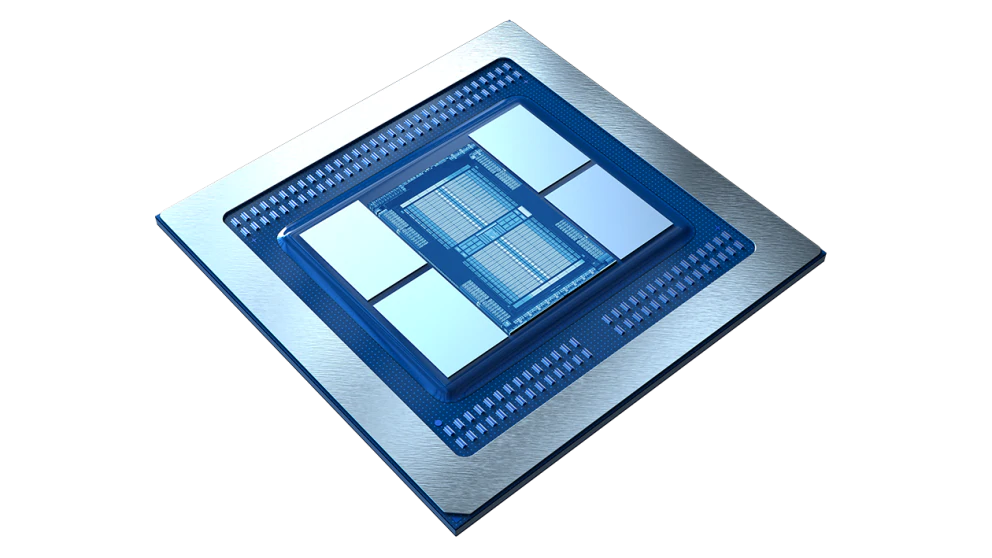
AMD's render of a GPU accelerator package. RCCL is the library that moves data between parts like these. Image: AMD
AMD's summary puts the fault down to "insufficient validation of attacker-controlled data within the RCCL proxy communication path", and says a remote attacker "may be able to disclose memory contents and bypass ASLR protections, potentially resulting in remote code execution in the context of the RCCL process". The scored identifier, CVE-2026-43598, carries a CVSS 4.0 base score of 7.7.
The count is easy to repeat. AMD's affected-products table has nine rows, one per accelerator, and the CVE column reads CVE-2026-54974 on all nine. Counted across the whole bulletin, CVE-2026-43598 occurs once and CVE-2026-54974 nine times.
The nine are the AMD Instinct MI210, MI250, MI250X, MI300A, MI300X, MI308X, MI325X, MI350X and MI355X, listed under the product family AMD calls "AMD Adaptive SoCs and FPGAs", which is where its Versal and Zynq parts sit. None of this touches a desktop. RCCL is the library ROCm uses to move data between accelerators inside a server, and no Radeon card, Ryzen processor or Adrenalin driver is among the affected products.
Neither number has a published CVE record yet
The CVE Program's own record service returns nothing for either identifier. A request for CVE-2026-43598 came back with "The cve record for the cve id does not exist" at 09:20 UTC on October 6, and CVE-2026-54974 returned the same error in the same minute. Two known-good identifiers queried in the same run, CVE-2024-3094 and CVE-2026-0001, both returned full records, so the service was answering.
AMD is a CVE Numbering Authority and files its own records, so this is not a gap in the system. Two identifiers from its September 24 bulletins, CVE-2026-0482 for a Versal secure boot bypass and CVE-2026-0461 for a Zynq UltraScale+ one, were published to the CVE List by AMD at 21:35 and 21:38 UTC on October 5. The two RCCL numbers were not.
AMD's index of security bulletins gives AMD-SB-6033 a published date and a last updated date of September 30, and names one identifier against it: CVE-2026-43598. Read at 09:20 UTC on October 6, that index listed 200 bulletins and no occurrence of CVE-2026-54974.
The fix shipped 11 weeks before the disclosure
AMD names ROCm 7.14 as the mitigation and gives a mitigation release date of 2026-07-15. The ROCm release feed on GitHub dates the rocm-7.14.0 tag to July 16 at 03:28 UTC, and at 09:22 UTC on October 6 it was still the newest release in that repository. Anyone running a current ROCm stack has carried the fix since the middle of July, 11 weeks before AMD said what it was for.
AMD gives no reason for the gap, and the bulletin makes no claim that anyone exploited the flaw. What an operator cannot work out from it is which of the two numbers to track in a vulnerability scanner.
Nvidia published its own September driver bulletin on the same day. That document, which lists 114 CVEs for GeForce, RTX and vGPU owners, went live with the words "Default Summary" standing where its summary belonged and stayed that way for two days and six hours.
AMD credits the RCCL report to the researcher Luna Nova of lunnova.dev. It has not revised the bulletin since it went up on September 30, so whatever CVE-2026-54974 stands for, it has been there from the start.

